
I handle family safari bookings every week. Parents reach out with questions that are sometimes very specific and sometimes barely formed, but underneath almost every inquiry there are the same core concerns: is it safe, will the children be bored, how do we manage the long drives, what do we do about malaria, and will this be worth the cost when the children are this age. These are good questions and they deserve honest answers.
This is not a guide that will tell you Tanzania is perfect for every child at every age. Some ages are genuinely challenging. Some parks work much better for families than others. Some lodges that market themselves as family friendly are simply adding a rollaway bed to an adult room and calling it a day. I will tell you the difference, because the difference matters to whether your family comes home having had the experience of a lifetime or comes home exhausted and underwhelmed.
Minimum Age: What the Parks Allow and What Actually Works
Most Tanzania national parks have no minimum age requirement. The parks will not turn a vehicle away because it contains a two-year-old. The question is not what the park allows. The question is what is enjoyable, manageable, and genuinely worth the investment for your children at their specific age.
Children under five are technically permitted but practically difficult. Game drives start before dawn and run for three to four hours at a stretch. Toddlers have limited capacity to sit still, limited attention for animals that may appear as distant shapes on the horizon, and real needs for naps, feeding, and movement at times that do not align with game drive schedules. If you have a child under five and are determined to go, it is possible with careful itinerary planning and the right lodges. But manage expectations. The adults in the group will make compromises, and the child will very likely remember nothing of it ten years from now.
Children aged six to nine are where things begin to work properly. A six-year-old can spot a giraffe before the guide does. A seven-year-old will talk about elephants for months after the trip. Children in this range are old enough to understand what they are seeing, to ask questions that a good guide will love answering, and to manage the physical demands of a safari day with the right pacing. You need midday rest periods, an early evening meal, and realistic game drive durations. With those adjustments, a safari at this age is memorable for everyone in the vehicle.
Children aged ten and above enjoy a family safari in Tanzania fully. Teenagers who claimed to have no interest often return home changed by what they witnessed. A ten-year-old in a private vehicle with a knowledgeable guide will absorb everything, develop a connection to the natural world, and carry the experience in a way that no beach holiday produces.
Which Parks Work Best for Families
Not all Tanzania parks are equal for family travel. The differences matter enormously, and choosing the right parks for your children's ages is one of the most consequential decisions in planning a family safari.
Tarangire National Park
Tarangire is where I recommend almost every family with children under twelve begins. It sits roughly two and a half hours southeast of Arusha, which means you arrive at your lodge and do an afternoon game drive on the same day you land at Kilimanjaro. There is no exhausting long-distance transfer before wildlife appears.
The park is famous for its elephant herds, the largest concentration in northern Tanzania. Elephants are the animal that works for every age group. They are impossible to miss, they move in ways that are visible and understandable, and the dynamics of a family herd create a story that even young children can follow with excitement. Tarangire also has enormous baobab trees that children find remarkable, and a river that draws dense concentrations of wildlife during the dry season. Game drives here are productive and compact. You do not need to cover vast distances to find animals. For the full seasonal picture, lodge options, and the way the elephant herds shift through the year, my Tarangire National Park guide has the deeper detail.
Ngorongoro Crater
The crater works for families as a single concentrated day rather than the centrepiece of a long itinerary. Descend at first light, spend six to seven hours on the enclosed floor, and ascend in the afternoon. Because the floor is bounded, wildlife is everywhere and sightings come without the long gaps that can occur in the open Serengeti. For children who need constant stimulus to stay engaged, the crater delivers it almost continuously: lion, buffalo, hippo at the springs, flamingo on the soda lake, and if timing is right, black rhino on the southern grasslands.
The limitation for families with very young children is that all viewing on the crater floor must happen from inside the vehicle. There is nowhere to stretch or walk down there. For older children and teenagers, the Ngorongoro Crater is often the single most impressive thing they see on the entire trip.
Serengeti National Park
The Serengeti is the wow factor. The scale of the landscape, the migration if your timing is right, the predator concentrations across the open plains: it is everything people picture when they think of Africa. For families with children aged eight and above, the Serengeti belongs in the itinerary.
The challenge for family travel in the Serengeti is driving distances. The park covers 15,000 square kilometres. Depending on where your lodge sits relative to the best game areas, drives can involve significant road time before the first major sighting. Position your lodge carefully and this becomes manageable. For families, I recommend the central Seronera region for first visits: it delivers reliable wildlife throughout the year and keeps game drive distances sensible rather than draining.
Pacing: Why Families Need a Different Itinerary
The biggest planning mistake I see with family safaris is applying an adult itinerary to a group that includes children. A standard adult northern circuit builds in three game drives per day, early departures, and lodges chosen purely for wildlife proximity. Children need a different structure entirely.
For families, I build itineraries around two game drives per day: an early morning drive from approximately 6:30am to 10:30am, a genuine midday break at the lodge from around 11am to 3:30pm, and an afternoon drive from 3:30pm to 6pm. This structure gives children a real break during the hottest part of the day, when most animals are resting in shade anyway and visibility is at its worst. It allows time for swimming, lunch, and a nap if younger children need one. It also means the parents arrive at dinner still able to hold a conversation rather than falling asleep in their soup.
If you are still working out how many days to allocate to the safari itself, I have written a detailed guide on how many days a Tanzania safari actually needs that is worth reading before you finalise the itinerary. For families with children, I recommend a minimum of seven safari days before any beach extension, which gives enough time for the slower pacing without sacrificing the breadth of the experience.
Private Vehicle: Not Optional for Family Travel
For families, a private vehicle is not a luxury upgrade. It is a requirement, and I will explain exactly why.
A shared group vehicle means your child sits alongside strangers who have paid for a wildlife experience and have a right to it. Your child cannot ask a question without interrupting the group. You cannot request an unscheduled toilet stop without negotiating with five other passengers. You cannot speak at normal volume when an animal is close. The guide manages a collective agenda, not your family's agenda.
With a private vehicle, your guide calibrates entirely to your children. If your seven-year-old wants to know why the elephant is flapping its ears, the guide stops and explains it properly. If your four-year-old needs a toilet stop at an inconvenient moment, you stop. If the children are flagging by mid-morning and everyone would benefit from heading back early, you go. No justification required. The day belongs to your family.
The economics work in a family's favour as well. The private vehicle is charged per vehicle regardless of how many people sit in it. A family of four or five travelling together finds the per-person cost difference compared to a group vehicle narrows significantly. For families of six, the private vehicle often costs less per person. I have written a full comparison of private versus group safari vehicles that covers the full cost and experience trade-offs if you want the detailed breakdown.
If you already have dates in mind or want to know what this costs for your specific trip, send your details on WhatsApp and I will respond with a personalised answer within a few hours.
Accommodation: What Family Friendly Actually Means
Tanzania has many lodges that describe themselves as family friendly. Only some of them are, in a meaningful sense of the phrase, and it is worth knowing the difference before you book.
What family friendly actually means in practical terms: the lodge has interconnecting rooms or genuine family cottages where adults and children share a continuous private space, not adjacent rooms accessed via an external path through the bush at night. It means there is a swimming pool that children are permitted to use without restriction. It means the kitchen can serve an early dinner at 6:30pm, because children at the end of a long safari day cannot wait until 8pm. It means there are child-appropriate meals that go beyond plain pasta or a bowl of rice. It means the staff is genuinely accustomed to children and responds to them with warmth rather than barely concealed impatience.
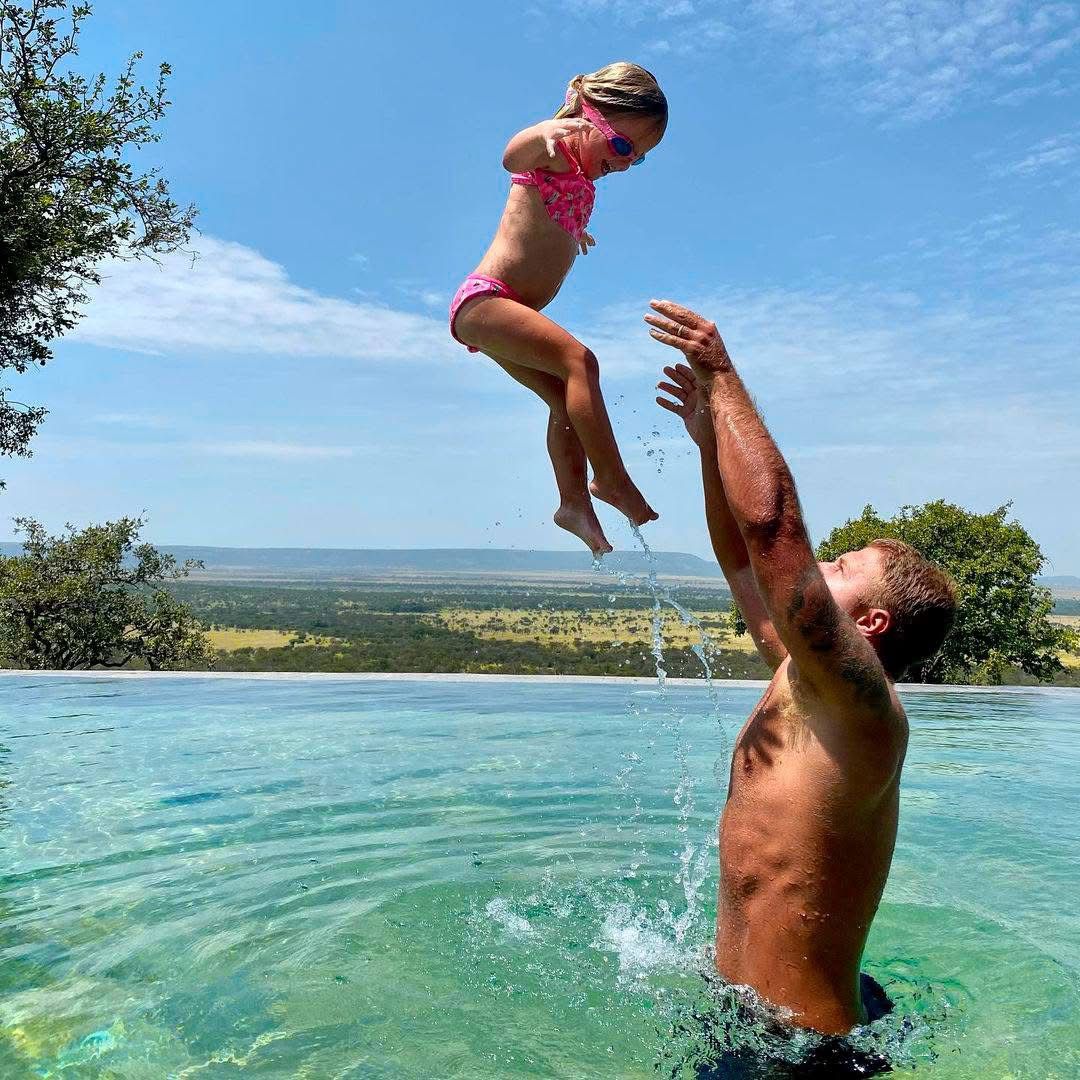
Some specific things to know by park. Tarangire has several lodges that handle family groups well, particularly those with standalone family cottages rather than modified standard rooms. In the Serengeti, lodges in the Seronera area are generally more accustomed to mixed-age groups than the remote exclusive bush camps, which are designed for adults seeking wilderness solitude and are honest about that. Ngorongoro rim properties vary: some have genuine family suites with connected rooms and proper family setups; others are configured for couples and will offer a connecting room that works in practice but is not specifically designed for children. I will tell you honestly when a lodge sounds right but is not actually configured for it, because this is precisely what a local operator who handles family bookings is supposed to know.
Malaria and Health: Preparing Without Panic
Tanzania is a malaria-endemic country. This is a fact, not a reason to avoid the safari. Malaria is preventable with proper preparation, and families travel to Tanzania with young children every year without incident. What it requires is preparation, not alarm.
Consult a travel medicine specialist at least six to eight weeks before departure. Antimalarial medication options exist for children of different ages, including mefloquine and atovaquone/proguanil (Malarone). Your doctor will recommend the appropriate choice based on your children's ages and health history. Do not skip this step and do not try to manage it at the last minute.
Alongside medication, protective measures substantially reduce exposure. Insect repellent containing DEET is appropriate for children over two months of age when used as directed. Long sleeves and trousers at dusk and dawn, which is when mosquitoes are most active, are practical and effective. Good lodges have mosquito nets on all beds and screens on windows. Check that the lodges you book take this seriously before confirming.
Vaccinations are worth reviewing with your travel doctor. Yellow fever may be required depending on your travel routing, and hepatitis A, typhoid, and routine immunisations are generally recommended for travel to East Africa. The families I have sent to Tanzania with young children have not had problems when they prepared properly. Do not let malaria concern become the reason your children miss this experience. For the wider safety picture beyond malaria, including wildlife protocols, food and water, and what solo and family travellers most often worry about, the Tanzania safari safety guide is the deeper read.
What to Pack for Children on Safari
Children on safari have specific packing needs that adults often overlook when they are focused on their own kit. I will walk through what actually matters.
Clothing should be in neutral colours: khaki, olive, tan, and soft grey. Bright colours attract insects and stand out in the bush. Blue specifically attracts tsetse flies. Everything should be lightweight but long-sleeved and long-legged for the cooler morning drives and for sun and insect protection during the day. Layers matter at Ngorongoro, where the rim sits at 2,300 metres and early mornings are genuinely cold.
Sun protection is non-negotiable. The equatorial sun is intense, particularly at altitude. A high-SPF sunscreen for your child's skin type, a wide-brimmed hat, and UV-protective sunglasses are all worth bringing from home rather than relying on finding them in Arusha.
Binoculars are transformative for children aged six and above. A child with their own binoculars becomes an active participant in the game drive rather than a passive observer waiting for adults to describe what they can see. Get a pair sized for smaller hands and adjust them before the first drive.
For younger children, bring a small number of familiar comfort items for the moments when a child is overwhelmed or tired. Safari days are long and can be emotionally intense for young ones in ways that are not always predictable. Rehydration sachets, any regular medications, and high-factor insect repellent should travel in hand luggage rather than checked bags in case of delays.
How Children's Park Fees and Family Pricing Work
Tanzania national park fees have a clear structure for families that works in your favour once you understand it.
Children under five years of age enter all TANAPA national parks free of charge. This is a meaningful saving if you are travelling with toddlers, though as I noted earlier, the practical challenges of that age group for game drives remain regardless of the fee.
Children aged five to fifteen pay a reduced park entry fee. In Serengeti and Tarangire, the children's rate is approximately $35 per child per day compared to $71 for adults. At the Ngorongoro Conservation Area, fees are structured slightly differently and include per-person conservation fees on top of the entry rate. I recommend confirming current rates at the time of booking, as these fees are subject to annual revision by the relevant authorities.
The private vehicle fee is charged per vehicle regardless of how many passengers are inside. A family of five pays the same vehicle cost as a couple. This is one of the reasons why family groups, when they move to a private vehicle, often find that the per-person cost difference is smaller than they expected. For the complete cost breakdown including a worked family group scenario, the Tanzania safari cost guide has the full numbers across park fees, vehicle costs, and accommodation tiers.
Zanzibar as a Family Beach Extension
Most family itineraries I design end with five to seven days in Zanzibar, and it consistently proves to be the right choice. After the early mornings, long drives, and dust of a safari circuit, the transition to the Indian Ocean coast is exactly what most families need to close a trip.
Zanzibar is well configured for children. The north and northeast coasts, particularly Nungwi and Kendwa, have calm sea conditions and shallow reef areas suitable for children who want to snorkel. Stone Town, Zanzibar's historic old city, is walkable, compact, and genuinely fascinating for older children and teenagers who have absorbed something about the island's history as a spice and trading centre.
The flight from Kilimanjaro or Arusha to Zanzibar takes approximately one hour on local carriers. You finish your last morning game drive, transfer to the airstrip, and by early afternoon you are swimming in warm water. The contrast between the two halves of the trip is part of what makes a Tanzania safari with a Zanzibar extension so satisfying for families: the children experience two entirely different worlds within a single holiday.
Frequently Asked Questions
Six years old is where a Tanzania safari starts to work well. Children at this age can manage the early starts, follow what the guide is pointing out, and retain the experience in a way that lasts. Under five is possible but demanding for everyone involved. Ten and above is where children enjoy the full experience independently and often describe it as the most significant trip of their lives. With the right pacing, a private vehicle, and the right park selection, children from six onwards can have a genuinely excellent safari.
Yes, with proper planning. All game drives take place from inside enclosed vehicles. Children are never on foot in areas with dangerous wildlife. The primary health consideration is malaria, which is managed effectively with antimalarial medication prescribed by a travel doctor, DEET-based repellent, and appropriate clothing at dawn and dusk. Good lodges have mosquito nets and screened rooms. Families travel to Tanzania with young children every year. The experience is overwhelmingly positive when the preparation is done properly and the itinerary is built around the children rather than applied wholesale from an adult trip.
A well-run private family safari at mid-range to luxury lodges costs between $500 and $1,200 per adult per day, including park fees, accommodation, meals, and a private vehicle. Children under five enter all national parks free. Children aged five to fifteen pay a reduced park entry rate, typically around $35 per day in Serengeti and Tarangire versus $71 for adults. The private vehicle fee is shared across all passengers regardless of how many children are in the group, which means a family of four or five pays the same vehicle cost as a travelling couple. Larger families spread this cost very efficiently. For worked examples with real numbers, read the Tanzania safari cost guide.
Tarangire is the best starting point for families with younger children: close to Arusha, elephant-rich, and productive without demanding long drives. The Ngorongoro Crater works very well as a single concentrated day of continuous wildlife sightings in an enclosed environment. The Serengeti is the most dramatic option and works well for families with children aged eight and above, particularly from a lodge in the central Seronera area. Combining all three parks in one itinerary gives a family the full range of Tanzania's northern circuit, and it is the structure I use for most family bookings I handle.