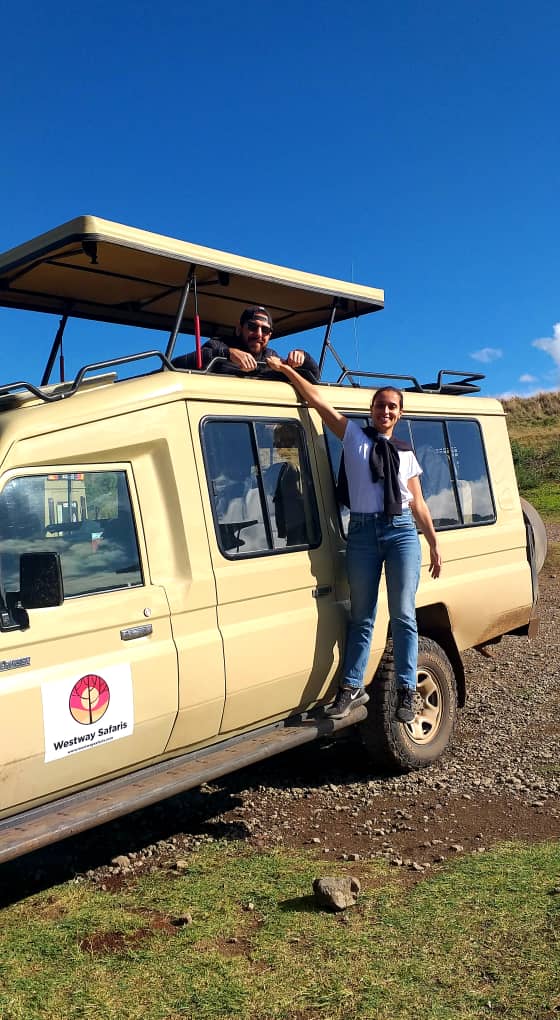
Most people who contact me for the first time arrive with the same set of questions in roughly the same order. When should I go? Which parks should I include? How much will it cost? Can I trust an operator I have never met? These are good questions, and they deserve honest, specific answers. This guide walks you through every stage of the planning process, from the moment you first decide you want to go on safari to the moment you step into your vehicle in Arusha and the northern circuit opens up in front of you.
I have been running safaris out of Arusha for many years. I have heard every variation of the questions above, and I have watched guests make the same avoidable mistakes: booking too late and finding their preferred camp is full, choosing parks based on names rather than what actually suits their dates, trusting vague quotes from operators who then itemise fees on arrival, or arriving in Tanzania without the right vaccinations. This guide exists to make sure none of that happens to you.
Step One: Choose Your Dates
The single most consequential planning decision you will make is when to go. Tanzania's wildlife calendar is specific, and the experience you have in February is fundamentally different from the experience you have in August. Both can be outstanding. But they are not the same thing, and pretending they are does guests a disservice.
The Serengeti operates on a rough annual cycle that most people have heard described as the Great Migration. In reality, the wildebeest and zebra herds are moving constantly. But there are two windows that most guests are trying to reach. The first is calving season, which runs from late January through February in the southern Serengeti around the Ndutu area. Several hundred thousand animals gather to give birth over a period of approximately six weeks. Predator activity around the calving grounds is extraordinary, and the landscape in the short rainy season that precedes calving is lush, green, and photographically exceptional. If this is the experience you want, late January or February is your window, and you should book your central Serengeti or Ndutu camp no later than October of the preceding year.
The second target window is the river crossings. The wildebeest cross the Mara River into the Masai Mara and back between July and October, peaking in August and September. If standing on the riverbank watching thousands of animals plunge into crocodile-filled water is what you have in mind, you need to be in the northern Serengeti or the Masai Mara between late July and early October. This is also peak season, when rates are highest and the best camps sell out furthest in advance.
The dry season from June through October is strong across all parks: wildlife concentrates around water, vegetation is lower and animals are easier to see, and the weather is clear and cool in the early mornings. If your dates are flexible and budget is a consideration, June and October offer essentially the same wildlife conditions as July and August at meaningfully lower rates. The short rains in November and December bring light afternoon showers, dramatic skies, fresh grass, a reduction in lodge rates of 20 to 30 per cent, and exceptional birding. January and February outside of the calving window are also excellent, particularly for guests who want strong wildlife combined with fewer vehicles in the parks.
The long rains from March through May are the true low season. Heavy daily rainfall makes some tracks impassable, certain remote camps close entirely, and March through May is the period I would not recommend for a first-time visitor unless the significant price reductions are the primary driver.
Step Two: Select Your Parks
Tanzania has 22 national parks. For a first-time visitor, three parks form the backbone of what most operators call the northern circuit: Tarangire National Park, the Ngorongoro Conservation Area, and the Serengeti National Park. Together, they provide the most complete and consistently reliable safari experience available anywhere in East Africa.
Tarangire sits roughly 120 kilometres south of Arusha. It is most celebrated for its elephant herds, which reach into the thousands during the dry season when the Tarangire River becomes the only permanent water source for the surrounding ecosystem. The park is also defined by its ancient baobab trees, some over a thousand years old, which give the landscape an atmosphere unlike anything else in Tanzania. Tarangire is routinely underestimated by first-time visitors who have the Serengeti fixed in their minds. A game drive through the Tarangire river corridor in the late dry season, with elephants moving through baobab-lined floodplains as the light falls, is one of the defining experiences of the East African safari circuit.
The Ngorongoro Crater is the world's largest intact volcanic caldera: 19 kilometres across, 600 metres deep, holding approximately 25,000 large animals permanently within its walls. Because the crater is self-contained, the wildlife does not migrate. The Big Five are present year-round. You will see lions, elephant bulls, buffalo herds of several hundred, hippo at the Ngoitokitok Springs, flamingo on the soda lake, and on a well-planned morning, black rhino. The crater charges significant government fees in addition to accommodation, and it deserves its own dedicated day, ideally two days with a night at a rim lodge so you descend at first light.
The Serengeti is the centrepiece. At nearly 15,000 square kilometres, it is one of the largest national parks in Africa, and the scale of it is something no photograph communicates adequately. The Serengeti is where you go for the migration, for open savannah that reaches the horizon in every direction, and for the sensation of insignificance that a genuinely wild landscape produces in people who have never experienced it before. Three nights in the Serengeti is the minimum that does it any justice. Five nights is better. The park has distinct zones and the right zone to focus on depends entirely on your dates.
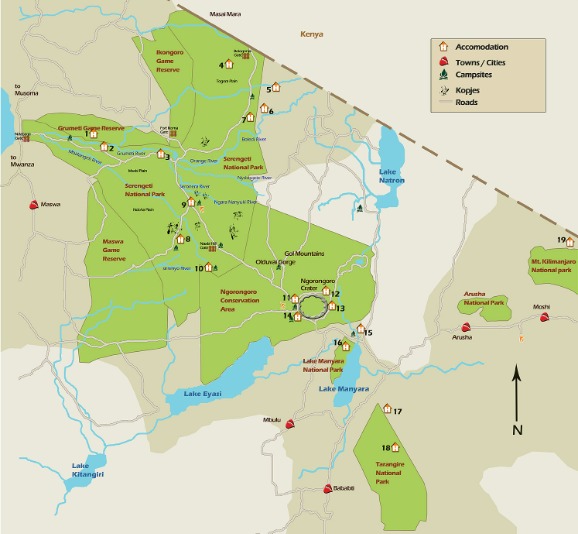
Beyond the core three, other parks are worth considering depending on your interests. Lake Manyara is a half-day visit en route between Arusha and Ngorongoro, known for its tree-climbing lions and the flamingo colonies on its soda lake. It does not require a full day and adds genuine variety without significant extra time. Ruaha National Park in southern Tanzania is a different experience entirely: wilder, more remote, with almost no other vehicles on the road. It belongs in the itinerary of any guest returning to Tanzania or looking to experience the country away from the northern circuit's well-worn tracks.
Step Three: Set a Realistic Budget
I want to give you honest numbers, which means I need to explain what a genuine all-inclusive safari quote actually covers. A reputable operator's all-inclusive price includes accommodation, all meals, a private vehicle with a professional driver-guide, all game drives, and airstrip transfers. It should also include all government park fees, NCA conservation fees, and crater service fees where applicable. These fees are substantial. If a quote is silent on park fees or describes them as payable locally, that is a significant red flag.
For the northern circuit (Tarangire, Ngorongoro, Serengeti) in mid-range accommodation, budget between $500 and $800 per person per day. For quality luxury tented camps and lodges, budget $800 to $1,500 per person per day. Ultra-luxury properties can reach $1,800 to $3,000 per person per day. A seven-day northern circuit for two people in quality mid-range accommodation will typically total $7,000 to $12,000 inclusive of all fees. The same itinerary in genuine luxury typically starts at $16,000 for two people.
Be sceptical of quotes that fall significantly below these ranges. The most common ways operators reduce quotes are: cutting guide quality and experience, replacing a private vehicle with a shared one, removing park fees from the quoted price as separate items, or substituting lower-category accommodation under similar-sounding names. The quote is only the starting point. The safari is what you actually experience.
Step Four: Understand Park Fees
Park fees in Tanzania are paid directly to the Tanzania National Parks Authority (TANAPA) and the Ngorongoro Conservation Area Authority (NCAA). They are not optional, they are not negotiable, and they represent the single largest line item in a Tanzania safari budget after accommodation. A reputable operator pays them on your behalf and itemises them transparently in your quote.
The current fee structure includes: Serengeti entry at $82 per adult per 24-hour period, Tarangire entry at $59 per adult per day, Ngorongoro Conservation Area entry at $82.60 per adult per day, a vehicle crater floor access fee of approximately $200 per vehicle per descent, and an NCA conservation fee of $70.80 per person per night for any accommodation within the conservation area. For a seven-day itinerary across all three parks, the government fees alone for two adults amount to $1,500 to $2,000 depending on how many nights are spent in each area. This is money that goes directly to Tanzania's conservation infrastructure, and it is one of the reasons Tanzania's wildlife remains what it is.
Step Five: Driving Versus Flying Between Parks
Between Arusha and the Serengeti, you have two practical options: overland road transfer or scheduled light aircraft. Each has genuine advantages, and the right choice depends on the guest and the itinerary.
Driving the northern circuit from Arusha takes you through the Great Rift Valley escarpment, the agricultural highlands around Karatu, and the Ngorongoro highlands before descending to the Serengeti plains. The roads are rough in sections, particularly inside the parks, but the landscape is a significant part of the experience. You will stop for wildlife en route. The geography of Tanzania reveals itself slowly, and guests who drive the full circuit consistently say the overland journey gave them a sense of the country that flying over it could not provide.
Flying between parks compresses transfer time considerably. The scheduled flight from Arusha to the central Serengeti takes approximately 90 minutes. Over a seven-day itinerary, flying saves approximately two days of road travel. For guests with limited time, guests who prioritise every available hour in the parks, or guests for whom long vehicle journeys are uncomfortable, flying is the correct choice. Airstrip fees and scheduled flight costs add approximately $400 to $600 per person per sector to the itinerary budget.
My general recommendation is a hybrid approach: drive from Arusha through Tarangire and on to Ngorongoro, which covers the most scenic overland section of the northern circuit, then fly into the Serengeti and fly back out to Arusha at the end. This gives you the landscape experience of the overland route without losing meaningful park time to the long road transfer between Ngorongoro and the Serengeti.
Step Six: Book Your Accommodation
Tanzania's accommodation ranges from basic shared-facility tented camps to ultra-luxury lodges with private plunge pools, full butler service, and wine cellars. Within the categories that most guests are choosing between, the differences that matter most are location within the park, the quality and experience of the guide team, the vehicle quality, and the intimacy of the camp. A smaller camp with twelve tents and excellent guides will outperform a larger lodge with average guides almost every time.
For the Serengeti, location within the park is the single most important factor. The Serengeti is 15,000 square kilometres. A well-positioned mobile camp in the central Seronera valley or the northern sector during the July and August peak will produce dramatically better wildlife than a more lavish fixed lodge positioned near the entrance gate. When I build an itinerary, the first question I ask about Serengeti accommodation is: where will the animals be during my guest's dates? The camp selection follows that answer.
For Ngorongoro, I recommend at least one night at a rim lodge. Waking before dawn at 2,300 metres above sea level, looking down into the crater as mist fills the caldera before the light burns it away, is one of the experiences guests consistently name as the single most memorable moment of the entire safari. The Ngorongoro Serena Safari Lodge and the &Beyond Ngorongoro Crater Lodge are both strong options with genuine crater views. Staying on the rim allows you to descend the crater wall at first light when the floor is at its most atmospheric, and ascend in the late afternoon before the gates close.

Book early. For July and August travel, the best camps are often fully committed by January or February of the same year. If your dates are peak season, contacting an operator in October or November of the preceding year is not excessive. For green season travel, three months' advance notice is typically sufficient for most itineraries and preferred properties.
Step Seven: Choose the Right Operator
This is where most planning guides go vague, because this is where the honest answer is also the most commercially sensitive. I will tell you what I would want to know if I were a guest choosing between operators I had never met.
A legitimate Tanzania safari operator is registered with TATO (Tanzania Association of Tour Operators) and the Tanzania Tourism Board (TTB). Both registrations require formal documentation, safety standards, and ongoing compliance. Ask any operator you are considering to confirm their registration numbers. A registered operator will provide them without hesitation. An unregistered one will deflect.
Ask specifically: who will be my driver-guide, and what is their experience? The guide makes the safari. A guide who has spent ten years in the Serengeti will find you a leopard in a tree. A less experienced guide will drive past it. Ask whether guides are employed directly or hired as freelancers for each trip. Ask for the name of the specific vehicle you will be in and when it was last serviced. These questions are not difficult to answer for a well-run operation, and the quality of the answers tells you a great deal.
Ask for references from recent guests with a similar itinerary. Any operator worth booking can connect you with two or three past guests who are willing to speak with you. A referral from a real guest is more valuable than any number of website testimonials.
Visa and Vaccination Requirements
Tanzania requires a tourist visa for most nationalities. Citizens of the United States, United Kingdom, Canada, Australia, and most EU member states can obtain a visa on arrival at Kilimanjaro International Airport (JRO). The fee is $50 USD, payable in cash or by card. The e-visa, available through Tanzania's immigration portal, is worth applying for in advance as it avoids queues on arrival and lets you proceed to luggage collection immediately after landing.
Yellow fever vaccination is mandatory if you are arriving from a country where yellow fever transmission occurs. If you are travelling directly from Europe or North America to Tanzania, it is not required for entry, but it is highly recommended if your itinerary continues to Uganda, Rwanda, or other East African countries where it is required at the border. Keep your vaccination certificate with your passport throughout the trip.
Beyond yellow fever, the vaccinations and precautions I recommend to all guests are: a malaria prophylaxis course prescribed by your travel clinic (antimalarials are not optional in Tanzania), hepatitis A and B, and typhoid. Bring DEET-based insect repellent of at least 30 per cent concentration. Consider treating your safari clothing with permethrin spray before you travel. Malaria risk in northern Tanzania is real and manageable. No one has contracted malaria on a Westway safari. We take it seriously, and I ask our guests to do the same.
Travel Insurance
Comprehensive travel insurance that includes medical evacuation cover is not optional for a Tanzania safari. This is the one instruction I give every guest without qualification. The national parks are remote. If you are seriously ill or injured in the Serengeti, reaching hospital-level care requires a fixed-wing aircraft evacuation to Arusha or Nairobi. Without insurance, that evacuation can cost $15,000 to $30,000. With insurance, it is covered.
Your policy should cover trip cancellation and curtailment, emergency medical expenses and evacuation, personal liability, and loss of baggage. Confirm specifically that safari activities including game drives in open vehicles are listed as covered activities. Most standard travel insurance policies include this as a matter of course, but confirming takes five minutes and costs nothing. The AMREF Flying Doctors annual subscription is also worth considering as a supplement for East Africa-specific coverage. It is relatively inexpensive and provides direct evacuation coordination through a service that operates throughout the region.
What Happens When You Land
Kilimanjaro International Airport (JRO) is the arrival point for almost all northern circuit safaris. Most international guests fly via Nairobi on Kenya Airways or KLM, via Addis Ababa on Ethiopian Airlines, or via Amsterdam on KLM with a direct connection to Kilimanjaro. British Airways operates a direct service from London Heathrow to Kilimanjaro. The airport is straightforward: collect your baggage, proceed to the immigration hall, pay the $50 visa fee or present your e-visa, and follow the arrivals signs to the exit.
Your driver from Westway Safaris will be waiting in the arrivals hall holding a sign with your name. The drive to Arusha takes approximately 45 minutes on the main highway. I strongly recommend arriving the night before your safari begins and staying in Arusha. A one-night buffer means that any international flight delay does not cost you a morning in Tarangire. We arrange the pre-safari accommodation and include the airport transfer in your itinerary.
On the morning your safari departs, your vehicle will collect you from your Arusha hotel and a brief orientation takes place over coffee before departure. You will meet your driver-guide, confirm the itinerary and any adjustments based on recent conditions in the parks, check that your camera equipment is accessible in the vehicle, and be on the road before 8am. The first game drive begins within two hours of leaving Arusha, when the vehicle enters Tarangire and your guide cuts the engine for the first time.
That moment, the engine off, the dust settling, and an elephant 30 metres from the vehicle going about its business as though you are not there, is what this entire planning process leads to. It is worth the effort of doing it properly.
Questions I Get Most Often
For peak season travel in July, August, or September, booking six to twelve months in advance is strongly recommended. The best tented camps in the Serengeti are committed that far ahead, and the most sought-after lodges on the Ngorongoro rim follow the same pattern. For green season travel between November and June, two to three months' notice is sufficient for most itineraries. If your dates are fixed and your first-choice accommodation matters, contact us earlier rather than later. I have taken bookings with two weeks' notice that worked out well. I have also had to tell guests that their preferred camp was fully booked because they called in June for an August safari.
Most nationalities, including US, UK, Canadian, Australian, and EU citizens, can obtain a visa on arrival at Kilimanjaro Airport for $50 USD. The e-visa through Tanzania's immigration portal is available in advance and I recommend it for avoiding queues. Yellow fever vaccination proof is required if arriving from a country with yellow fever transmission risk. If you are continuing to Uganda or Rwanda, your yellow fever certificate will also be checked at those borders. Check the current requirements for your specific passport, as some nationalities qualify for exemptions or preferential arrangements.
Tanzania is one of the safest and most politically stable countries in Africa. The northern safari circuit has operated without significant security incidents for decades. Standard international travel precautions apply in Arusha, as in any city. In the parks themselves, you are in a vehicle with an experienced guide and the only risks are the wildlife, which your guide manages professionally. Medical evacuation insurance is the single most important safety measure for a Tanzania safari, not because of crime but because of distance from hospitals. I will not send a guest into the bush without it.
A local operator based in Arusha employs guides who live in Tanzania, has direct relationships with camps, and can adapt your itinerary immediately if conditions on the ground change. An international agent can offer financial protection schemes like ATOL and a familiar contact in your home country. The key question is: who is actually running your safari on the ground? An international agent is reselling a Tanzanian ground operator's product. If that operator is excellent, you will have an excellent safari. If you book locally, verify TATO and TTB registration, confirm that client funds are held in a protected account, and ask for references from recent guests. The answers to those questions tell you what you need to know.