This is the question I get asked more than any other. Should I go to the Serengeti or the Masai Mara? And because I operate safaris in both Tanzania and Kenya, I can give you an answer that most safari companies will not. Most of them only sell one side of the border and have a financial incentive to steer you their way. I do not. I will send you wherever is genuinely better for what you are looking for.
The short answer is that the Serengeti and the Masai Mara are two very different experiences that happen to share a border and a migrating herd. Choosing between them is not about which one is "better." It is about understanding what each one delivers and matching that to your priorities. Let me break it down honestly.
Size and Scale
The Serengeti is enormous. At 14,763 square kilometres, it is nearly ten times the size of the Masai Mara's 1,510 square kilometres. This size difference fundamentally shapes the experience. In the Serengeti, you can drive for hours without seeing another vehicle. The sense of wilderness immersion, the feeling that you are genuinely in the wild and not in a well managed park, is profound and increasingly rare in Africa.
The Mara is compact, and that compactness is both its strength and its limitation. Everything is concentrated. The predator density per square kilometre is extraordinary, and you are almost always within striking distance of a sighting. But during peak season from July to October, the main crossing points on the Mara River can attract thirty or more vehicles. If solitude matters to you, the Mara in peak season may test your patience.
Wildlife
Both destinations deliver world class wildlife. But the character of the viewing is different.
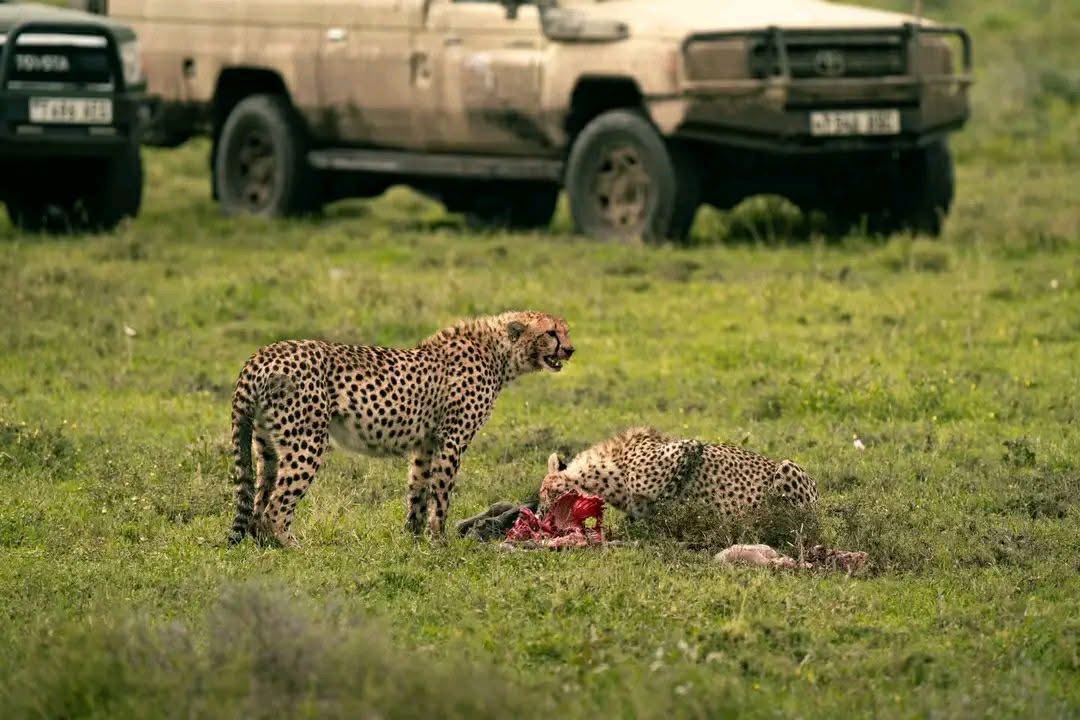
The Serengeti excels at big cat encounters. Its lion population is one of the largest and most studied in Africa. Leopard sightings in the Seronera valley are almost routine because several well known individuals are habituated to vehicles and can be observed at remarkably close range. Cheetahs favour the open plains of the south and east. Beyond cats, the Serengeti hosts significant populations of elephant, giraffe, buffalo, hippo, hyena, wild dog (increasingly so), and a staggering diversity of antelope species.
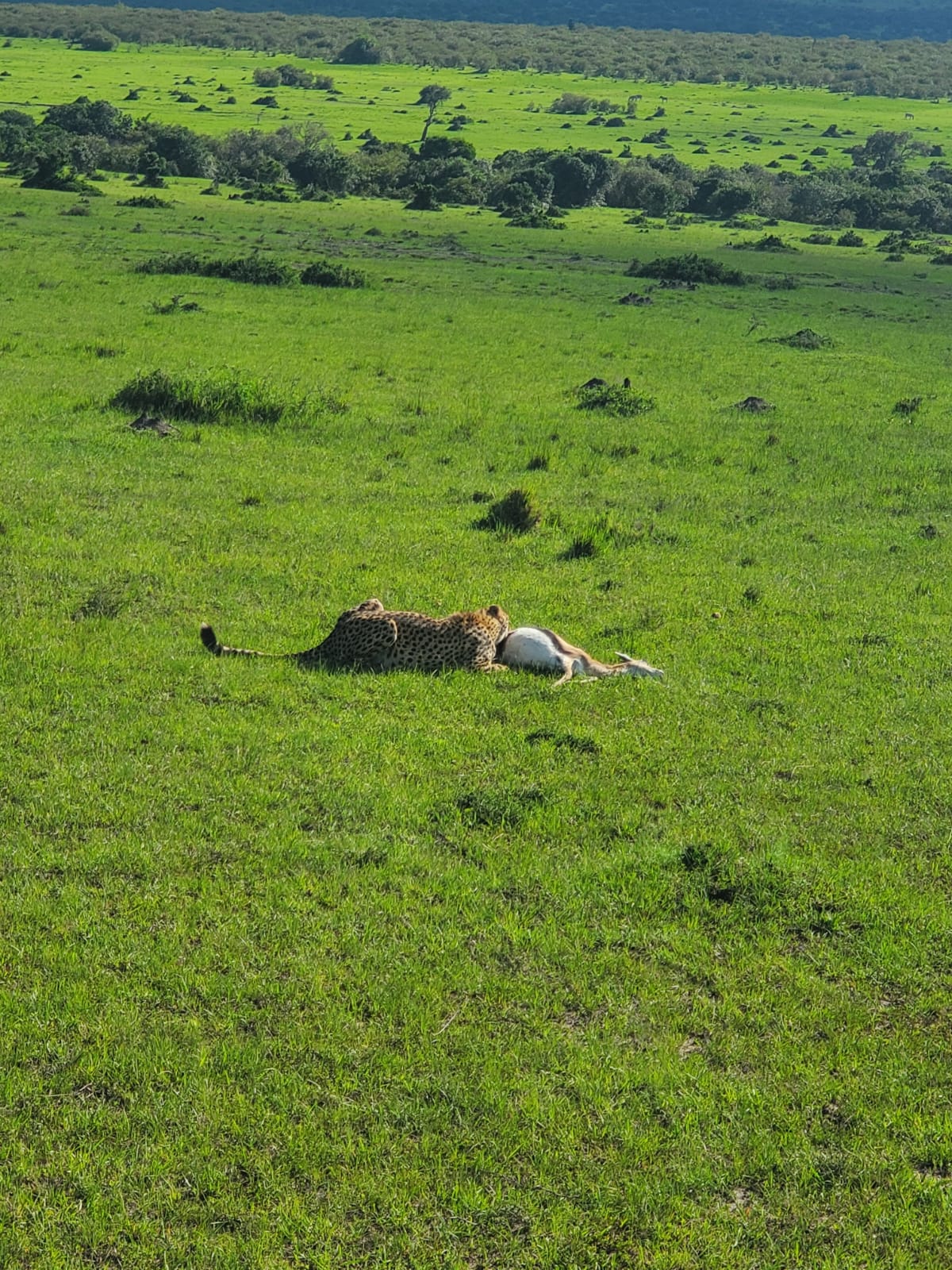
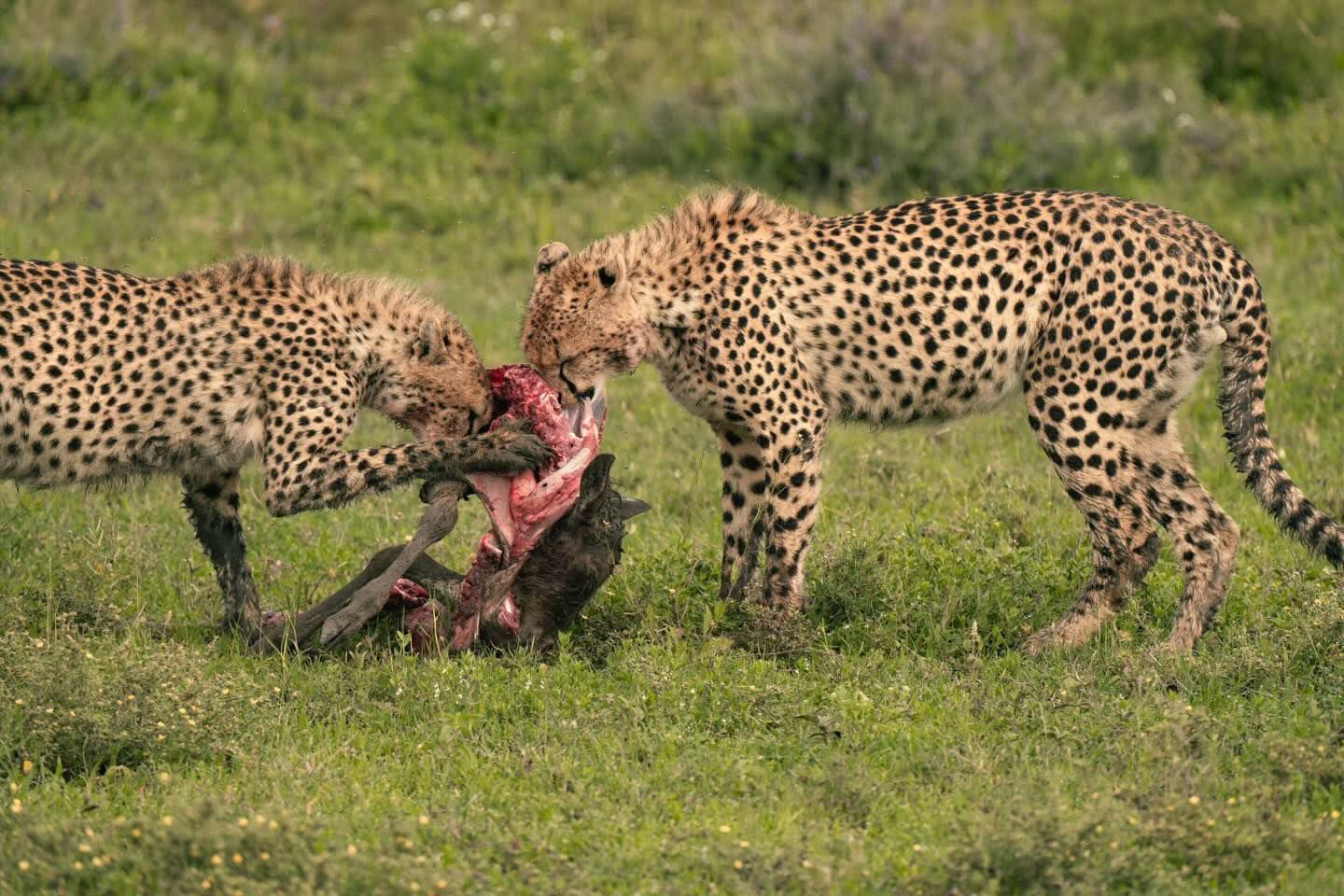
The Masai Mara is also exceptional for big cats, particularly the Marsh Pride lions and the Mara's famous cheetah coalition sightings. Where the Mara sometimes edges ahead is in the predictability and accessibility of sightings. The smaller area means guides know exactly where key individuals are on any given day. The Mara is also better for black rhino sightings than the Serengeti, where rhino are restricted primarily to the Ngorongoro Crater.
The Migration
Here's the critical point that most comparison articles miss: the migration happens in the Serengeti for ten months of the year and in the Masai Mara for roughly two to three months.
The herds calve in the southern Serengeti (January-March), move through the central and western Serengeti (April-June), cross the Mara River into the northern Serengeti and Masai Mara (July-October), and return south through the eastern Serengeti (November-December). If migration is your primary objective, the Serengeti gives you a dramatically wider window to witness it.
The Masai Mara's migration window. roughly late July through October. is undeniably spectacular and includes the most famous river crossings. But if you miss that window, the Mara is a year-round resident wildlife destination, not a migration destination. The Serengeti offers migration action in some form across nearly every month.
If you are visiting specifically for the migration and have flexible dates, the Serengeti gives you more options. If your dates are locked to July-September and you want the classic river crossing experience, either destination delivers. but the northern Serengeti is usually less crowded than the Mara during this period.
Cost Comparison
This is where things get interesting, and I want to be completely transparent with you because most comparison articles get these numbers wrong.
Let me give you the real park fee breakdown. The Masai Mara charges $100 per person per day from January to June and $200 per person per day from July to December during peak season. The Serengeti charges $82.60 per person per day, which sounds cheaper on paper. But here is what most websites do not tell you. If you are staying in a mid range lodge or above (which most of our clients do), Tanzania adds an additional $70.80 per person per day called a concession fee. So your real Serengeti cost per day is $153.40 per person in park fees alone.
What does that mean in practice? During low season (January to June), the Mara is actually cheaper on park fees at $100 versus Tanzania's $153.40. During peak season (July to December), the Mara jumps to $200 and Tanzania's $153.40 becomes the better deal. Add Ngorongoro Crater to a Tanzania itinerary and that is another $82.60 per person on top. These fees add up fast on a multi day itinerary and it is important you understand the full picture before you budget.
On accommodation, Tanzania generally offers better value at the mid range level. A well appointed tented camp in the central Serengeti with excellent guiding, full board, and game drives typically costs $350 to $600 per person per night. Comparable quality in the Masai Mara's private conservancies often starts at $500 to $800. At the ultra luxury end, both destinations are expensive, running $1,000 to $3,000 or more per person per night.
The Mara has one clear logistical advantage: proximity to Nairobi. You can fly from Nairobi's Wilson Airport to an airstrip in the Mara in 45 minutes. A Serengeti safari typically starts from Arusha or Kilimanjaro Airport, and internal flights to the Serengeti run $250 to $400 per person one way. If you are combining safari with time in Nairobi, the Mara is simpler and cheaper to reach.
| Factor | Serengeti (Tanzania) | Masai Mara (Kenya) |
|---|---|---|
| Size | 14,763 km², vast wilderness | 1,510 km², compact and concentrated |
| Migration Window | Around 10 months of the year | 2 to 3 months (Jul to Oct) |
| Crowds (Peak) | Lower vehicle density | Higher at crossing points |
| Park Fees (Adult) | $82.60 + $70.80 concession = $153.40/day | $100/day (Jan to Jun), $200/day (Jul to Dec) |
| Mid Range Lodging | $350 to $600/night pp | $500 to $800/night pp |
| Gateway City | Arusha (45min flight to park) | Nairobi (45min flight to park) |
| Night Drives | Private concessions only | Conservancies allow them |
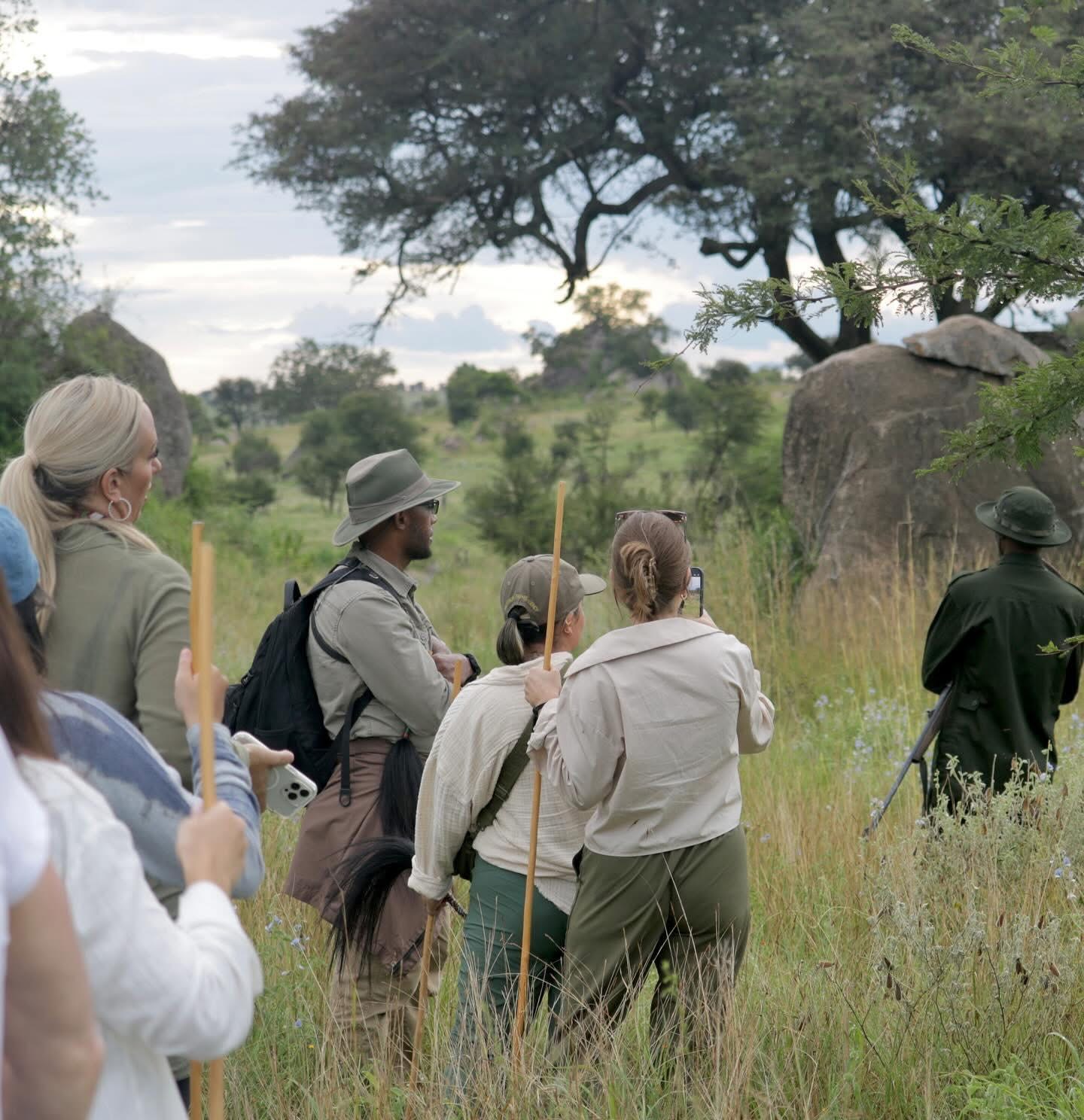
| Walking Safaris | Select areas only | Conservancies allow them |
| Best For | Wilderness immersion, photography, migration depth | Short trips, predator density, Nairobi access |
The Experience
Beyond the logistics, there is something intangible that separates the two. The Serengeti feels ancient. It feels like the world before humans decided to organise it. The scale of the landscape, the silence at dawn, the sense of being dwarfed by something immeasurably older than you. That is the Serengeti's gift. It changes people. I have watched it happen hundreds of times.
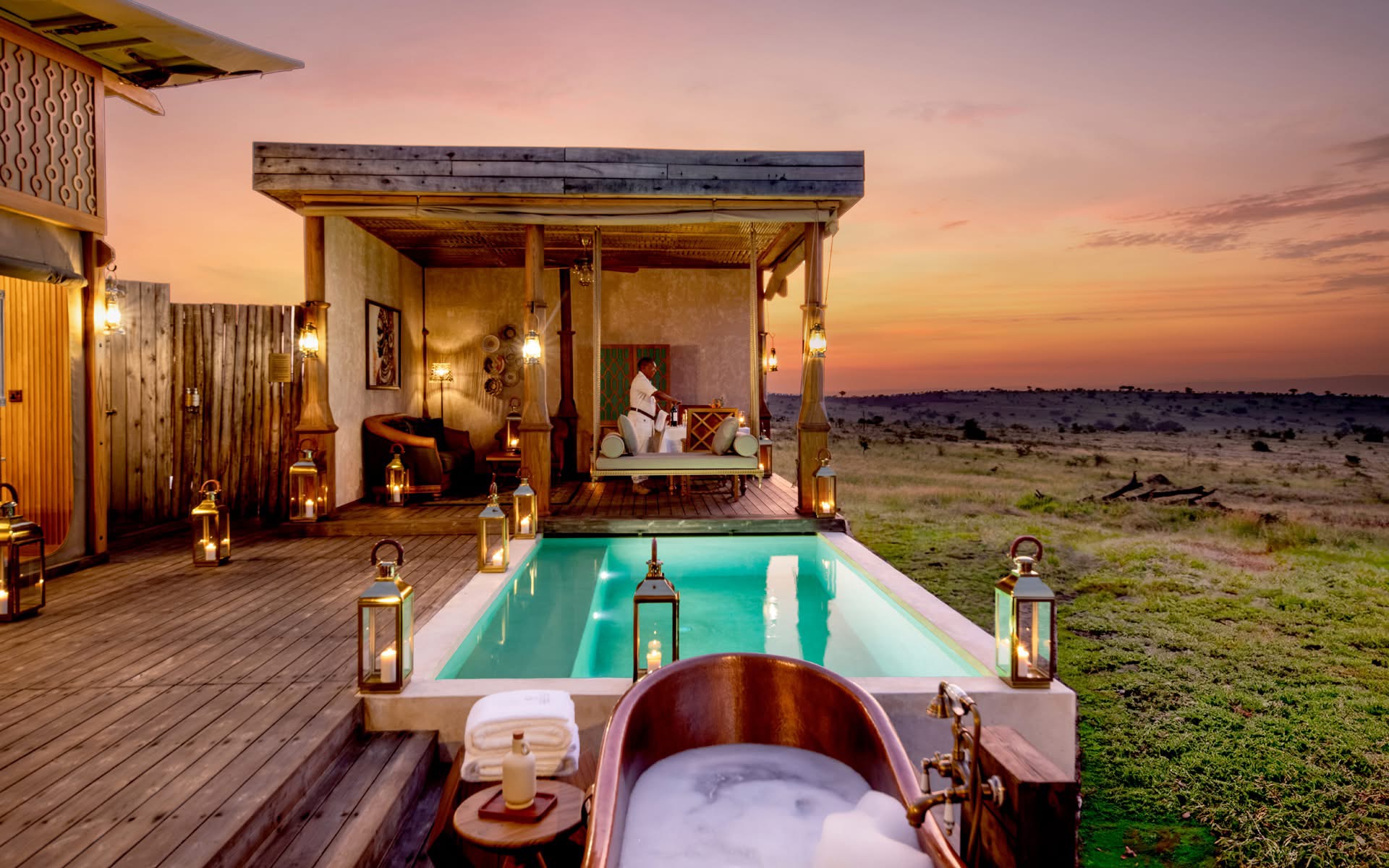
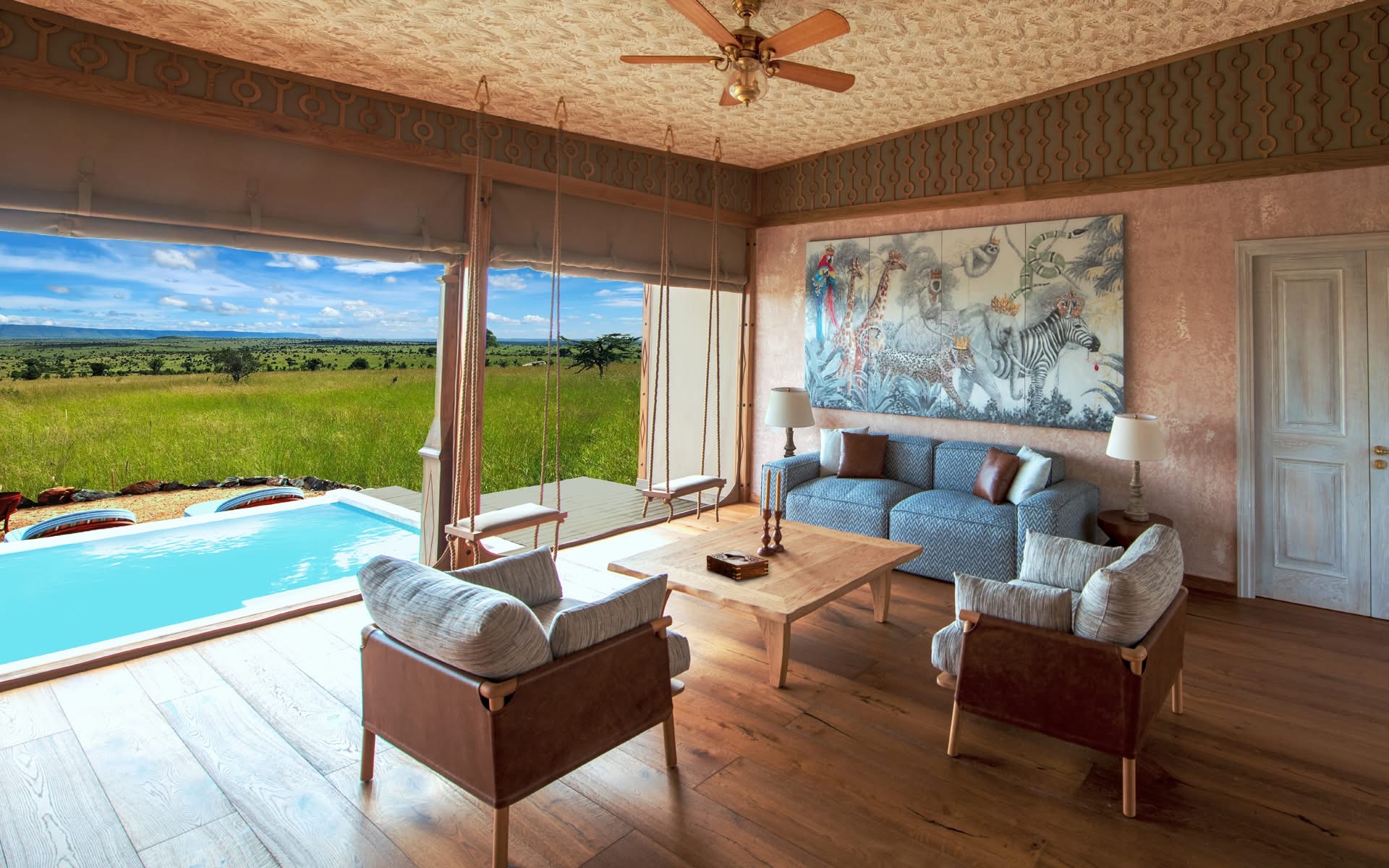
The Masai Mara is more immediately accessible, more sociable, and in some ways more comfortable. Kenya has a longer tourism history than Tanzania, and the Mara's conservancy system offers excellent experiences like night drives, walking safaris, and Maasai cultural interactions that are not available inside the Serengeti's national park boundaries. For a shorter trip or a first time safari from Nairobi, the Mara is hard to beat.
My Recommendation
Choose the Serengeti if: you have five or more days, you value solitude and scale, you are a photographer, you are visiting for the migration outside July-September, or this is a once-in-a-lifetime trip and you want the most immersive wilderness experience Africa can offer.
Choose the Masai Mara if: you have three to four days, you are already in Nairobi, you want night drives and walking safaris included, you are visiting in July-September specifically for river crossings, or you are combining with other Kenya destinations like Amboseli or the coast.
Choose both if: you have the time and budget. A combined Serengeti-Mara itinerary, crossing the border overland or by air, is one of the most extraordinary wildlife journeys on earth. We design these regularly for clients who do not want to choose.
I operate safaris in both. I profit from both. My honest opinion? If I could only visit one place on earth one more time, it would be the Serengeti in February. But the Mara in August is a close second.