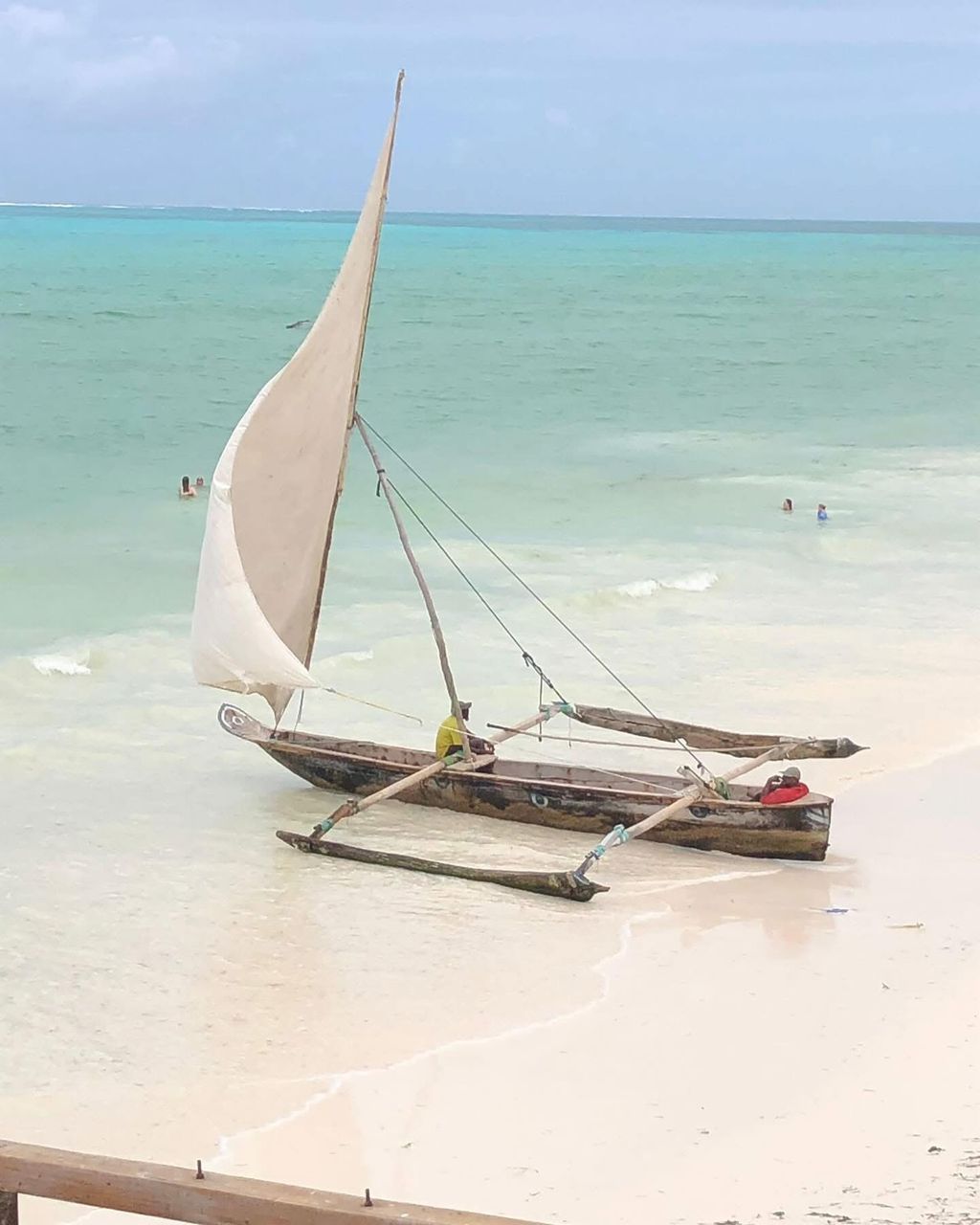
I book this combination every month. A client arrives in Arusha, spends five to seven days in the national parks, and then adds four or five days on the coast before flying home. It works better than almost any other holiday format I know, because the two parts of the trip complement each other in a way that is not obvious until you have done it. The bush sharpens everything: your senses, your patience, your willingness to sit still and watch something unfold at its own pace. Then you arrive at the coast and the warmth, the water, and the openness of the Indian Ocean complete the transition. The safari gives the beach its meaning. If you reversed the order, you would just be doing a beach holiday with some animals at the end.
This guide answers every practical question I get from clients who have already committed to the safari and are now considering the extension: which coast, how many nights, how to get from the parks to the island, what the accommodation tiers actually deliver, what to do with your time, and what the whole thing adds to your budget. I will also tell you about one administrative requirement that most operators, including international agents, fail to mention in their documentation.
Why Zanzibar After Safari, Not Before
The argument for doing Zanzibar first is usually made on logistical grounds: fly into Zanzibar, spend a few days, then connect to the mainland for the safari. The routing can sometimes be marginally simpler in one direction. I understand the logic, but I recommend against it for every client who asks, and here is why.
When you arrive in Tanzania from Europe, the Gulf, or North America, you are tired from travel. Even a comfortable long-haul flight disrupts sleep, crosses time zones, and leaves most people in a slightly disconnected state for the first 24 to 48 hours. A beach is a passive environment. It gives you warmth and water and not much else to organise your attention around. Guests who begin with Zanzibar typically spend their first two days half-settled, aware of the safari coming and unable to fully relax into the coast. The anticipation of the main event undercuts the beach.
The safari solves this problem structurally. Early mornings demand something from you. Wildlife fills your attention completely, leaving no room for phone-scrolling or background anxiety. Camp life resets your internal clock within 48 hours. By day three in the bush, every client I have sent is sleeping well, waking easily before dawn, and arriving at meals genuinely hungry. By the time the safari ends, they are physically tired in a satisfying way and emotionally full in a way that makes the beach feel exactly right. They are not anticipating something. They are recovering from something extraordinary. That is the correct state in which to arrive at an island.
Getting from Safari to Zanzibar
The transfer from the safari circuit to Zanzibar is straightforward and takes between one and two hours in the air, depending on your departure point.
From Arusha, Precision Air operates scheduled daily flights to Zanzibar International Airport with a journey time of approximately one hour and 15 minutes. Flights depart in the morning and midday, which fits neatly after a final morning game drive. The scheduled fare runs $150 to $250 per person one way depending on how far in advance you book and the season.
For guests who are flying between parks during their safari, Coastal Aviation and Auric Air offer charter and scheduled service directly from Serengeti airstrips to Zanzibar. This is the most seamless option available. You finish your final game drive, return to the airstrip, and fly direct to the coast without backtracking to Arusha at all. The flight from the central Serengeti to Zanzibar takes around one hour and 20 minutes. Charter costs run $300 to $600 per person depending on aircraft size and passenger numbers, but the time saved and the simplicity of the routing make it worth the premium for most guests.
There is no direct international flight into Zanzibar from most origin countries, so the island-to-island connection via the mainland is always part of the routing for international visitors. Plan your outbound departure from Zanzibar International Airport, which has regular connections to Nairobi, Dar es Salaam, and Addis Ababa for onward international flights.
How Many Days in Zanzibar
Three nights is the minimum for the extension to feel worthwhile rather than rushed. With three nights you have one day to arrive, settle in, and find your rhythm on the beach, one full day for a single activity or a Stone Town visit, and one final morning before your departure flight. It is not generous, but it functions if the safari is the primary focus of the trip and the beach is a deliberate finish rather than the main event.
Four to five nights is where most of my clients land, and it is the range I recommend without hesitation. Four nights gives you enough time to visit Stone Town properly, complete one water activity such as snorkelling at Mnemba Atoll or a dhow sunset cruise, spend two full unstructured days on the beach, and leave without feeling that you cut anything short. Five nights adds a second activity or simply extends the rest time, which many guests, particularly after a physically active safari itinerary, find genuinely valuable.
Seven nights or more makes Zanzibar a full beach holiday in its own right. This suits guests on a longer itinerary, those combining Tanzania with a wider East Africa trip, or those who simply want the Indian Ocean as a proper destination rather than a post-safari coda. When I discuss total trip duration with clients, as covered in more detail in the full guide to how many days you need in Tanzania, the Zanzibar component is usually the easiest place to add or subtract nights when fine-tuning the overall length.
North Coast: Nungwi and Kendwa
The north coast offers the most reliable swimming conditions on the island year-round. The beach faces northwest, the reef sits further offshore than on the east coast, and the tidal variation is less pronounced, which means you can swim comfortably at most times of day regardless of the season. This matters more than most guests realise when they are planning, and it is the primary reason I send couples and families to the north as a default unless they have a specific reason to choose otherwise.
Nungwi has a genuine village feel alongside its tourism infrastructure. Local fishing boats share the beach with resort sun loungers. There are restaurants of varying quality within walking distance of most properties, a handful of beach bars that stay active into the evening, and enough foot traffic to give the place energy without overwhelming it. It suits younger couples, guests who want company around them, and anyone who finds a completely isolated resort setting a little too quiet after the intensity of the bush.
Kendwa sits immediately south of Nungwi on the same stretch of coastline and is notably quieter. Fewer restaurants, a smaller strip of development, and the same beach quality. Guests who want the north coast swimming conditions without the social energy of Nungwi consistently prefer Kendwa. The full-moon beach parties at Kendwa Rocks are a genuine local institution if your dates happen to align.
East Coast: Paje and Jambiani
The east coast is where you go when you want Zanzibar to feel different from a standard resort beach. The water is shallower on this side of the island, the tidal variation is significant, and at low tide the beach stretches for several hundred metres of exposed sand and tidal pools. Swimming is tide-dependent rather than constant, which takes some adjustment for guests who are used to simply walking into the sea at any hour. At high tide, the swimming is good and the water is warm.
What the east coast offers that the north does not is wind, authenticity, and a kitesurfing scene that has become one of the strongest in East Africa. Paje, the main village on the east coast, draws serious kite riders from around the world between June and March. If you or your travel companion kitesurf, Paje is the obvious choice. If you are a beginner looking to learn, several schools operate out of the village with professional instruction and equipment.
Jambiani sits a few kilometres south of Paje and is quieter still. Small guesthouses run by local families line the beach road. The restaurants are simple and good. There are no beach bars in the Nungwi sense, and the pace of life feels closer to the fishing village it still partly is. Guests who want an authentic rather than resort experience in Zanzibar, and who do not need reliable swimming as a daily constant, often tell me that Jambiani was the right call.
South Coast and Mafia Island
For guests who want to disappear entirely, the southern end of Zanzibar Island and the neighbouring Mafia Island offer a level of remoteness that is difficult to find anywhere else in the Indian Ocean at this price point.
Kizimkazi, on the southern tip of Zanzibar, is the best location in the archipelago for dolphin encounters. Spinner and bottlenose dolphins inhabit the channel in significant numbers, and early morning boat trips from the village find them reliably. The accommodation options are simpler than the north and east coasts, but a few quality boutique properties have established themselves here for guests who want the dolphin access alongside comfortable lodging.
Mafia Island, accessible via a 45-minute flight from Dar es Salaam, is genuinely remote in a way that Zanzibar Island itself can no longer claim to be. The reefs surrounding Mafia are among the least-dived in the Indian Ocean and the marine life is extraordinary. Whale shark aggregations occur in the Mafia Island Marine Park seasonally between October and March, attracting guests specifically for the snorkelling and diving experience. Guest numbers across the whole island at any given time are a fraction of what you would find on the north coast of Zanzibar on a busy July weekend. For clients who want to finish a safari with genuine solitude, Mafia is the recommendation I make without hesitation.

If you already have dates in mind or want to know what this costs for your specific trip, send your details on WhatsApp and I will respond with a personalised answer within a few hours.
Accommodation: What Each Tier Delivers
The accommodation range in Zanzibar is wider than most destinations of comparable size, and the gap between tiers is large enough that it is worth understanding before you commit to a property.
At $100 to $150 per room per night, you are in guesthouse or entry-level resort territory. Air conditioning is standard, rooms are clean and functional, and beach access is good at most properties in this range in Nungwi or Paje. You will not have a pool, and the restaurant will be basic. This tier works well for guests in their twenties who are comfortable with a simpler setup and are spending the majority of their time on the beach or water.
At $200 to $400 per room per night, the mid-range tier in Zanzibar is genuinely strong. Properties such as Karafuu Beach Resort in Paje, Essque Zalu in Nungwi, and Diamonds La Gemma Dell'Est on the east coast offer proper resort amenities, good food, and consistent service at a price point that most guests find reasonable after a mid-range safari budget. Pools, beach bars, and organised excursions are standard at this level.
Above $600 per room per night, Zanzibar offers some of the most beautifully designed small resorts in the Indian Ocean. The Residence Zanzibar, Zuri Zanzibar on the west coast, and Matemwe Lodge on the northeast coast are in this category. Private pool villas, curated daily menus, and a level of privacy that genuinely delivers on its promise. For clients doing the full honeymoon safari and Zanzibar combination, I almost always plan the coastal component at this tier, because the design and the service at the top end of Zanzibar's accommodation market are genuinely exceptional.
What to Do in Zanzibar
Stone Town is the historic core of Zanzibar Island: a UNESCO World Heritage Site of narrow alleyways, carved wooden doors, spice merchants, and the ruins of the Arab sultanate that once controlled the East African slave trade. One full day is enough to cover the highlights properly. The House of Wonders, the old fort, the Palace Museum, the Anglican Cathedral built on the site of the former slave market, and Forodhani Gardens in the evening for street food along the waterfront. Guests who allocate more than a day to Stone Town typically find themselves retracing the same streets after the first twelve hours. Visit once, give it a full day, and spend the remainder of your time on the coast.
A spice tour is worth doing if you have any interest in food or the history of the Indian Ocean trade routes. Zanzibar's clove, nutmeg, vanilla, cinnamon, and cardamom plantations are the reason the island was geopolitically significant for centuries, and a three-hour guided walk through a working farm makes that history tangible in a way that no museum exhibit achieves.
Snorkelling at Mnemba Atoll, a private conservation island off the northeast coast, is the best snorkelling experience in the archipelago. The atoll hosts spinner dolphins, hawksbill and green sea turtles, and an exceptional density of reef fish in warm, clear water. Day trips depart from Matemwe Beach and take around 20 minutes by boat. Access fees apply, as the atoll is managed by andBeyond, but the experience justifies the cost for any guest with a reasonable interest in marine life.
A dhow sunset cruise is the standard Zanzibar activity for the simple reason that it is very good. The traditional wooden sailing vessels that have worked these waters for centuries provide the right pace and the right vessel for watching the sun go down over the Indian Ocean with something cold in your hand.
Prison Island, a 20-minute boat ride from Stone Town, holds a population of giant Aldabra tortoises relocated from the Seychelles in the 1800s. Some of these tortoises are over 100 years old. Guests travelling with children consistently rate this as a highlight of the Zanzibar portion of their trip.
The Zanzibar Health Insurance Requirement
There is one administrative requirement that catches a significant number of visitors off guard, and that most tour operators, including international booking agents, do not mention in their pre-departure documentation.
As of January 2025, Zanzibar requires all international visitors to purchase mandatory health insurance on arrival. The current cost is $44 per person for stays of up to 92 days. This is a compulsory government fee collected at the point of entry, separate from and in addition to the standard Tanzania mainland visa. It applies to all nationalities without exception. Some airlines and ground operators have begun including this requirement in their guest documentation, but many have not, and I still receive messages from clients who discover the fee at the airport for the first time.
I mention it here because arriving at an island airport with an unexpected $44 per person charge after a long safari and a flight transfer is not the start to a beach holiday that anyone wants. Budget for it, arrive with the cash or a working card, and it becomes a non-issue.
Best Months for Zanzibar
Zanzibar's best months align closely with Tanzania's main safari season, which is one of the structural reasons the combination works so effectively as a paired itinerary.
June through October is the primary dry season on both the mainland and the coast. Zanzibar in July and August has warm temperatures, low humidity, calm seas, and minimal rainfall. This is peak season and hotel rates reflect it, but the conditions are as reliable as they get and the combination of a dry-season safari with a peak-season beach extension is the version of this trip that most guests describe as close to perfect.
December through February is the second strong period. The short dry season brings clear skies, strong sunshine, and excellent snorkelling visibility in calm water. Christmas and New Year weeks are the most expensive period of the year at every accommodation level, and availability at quality properties requires booking six to twelve months in advance.
April is the one month I actively discourage for the Zanzibar component. The long rains arrive in late March and peak through April, bringing heavy daily showers that limit outdoor activities and make the coast feel significantly less appealing. May is transitional and can go either way. If your safari dates fall in April or May, the beach extension is best added before the rains arrive or saved for a return trip.
A Combined Itinerary That Works
Here is the structure I use most often for clients combining a northern circuit safari with a Zanzibar extension. It is a nine-night trip in total: five safari nights and four beach nights, designed to flow cleanly without backtracking.
Days one and two cover arrival at Kilimanjaro or Arusha Airport and an overnight in Arusha for acclimatisation. Day three begins the safari with a drive to Tarangire National Park and an afternoon game drive. Day four is a full day in Tarangire. Day five moves to the Ngorongoro Conservation Area for a crater rim overnight. Day six is a full crater descent and floor game drive. Days seven and eight are in the central Serengeti. On day nine, a morning game drive is followed by a direct flight from the Serengeti airstrip to Zanzibar International Airport and check-in at the beach hotel. Days ten to twelve are full Zanzibar days: Stone Town, snorkelling or a dhow cruise, and two unstructured beach days. Day thirteen is the departure from Zanzibar.
The flight from the Serengeti to Zanzibar on day nine is the operational hinge of this itinerary. It is booked as part of the overall package and connects directly to the beach hotel transfer without any road travel. This is where booking through a local operator rather than assembling the components separately makes the greatest practical difference.
For a full picture of what different safari durations look like and how to decide how many days to allocate to each part of the trip, the Tanzania safari cost guide covers the full pricing structure including how accommodation tiers compound across the safari and beach components of the trip.
What the Zanzibar Extension Costs
The Zanzibar component sits largely outside the safari package and is priced separately, which gives guests the flexibility to choose their accommodation tier on the coast independently of the safari level. A guest doing a mid-range safari can choose a luxury beach property, or vice versa. The two parts of the trip do not have to match.
At the budget level, four nights in a clean guesthouse with a good beach location and the mainland flight included runs $400 to $600 per person. This covers accommodation, breakfast, and the internal flight, but not activities or meals beyond breakfast.
At mid-range, $800 to $1,500 per person for four nights covers a quality resort on full board, the internal flight, a guided Stone Town visit, and one water-based excursion such as a snorkelling trip to Mnemba Atoll.
At the luxury level, $2,000 to $4,000 per person for four nights at a private pool villa property with curated experiences, private transfers, and full board is achievable and genuinely excellent value compared to equivalent properties in other Indian Ocean destinations.
Frequently Asked Questions
Four to five nights is the range I recommend for most guests. Three nights is the workable minimum if the safari is the primary focus and the beach is a finishing note rather than a destination in its own right. Five nights allows two full unstructured beach days, one Stone Town visit, and one water activity without any sense of rushing. Seven nights or more makes the coast a proper second destination. Most guests who choose four nights tell me on return that it was exactly right. Most who choose three wish they had one more day.
The north coast, centred on Nungwi and Kendwa, is the safest default for most guests because the swimming conditions are reliable year-round regardless of the tide. The east coast, centred on Paje and Jambiani, is the choice for guests who want quiet, authenticity, and kitesurfing, and who do not mind that swimming is tide-dependent. The south coast and Mafia Island are for guests who want genuine remoteness and exceptional marine life without the resort infrastructure of the more developed coasts. I ask three questions before recommending a coast: do you need reliable swimming, do you have any specific activities in mind, and how much company do you want around you?
The cleanest option is a charter or scheduled flight directly from a Serengeti airstrip to Zanzibar, which eliminates the road transfer to Arusha and saves half a day. Cost runs $300 to $600 per person depending on aircraft and passenger numbers. If your safari ends in Arusha, Precision Air operates daily scheduled flights to Zanzibar for $150 to $250 per person one way, with a flight time of approximately one hour and 15 minutes. I book this transfer as part of the overall package so that the timing aligns with the end of the final game drive and the beach hotel check-in.
Budget on $400 to $600 per person for four nights at a clean guesthouse including the mainland flight. Mid-range runs $800 to $1,500 per person for four nights at a quality resort on full board with one activity included. Luxury properties with private pool villas run $2,000 to $4,000 per person for four nights. These figures cover the Zanzibar component only and are in addition to the mainland safari cost. Do not forget the mandatory health insurance of $44 per person payable on arrival at Zanzibar Airport.