Let me tell you something most safari websites will not. The Great Migration is not a schedule. You cannot open a calendar, point to a date, and say "the herds will be here." It does not work like that. The migration follows the rain. And the rain follows its own rules. So the single most important thing I can give you in this guide is honesty about what actually happens on the ground, month by month, based on years of watching these animals move across this incredible landscape.
Too many travellers arrive in the Serengeti expecting a spectacle on demand. The ones who leave transformed are the ones who understood the rhythm before they booked. That is what this guide is for.
The mega herds are in the northern Serengeti now, and the Mara River crossings are in full swing, with several crossing points active at different stretches of the river. This is the stretch people picture when they think of the migration, the columns pouring down the banks and running the gauntlet of the crocodiles, and it is at its peak right now through late September, and it holds into early October before the herds begin drifting south. If you are planning to travel in the next several weeks, you are looking at the strongest crossing window of the year, in the northern Serengeti around Kogatende and the Lamai Wedge, and across into Kenya's Masai Mara. The crossings are driven by rain and grass, so no one can promise a crossing on a given day, but this is when your chances are highest. I position guests in camps with fast access to the active stretch of river, so we can move the moment the herds start to build on the bank.
As a guide across the year, and this holds for both the 2026 and 2027 seasons: from December to March the herds are on the southern Serengeti short-grass plains around Ndutu; from April to June they move north through the central and western Serengeti, with the Grumeti River crossings along the way; from July to October they are in the northern Serengeti and cross into Kenya's Masai Mara, when the Mara River crossings typically happen; in November the short rains begin and they start moving back south. The crossings vary year to year with the rains, so I treat these as typical windows, not fixed dates.
When Is the Calving Season in the Serengeti?
In January and February the herds are concentrated on the short-grass plains of the southern Serengeti and around Ndutu, and this is calving season. Roughly 500,000 calves are born across a two-to-three-week window, with as many as 8,000 in a single day at the February peak. This is my favourite time in the Serengeti, and most travellers have never even heard of it. The same window applies in the 2026 and 2027 seasons, weather permitting.
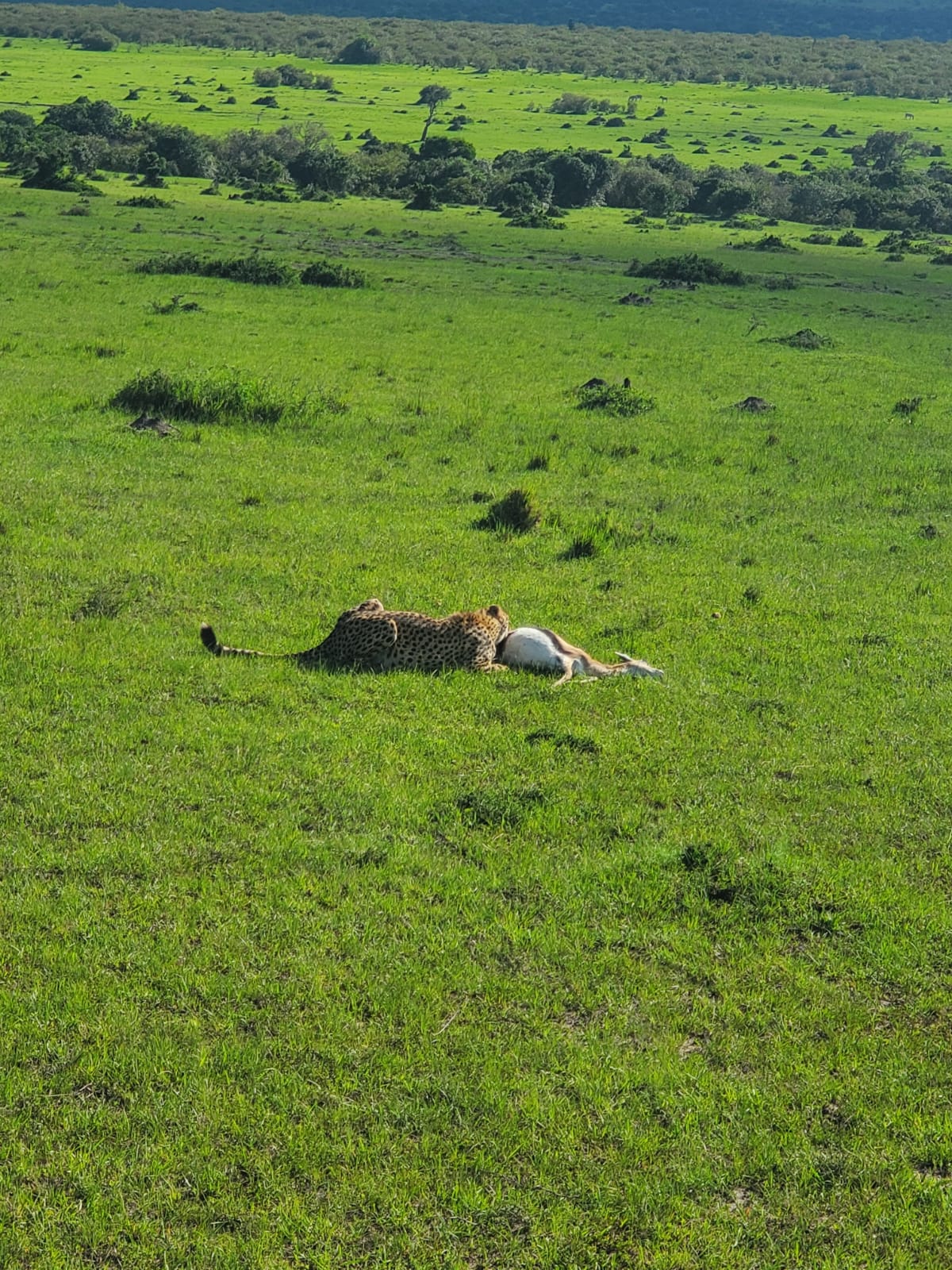
The predator action is constant. Lions, cheetahs, hyenas, and jackals all know what this season means. They converge on these plains because thousands of vulnerable newborns are stumbling to their feet for the first time. The photography during calving season is some of the best you will ever get anywhere in Africa because the terrain is flat, the light is golden, and the animals are everywhere. And the crowds? A fraction of what you will see during the river crossings later in the year.
The Serengeti in January
In January the short rains have greened the southern plains and the herds gather on the nutrient-rich grass around Ndutu. Calving builds through the month toward the February peak. Early January is quieter and greener, while late January brings the first waves of newborns and the predators that follow them.
Ndutu area lodges and mobile camps give you the closest access to the calving grounds. Ndutu Safari Lodge, Lemala Ndutu, and several seasonal mobile camps put you right in the middle of the action. But you need to book early. The best camps during calving season fill up by September the year before.
Where Are the Herds in March and April?
In March and April the herds drift north from the southern plains into the central Serengeti as the long rains begin, and you find them spreading across the Seronera valley. March can still offer excellent game viewing around Ndutu and the Kusini area, because the herds have not fully moved yet. By April the rains pick up and the herds spread out across the central Seronera valley. This is the pattern in both 2026 and 2027.
The Serengeti in April
Here is something most operators will not tell you. April is Tanzania's quietest tourism month and some lodges drop their rates significantly. If you are comfortable with afternoon showers, and honestly you should be, because mornings are usually clear and the light is extraordinary, this is one of the best-value months to visit. The landscape goes from golden brown to vivid green almost overnight. The birdlife hits its absolute peak with migrant species arriving from Europe and Asia. It is a completely different Serengeti and it is beautiful.
When Are the Grumeti River Crossings?
In May and June the herds move north and northwest off the central plains toward the Grumeti River in the Western Corridor. The larger columns push through the corridor while others track up through the central Serengeti, and the first major river crossings of the year happen here at the Grumeti, not the Mara. The Grumeti crossings typically come around June and July, in both 2026 and 2027. They are smaller in scale than the Mara crossings but just as intense, and the Nile crocodiles in this river are some of the largest in all of Africa.
June is the month I love recommending for the Grumeti. The crossings here happen at a handful of points along the river inside the Western Corridor, and the timing is genuinely unpredictable, driven by grass and water rather than any calendar. To give yourself a fair chance of watching one, allow at least two or three nights based in or near the corridor rather than passing through in a single day. I position guests in camps with quick access to the active stretch of river, so we can move the moment the herds start to build on the bank. June also gives you the tail end of the rains giving way to dry skies and outstanding general game drives, because the resident wildlife in the western Serengeti is strong year round, especially the lion prides and the hippo pools along the Grumeti.
When Is the Mating Season on the Serengeti?
The wildebeest rut, or mating season, peaks around late May and into June, usually as the long rains ease. Hundreds of thousands of animals breed within a few weeks, and this is what sets the timing of the following year's calving. Out on the plains you hear the constant grunting of the bulls and watch them defending small patches of ground as the herds move through.
The Western Corridor is significantly less crowded than the northern Serengeti during crossing season. If you want to witness migration drama without twenty other vehicles around you, June in the Grumeti concession is your answer.
When Are the Mara River Crossings?
In July and August the herds reach the northern Serengeti and the Mara River, and this is the stretch most people picture when they think of the Great Migration. More than 1.5 million wildebeest, part of over two million animals including zebra and gazelle, funnel toward the river, gather on the banks in vast congregations, and then erupt across the water in a chaos of hooves, spray, and crocodile ambushes. It is exactly as dramatic as it sounds. And nothing, absolutely nothing, prepares you for the sound of it in person.
The major crossings run from late July, when the herds first reach the river in number, and they continue through August and into October. This pattern holds in both 2026 and 2027, though the exact timing shifts with the rains. The main crossing points sit along the Mara River in the far northern Serengeti, around Kogatende and the Lamai Wedge. A crossing can happen several times in a single day or not at all for three days straight, because the animals are reading water, grass, and pressure on the bank that none of us can predict. To realistically see one, allow at least three nights in the north rather than a single overnight. The way we work is to base you within reach of the active crossing points and have our guides on the river early, reading where the herds are massing, so that when a column commits to the water you are already in position. Patience is essential, and there are never guarantees on exact timing.
July and August are peak season. That means higher prices and more vehicles at popular crossing points. This is exactly where having a local operator like us makes all the difference. We know which crossing points attract fewer vehicles. We know which camps offer private concession access. And we read the herds' movements in real time rather than relying on last week's reports from a desk somewhere far away.
Where Is the Migration in September and October?
In September and October the herds are split between the northern Serengeti and Kenya's Masai Mara, with large portions having already crossed the Mara River. The major crossings continue through September and into October, so this is still a genuine crossing window rather than the end of one. The same holds across the 2026 and 2027 seasons.
The Serengeti in September
September is one of the strongest months for the Mara River crossings. The herds are concentrated in the far northern Serengeti around Kogatende and the Lamai Wedge, and crossings can happen on most days when the herds are massing on the banks. You also start to see reverse crossings, where herds that already moved into Kenya turn back south into Tanzania as conditions shift.
The Serengeti in October
October is one of those months that experienced safari travellers love. The herds begin fragmenting. Some animals are still in the northern Serengeti. Some are in the Mara. And the first groups are already drifting south again. The game viewing remains outstanding and October sits in a pricing sweet spot between peak season and green season rates. If you have flexibility on your dates, October is a month I often recommend.
Where Are the Herds in November and December?
In November and December the herds move back south through the eastern Serengeti toward the calving grounds. The short rains arrive in November and pull the herds down out of the north. By December the migration is in full southbound flow, heading toward the Ngorongoro Conservation Area and the southern Serengeti plains, where the whole cycle will begin again with calving in January. This is the pattern going into both the 2026 and 2027 seasons.
December safaris have a character all their own. The combination of migration movement, lush green landscapes, newborn animals from non migratory species, and the festive season atmosphere at the camps makes it a genuinely rewarding time to travel. Some of our most memorable client safaris have been December departures, and I think more people should consider it.
How to Plan Your Migration Safari
The single most important decision is not which month to travel. It is who designs your itinerary. The migration covers an ecosystem of roughly 30,000 square kilometres. Being in the Serengeti does not automatically mean you will see the migration. You need to be in the right part of the Serengeti, at the right time, with a guide who understands daily herd movements and has real time ground intelligence. Most migration itineraries also pair with a few days in Tarangire National Park as the gateway from Arusha, where the elephant herds along the river complement the migration without competing for attention with the Serengeti.
At Westway Safaris, we design every migration itinerary around current conditions, not a fixed template. We are based in Arusha, the gateway city to the northern Tanzania safari circuit, and our ground network includes guides, camp managers, and pilots across the ecosystem who feed us daily positioning updates. When you travel with us, you are not following a brochure. You are following the herds.
The best migration safari is not the most expensive one. It is the one designed by someone who was tracking the herds yesterday, not someone reading about them from an office in London.
If you already have dates in mind or want to know what this costs for your specific trip, send your details on WhatsApp and I will respond with a personalised answer within a few hours.
What Does a Migration Safari Cost?
Migration safaris typically range from $560 to $1,500 per person per day depending on the level of accommodation. A well designed 5 to 7 day itinerary with mid range to luxury lodges generally costs between $3,000 and $8,000 per person all inclusive. That covers accommodation, meals, game drives, park fees, and internal transfers.
The key variables that affect pricing are the season (July and August are peak), the accommodation tier (mobile tented camps versus permanent luxury lodges), and whether you include fly in transfers or travel by road. We always provide transparent, itemised quotes with no hidden fees. What you see is what you pay.
| Month | Where the Herds Are | What to Expect |
|---|---|---|
| Jan to Feb | Southern Serengeti / Ndutu | Calving season, predator action, fewer crowds |
| Mar to Apr | Central Serengeti | Rains, green season value, incredible birdlife |
| May to Jun | Western Corridor / Grumeti | Grumeti River crossings, transition to dry season |
| Jul to Aug | Northern Serengeti / Mara River | Peak crossings, dramatic action, highest demand |
| Sep to Oct | Northern Serengeti / Masai Mara | Continued crossings, reverse crossings, pricing sweet spot |
| Nov to Dec | Eastern / Southern Serengeti | Return south, short rains, green landscapes |
Frequently Asked Questions
The Great Migration runs all year. It is a constant loop, not a single event. The herds are in the southern Serengeti from December to March, the central and western Serengeti from April to June, and the northern Serengeti from July to October, before they turn south again in November.
There are no fixed dates, because the herds follow the rains. As a typical guide for 2026 and 2027: calving from December to March, the Grumeti River crossings around June and July, and the Mara River crossings from late July into October. I treat every date as a weather-dependent window.
It depends on the month. As a rough guide: the southern Serengeti and Ndutu from December to March, the central and western Serengeti from April to June, and the northern Serengeti and Masai Mara from July to October. See the updated note near the top of this guide for the current placement.
The Mara River crossings typically happen from July to October, in the northern Serengeti around Kogatende and the Lamai Wedge. Late July into September is usually the most active window. The timing shifts year to year with the rains, so I treat these as typical windows, never fixed dates.
The calving season runs from late January into February, on the southern Serengeti short-grass plains around Ndutu. Roughly 500,000 calves are born across a two-to-three-week window, with as many as 8,000 in a single day at the February peak. Predator action peaks alongside it.
There is no single best month. July to October brings the Mara River crossings and the most dramatic action. The calving season in late January and February is just as rewarding and far less crowded. The right month depends on what you most want to see.
Migration safaris typically range from $560 to $1,500 per person per day depending on the level of accommodation. A well-designed 5-7 day itinerary with mid-range to luxury lodges generally costs between $3,000 and $8,000 per person.