Tarangire does not market itself well. It sits at the opening end of the northern circuit, 118 kilometres from Arusha, and it arrives in most itineraries as the first park on the route rather than as a destination in its own right. Tour operators describe it as a warm-up. Budget itineraries treat it as a half-day stopover. A significant portion of the guests I speak with, before they have been there, describe it as the park between Arusha and Ngorongoro.
That perception is wrong in a way that is now one of my favourite things to correct. I have watched guests arrive at Tarangire expecting a decent morning and leave calling it the most visually arresting thing they saw in seven days across three parks. The elephant herds alone are enough to justify the trip. The baobab landscape is unlike anything else in East Africa. And the wildlife density in dry season, when every living thing on the Maasai Steppe converges on the Tarangire River, is extraordinary in a way that even experienced safari travellers do not anticipate until they are in the middle of it.
This guide covers everything: the wildlife, the fees, the best time to visit, where to stay, how many days to allocate, and the honest comparison with Lake Manyara that many guests need to make when building a tighter itinerary.
Why Tarangire Gets Overlooked
The answer is largely a marketing problem. The Serengeti has the migration. Ngorongoro has the crater. Both are photogenic, globally recognisable, and easy to describe in a single sentence that makes a non-traveller understand immediately why they matter. Tarangire has elephants and baobabs and a river, which sounds considerably less dramatic in a brochure summary even though the reality on the ground is anything but.
It also suffers from its position on the circuit. Because it sits closest to Arusha, it tends to be visited on the first full day of a safari when guests are still adjusting to the vehicle, the early mornings, and the pace of it all. They have not yet developed the eye for distance that comes after two or three days in the bush. They have not yet learned to read the landscape for movement. Tarangire gets their least attentive day, and it deserves the opposite.
The guests who rate Tarangire highest are almost always those who arrive on day three or four of a circuit, already calibrated, already comfortable with sitting still and watching something develop slowly. When I can design an itinerary with that flexibility, I always put Tarangire later in the sequence. The park rewards patience and it rewards a trained eye, and both of those things take a day or two of the bush to develop.
The Elephants: Tanzania's Largest Concentration
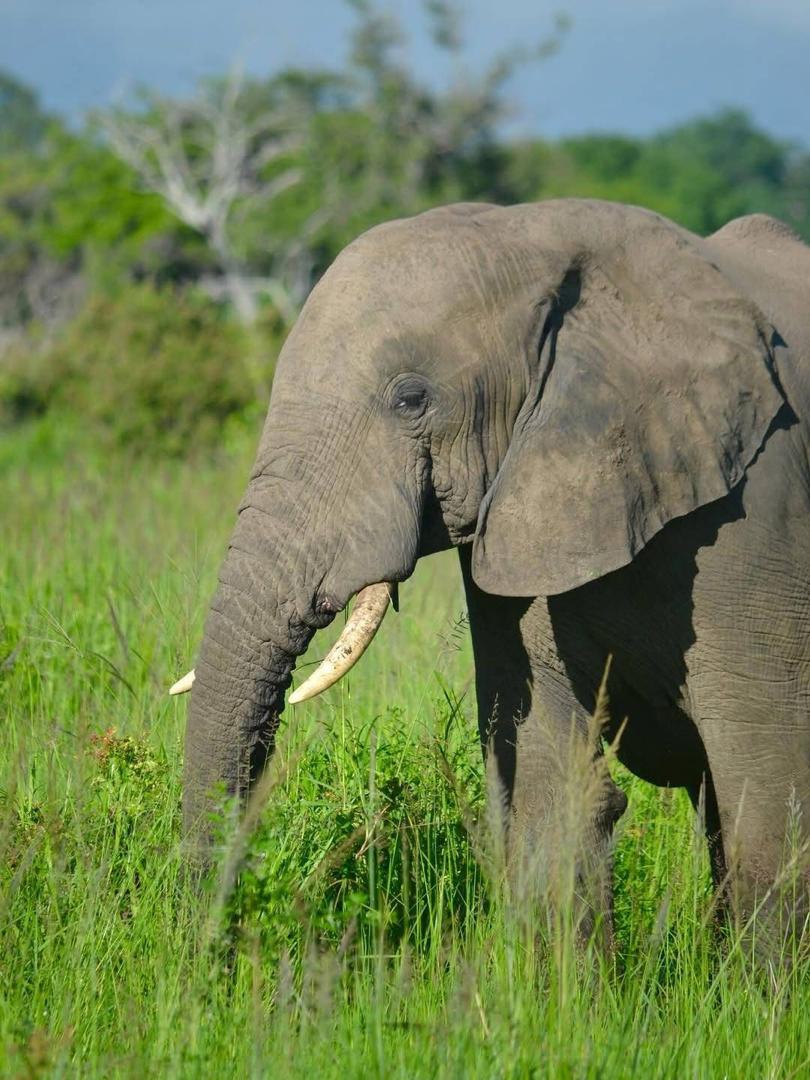
Tarangire has the highest density of elephants of any park in Tanzania. In the dry season months of June through October, the herds that range across the wider Tarangire ecosystem during the rains converge on the Tarangire River as it becomes the only reliable water source across a vast area of the Maasai Steppe. What results is a concentration of elephant that is genuinely difficult to convey in a photograph or a description.
Herds of 100 to 200 animals are not unusual. On a good July morning you can spend three hours on the river banks and count more than 500 elephants without moving the vehicle more than a kilometre. These are not zoo elephants. They are wild, relaxed around vehicles that have moved among them for decades, and they behave in ways that only become visible when a herd is large enough to display the full range of its social complexity: matriarchs making decisions, young bulls testing their position, calves staying close under the belly of an older relative when something uncertain approaches.
The calves in particular are what most guests remember. In a herd of this size there are always infants, always young animals learning, always interactions between generations that reward a long, unhurried watch. I have had guests who considered themselves primarily interested in predators leave Tarangire telling me that the elephants were the experience they will carry longest.
The Baobab Landscape
Every park on the northern circuit has a visual identity. The Serengeti is endless golden grass and open sky. Ngorongoro is the crater walls dropping away below you. Tarangire is baobabs.
Ancient baobab trees, some of them more than a thousand years old, grow across the Tarangire landscape in a density and scale that exists nowhere else in East Africa. They are enormous, grotesque in the best possible sense, with trunks up to 25 metres in circumference and branches that look more like roots than any tree should. They store water in their trunks during the wet season and sustain themselves through the dry months, and in doing so they anchor an entire food web: elephants strip their bark for moisture, weaver birds build elaborate hanging nests in their branches, and the hollows of older trees shelter a range of small mammals and raptors.
Photographically, Tarangire is one of the most distinctive parks on the continent. A herd of elephants moving through a landscape of baobabs at golden hour is a scene that has no equivalent anywhere else in the safari world. Guests who arrive without photographic ambitions often leave wishing they had brought a better camera.
Best Time to Visit Tarangire
The dry season from June through October is when Tarangire is at its most spectacular for wildlife concentration. As the rains end and the smaller waterholes across the Maasai Steppe dry out, the animals that have dispersed widely across the ecosystem during the wet months have no choice but to move toward the Tarangire River. The result is an accumulation of wildlife along the river corridor that builds through June and peaks in August and September.
Elephant numbers are highest in July and August, but the diversity extends well beyond them. Buffalo herds of several hundred, zebra and wildebeest moving in mixed columns, giraffe feeding in the acacia woodland above the river banks, and predators, particularly lions and leopard, working the edges of the concentration. The dry season also means shorter grass and denser visibility. You see further, you find animals more easily, and the tracks through the park are in good condition.
January through March offers a genuinely different experience that I recommend to clients with a specific interest in birds or in the green-season aesthetic. The park transforms. The baobabs are fuller, the grass is long and golden-green, and the birdlife reaches extraordinary density. Over 550 species have been recorded in Tarangire, more than in many entire countries, and the wet season activates the migrants and the breeding species in ways that produce sightings unavailable at any other time of year. Wildlife is harder to spot in the long grass, but the overall experience has a quality of its own that dry-season visitors never see.
April and May are the peak of the long rains. Some tracks in the lower sections of the park become impassable. Visitor numbers drop sharply and lodge rates fall accordingly. Wildlife viewing is more challenging but the park remains open and the landscape, for guests who do not mind the mud and the rain, is lush in a way that has its own appeal.
Wildlife: Beyond the Elephants
Tarangire's reputation rests on its elephants, but any guest who arrives thinking that is all the park offers is in for a significant correction.
Tree-climbing lions are documented in Tarangire, something most guides only mention in the context of Lake Manyara. The baobab and sausage tree canopies in certain sections of the park provide exactly the kind of resting platform that lions take advantage of when the midday heat makes the ground uncomfortable. Sightings are not guaranteed, but they occur with enough regularity that I now include this in my standard Tarangire briefing.
Leopard are present and sighted regularly, particularly along the riverine woodland that follows the Tarangire River. The combination of dense cover and high prey density makes Tarangire productive for leopard, and the population is large enough that even guests on a single overnight visit have a reasonable chance of a sighting.
Python are a Tarangire speciality that surprises almost every first-time visitor. African rock pythons, which can reach five metres in length, are found along the river banks and in the rocky outcrops of the park's central section. A python draped over a baobab branch, or coiled at a waterhole, is the kind of sighting that guests who have been on many safaris still rate as genuinely remarkable.
Lesser kudu and fringe-eared oryx, two dryland antelope species that are scarce or absent in the Serengeti and Ngorongoro, are reliably found in Tarangire. For guests with a serious interest in species diversity, this alone is a reason to prioritise the park. The park also supports large numbers of giraffe, eland, impala, and kongoni across its open woodland zones.
If you already have dates in mind or want to know what this costs for your specific trip, send your details on WhatsApp and I will respond with a personalised answer within a few hours.
Park Fees in 2026
Tarangire sits within the Tanzania National Parks (TANAPA) fee structure, which applies across most of the northern circuit outside the Ngorongoro Conservation Area. The current fees, which I have confirmed as accurate for 2026, are as follows. As I explain in the Tanzania safari cost guide, all of these fees are included in any reputable all-inclusive quote and should appear as itemised line items rather than hidden within a daily rate.
| Fee | Amount | Notes |
|---|---|---|
| Adult entry (non-resident) | $59 per person per 24 hrs | Applies to all guests aged 16 and over |
| Child entry, aged 5 to 15 | $20 per child per 24 hrs | Children under 5 enter free |
| Vehicle fee | Approx. $40 per vehicle per 24 hrs | For foreign-registered vehicles |
| Concession fee | $50 to $70 per person per night | Applies to accommodation inside park boundaries |
For a couple spending two nights inside Tarangire, the TANAPA fees alone come to approximately $350 to $400 per person before accommodation costs. These figures are sometimes omitted from budget quotes that advertise a per-night lodge rate without including the government fees on top. Always ask for a full itemised breakdown before comparing quotes from different operators.
How Tarangire Fits into Your Itinerary
Tarangire sits 118 kilometres south of Arusha on the main highway toward Dodoma, which makes it a natural first stop on a northern circuit safari departing from Arusha or Kilimanjaro Airport. The drive from Arusha takes approximately two hours on a sealed road, and guests arriving on an international morning flight can be inside the park for an afternoon game drive the same day.
The standard allocation on most commercial itineraries is one overnight, giving guests one afternoon drive and one morning drive before moving on to Lake Manyara or the Ngorongoro highlands. That is workable, but it is the minimum. A guest who arrives for one afternoon and leaves after the following morning game drive has not seen Tarangire. They have sampled it. The southern sections of the park, where visitor density is lowest and the wildlife is most undisturbed, typically require a second day to reach and explore properly.
My recommendation for most guests on a seven-day northern circuit, as outlined in the 5-day Tanzania luxury safari itinerary, is two nights in Tarangire. This gives one afternoon arrival drive, one full day inside the park to cover the river corridor and the southern zones, and one morning departure drive before continuing west. For photographers or guests with a specific interest in the elephant concentrations, two full days is the configuration I would always recommend over a longer stay anywhere else on the circuit.
Most guests who visit Tarangire on a single overnight never leave the northern section of the park, which is the area closest to the main gate and the river crossing that appears on every standard game drive route. The southern sections, particularly the Lemiyon and Mkungunero areas, hold significantly lower vehicle density and wildlife that is correspondingly less habituated to tourist traffic. The encounters are different there: more cautious animals, more space around the vehicle, and a feeling of genuine remoteness that the northern sections cannot offer in peak season. I always build southern zone time into two-night Tarangire itineraries.
Accommodation: Inside the Park vs Boundary Lodges
The distinction between accommodation inside the park boundaries and lodges located on the park's boundary matters more in Tarangire than in most other northern circuit parks, for one practical reason: only lodges inside the park can offer game drives that begin and end at the property without exiting and re-entering through the main gate.
Inside the park, Tarangire Treetops (andBeyond) is the standout luxury option, with rooms built into the canopy of ancient baobab and marula trees. The experience of sleeping inside a baobab is exactly as remarkable as it sounds, and the property's location in the southern Silale area puts guests in the heart of the best wildlife zone without the drive from the northern gate. Oliver's Camp, also inside the park and positioned along the Silale swamp, is the most private and exclusive option, with a genuine bush-camp aesthetic and night drives available in the concession surrounding the camp.
On the park boundary, Tarangire Sopa Lodge and Tarangire Safari Lodge offer solid mid-range options at lower price points than the interior camps. The game drives still require entering through the park gate, but the boundary location keeps costs more manageable for guests on a mid-range budget who want to allocate their accommodation premium to Ngorongoro or the Serengeti rather than Tarangire.

Night Game Drives
Tarangire is one of a small number of parks in northern Tanzania where night game drives are available, which is a meaningful addition to the standard safari programme. Night drives operate exclusively from private concessions attached to certain camps inside the park, most notably Oliver's Camp, and are not available from the main TANAPA-administered areas where vehicles must be out before dark.
A night drive in Tarangire with a spotlight and a knowledgeable guide reveals a completely different layer of the ecosystem. Genets, serval cats, porcupines, springhares, and bushbabies are all active after dark. Predators that spend the day resting in shade are moving. Owls and nightjars appear in the beam. The sounds alone, the hyena calls, the grunting of distant hippos, the insects, produce a sensory experience that no daytime drive replicates. For guests staying at camps that offer night drives, I consider it one of the most worthwhile additions to any Tarangire itinerary.
Tarangire vs Lake Manyara
This is the comparison I am asked about most often when clients are tightening a shorter itinerary and need to choose between the two parks for a single slot on the circuit. They are genuinely different parks that serve different purposes, and the right answer depends on what the guest has already decided about the rest of their trip.
Lake Manyara National Park is 330 square kilometres, considerably smaller than Tarangire's 2,850 square kilometres. It works well as a half-day game drive rather than an overnight destination. Its specific attractions are the groundwater forest along the park's eastern edge, the soda lake and its flamingo populations, and the tree-climbing lions that were historically one of its main draws. The park has a dense, enclosed feel that contrasts with the open savannah of the wider circuit.
Tarangire is the larger, more diverse, and in my view more rewarding park for any guest who has only one choice. The elephant concentrations alone place it above Manyara as a wildlife destination, and the landscape, the baobabs, the river, the scale, is in a different category. When itinerary length forces a choice, I keep Tarangire every time. When there is room for both, I include Manyara as a half-day en route between Arusha and the Ngorongoro highlands, which does it full justice without requiring an overnight allocation.
For guests building a full northern circuit, the relationship between Tarangire, Manyara, Ngorongoro, and the Serengeti is covered in detail in both the Ngorongoro Crater safari guide and the complete Tanzania safari guide, which walks through how the parks sit together as a planned route.
Frequently Asked Questions
Adult entry costs $59 per person per 24 hours. Children aged 5 to 15 pay $20 per child per 24 hours. Children under 5 enter free. Vehicle fees add approximately $40 per vehicle per 24 hours. Accommodation inside the park carries an additional concession fee of around $50 to $70 per person per night, charged by TANAPA on top of your lodge cost. Every reputable operator includes all fees in their all-inclusive quote and can provide a full itemised breakdown on request.
June to October is the strongest period. As water sources dry up across the Maasai Steppe, elephants and mixed wildlife herds concentrate along the Tarangire River in numbers that build through June and peak in August and September. January to March is excellent for birds and for the green-season landscape, with 550+ species active across the park. April and May bring heavy rains, lower lodge rates, and more challenging track conditions. Tarangire is worth visiting in any season, but if the elephant mega-herds are your reason for coming, dry season is the clear answer.
One overnight with an afternoon arrival drive and a morning departure drive is the workable minimum. Two full days is the recommendation for guests who want to explore the less-visited southern sections of the park and for anyone with a serious interest in photography or birds. Two nights in Tarangire will not feel like too much: the park rewards time and the southern zones alone justify the additional day. Guests on a five-day circuit who cannot afford two Tarangire nights should at minimum plan an early park entry on day one to maximise their single afternoon in the best light.
For most guests with a choice between the two, Tarangire is the stronger park. It is larger, more diverse, and home to the highest elephant density in Tanzania. Lake Manyara is smaller and works well as a half-day game drive en route to the Ngorongoro highlands, but it does not need an overnight allocation to deliver its highlights. When itinerary length forces a choice, I keep Tarangire. When the itinerary has room for both, Manyara earns a half-day stop and Tarangire earns at least one full overnight.