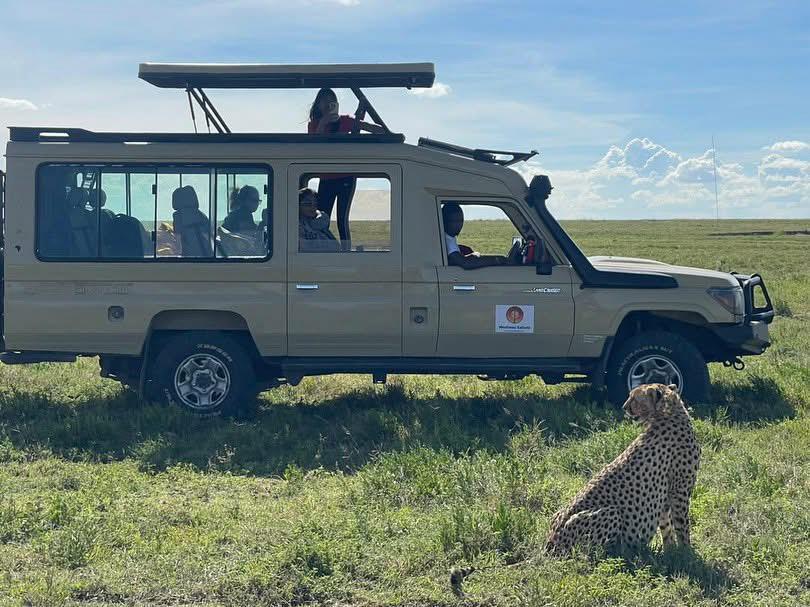
I have been planning Tanzania safaris from my base in Arusha for over a decade. In that time I have worked with couples on anniversary trips, families with young children, solo travellers on once-in-a-lifetime journeys, and corporate groups of thirty people. The questions are always the same: when to go, which parks to include, how much to budget, how long to stay, whether it is safe, and whether to book locally or through an international agent. This guide answers all of them, in the order that my clients need them, without the vague generalities that most online resources trade in. The safety question in particular gets its own deeper treatment in my Tanzania safari safety guide for anyone who wants the full picture before they commit.
Tanzania is not simply a safari destination. It is the safari destination. The Serengeti holds the largest terrestrial mammal migration on Earth. The Ngorongoro Crater contains one of the highest concentrations of wildlife found anywhere on the planet. Tarangire has elephant populations that rival anything in Africa. The northern circuit, which links these parks into a single route departing from Arusha, is the most productive wildlife-viewing route on the continent. When I send a client to Tanzania, I know exactly what they are going to experience. That certainty is why I keep sending them there.
Why Tanzania Is the Right Choice
The case for Tanzania over every other safari destination comes down to three things: scale, reliability, and diversity. No other country in Africa delivers all three at this level, consistently, across every budget.
The Serengeti is 14,763 square kilometres of open savannah supporting two million wildebeest, zebra, and gazelle in their annual migration across the Mara ecosystem. This is not a wildlife reserve with a managed handful of animals in a bounded enclosure. This is one of the last places on Earth where you can drive for an hour and feel genuinely small against the landscape. I wrote a detailed comparison of the two great migration ecosystems for clients deciding between Tanzania and Kenya in the Serengeti vs Masai Mara guide, and the conclusion is consistent: the Serengeti wins on scale, on the depth of the wilderness experience, and on the sheer range of what you encounter across different zones and seasons.
The Ngorongoro Crater is unlike anything else in Africa. A collapsed volcanic caldera 19 kilometres across and 600 metres deep, it holds approximately 25,000 large animals within its walls at any given time. The crater does not require luck. It delivers. The Big Five are resident year-round. Predator sightings are almost guaranteed on a full-day visit. A full breakdown of the crater, including fees, accommodation options, and the specific wildlife you can expect, is in the Ngorongoro Crater safari guide.
Tarangire rounds out the northern circuit with something the other parks cannot match: elephant herds numbering in the hundreds, moving through a landscape of ancient baobab trees and dry riverbeds. January and February, when the great herds congregate along the Tarangire River, produce scenes that my clients consistently describe as the most visually dramatic of their entire safari. Put these three parks together on a well-designed itinerary and you have a trip that is very difficult to improve upon anywhere else on the continent.
When to Go: A Month-by-Month Overview
Tanzania has two main seasons, and each delivers a fundamentally different experience. The honest answer is that there is no bad time to visit. The question is what you want the experience to look and feel like.
The dry season runs from June through October. Grasses are short and golden, predators are easy to spot because there is nothing to hide in, and animals concentrate around permanent water sources, which means sightings are dense and often extended. This period also coincides with the Mara River crossings in the northern Serengeti, where wildebeest plunge into crocodile-filled water in one of the most dramatic wildlife spectacles on Earth. Peak season also means peak prices and full camps. The most sought-after lodges in the northern Serengeti book out twelve months in advance for July and August.
The green season runs from November through May, with a short dry period in January and February. The landscape is lush, the light is exceptional for photography, and the prices drop significantly compared to the dry season peak. January and February are my personal favourite months in Tanzania. The southern Serengeti fills with wildebeest calves during calving season, the Ngorongoro Crater is less crowded, and lodge rates sit 20 to 30 percent below June to October levels. You get genuinely excellent safari with fewer vehicles on the plains and more room to breathe.
The long rains of March through May bring the lowest rates of the year and the smallest visitor numbers. Some remote camps close for the season. Certain tracks become muddy. But the parks remain open, the wildlife is everywhere, and the experience of driving through a green Serengeti with almost no other vehicles on the road has a quality that peak-season guests never get to encounter.
The best time to visit the Serengeti guide goes through every month in detail, and the Great Migration month-by-month guide covers exactly where the herds are and what they are doing throughout the year.
How Many Days You Need
The honest answer is that more days always produce a better safari. But most guests have constraints, and knowing what each duration actually delivers helps you make a clear decision before committing to an itinerary.
Three days is the absolute minimum for a meaningful experience, and it only works well as a focused single-park visit to the Serengeti or Tarangire. You see animals, you get the sensation of the bush, but you have no time to settle into the slower rhythm that makes a safari transformative, and no room to linger when something exceptional is unfolding in front of you.
Five days allows a proper two-park circuit: Tarangire and Ngorongoro, or Ngorongoro and the Serengeti. This is the most common duration for guests who have limited annual leave and need to make a deliberate choice about which experience to prioritise. It works well when the itinerary is not over-engineered and the parks are chosen with clear intention.
Seven days is the sweet spot for a first-time visitor. A well-designed seven-day northern circuit covers Tarangire, Ngorongoro, and two or three zones of the Serengeti, with enough nights in each park to feel unhurried. This is the duration I recommend most consistently, and it is the one that produces the fewest regrets.
Ten days and beyond opens up the full circuit. You can add Lake Manyara, spend additional nights in different sections of the Serengeti, and consider extending to Zanzibar for guests who want both bush and coast in one trip. Guests with twelve to fourteen days who want a second country rather than a beach can step up to the full combined Kenya and Tanzania safari itinerary, which adds the Masai Mara and Amboseli to the Tanzanian northern circuit. The full guide to how many days you need covers every scenario with honest assessments of what each duration actually covers and where the diminishing returns begin.
How Much a Tanzania Safari Costs
Tanzania safaris cover a wide range of price points, and understanding the tiers helps you allocate your budget where it produces the most value.
Budget-level safaris, which typically use shared group vehicles and fixed itineraries, run at roughly $150 to $250 per person per day. These are often sold through large online booking platforms. They represent a legitimate way to experience the bush, but they deliver a fundamentally different experience from what most guests picture when they imagine a private Tanzania safari.
Mid-range private safaris, with a dedicated vehicle and guide, comfortable tented camps, and full-board meals, run at $300 to $500 per person per day. This is the tier where most of my repeat clients begin, and it delivers a strong safari experience without the top-end accommodation premiums. A 7-day northern circuit at this level runs approximately $3,000 to $4,500 per person, all-inclusive.
Luxury safaris, at $600 to $2,000 or more per person per day, add exclusive camps with small guest numbers, higher guide-to-client ratios, and properties in prime wildlife areas that simply do not appear at lower price points. The premium is real, and whether it is justified depends on what you value most in the experience.
What a reputable all-inclusive quote always covers: all accommodation on full board, a private 4x4 Land Cruiser, a professional guide for the full duration, national park entry fees, and crater descent fees at Ngorongoro. What it does not cover: international flights, Tanzania visa, travel insurance, tips, and personal purchases. The complete Tanzania safari cost guide has real numbers for every category, and the hidden costs guide covers the line items that cheaper quotes frequently leave out of the total.

If you already have dates in mind or want to know what this costs for your specific trip, send your details on WhatsApp and I will respond with a personalised answer within a few hours.
Choosing Your Parks: The Northern Circuit
The northern circuit is the right framework for the vast majority of first-time and returning visitors to Tanzania, and it organises into four parks that complement each other naturally when the sequence is planned correctly.
Tarangire National Park is where most itineraries depart from Arusha, heading south and east into a landscape dominated by baobab trees and the dry Tarangire River. It is the park that calibrates your expectations most powerfully in the right direction. Elephant herds of 50 to 200 animals. Diverse birdlife that experienced wildlife watchers find extraordinary. And a bush aesthetic, dry and textured and ancient, that feels genuinely different from the open plains further north.
Lake Manyara National Park sits en route between Arusha and the Ngorongoro Crater and is known for its tree-climbing lions, the soda lake flamingo populations along the shoreline, and the dense groundwater forest along its eastern edge. Most itineraries treat Manyara as a half-day game drive rather than an overnight, which does it full justice without adding significant travel time or cost to the circuit.
Ngorongoro Conservation Area, and specifically the crater floor itself, is the concentrated centrepiece of the northern circuit. As the Ngorongoro Crater safari guide explains in detail, it delivers the Big Five in a bounded environment where nothing migrates and the wildlife density is extraordinary. Two nights at a rim lodge with one full crater descent is the version I always recommend over a rushed single day.
Serengeti National Park provides the scale, the open horizon, and the migration experience that the crater cannot offer. Most guests spend three to five nights in the Serengeti, and the zone you stay in matters enormously depending on the month of your visit. Staying in the south in January for the calving, the central corridor in April, or the north in July for the river crossings produces experiences that are dramatically different from one another. Getting this alignment right is one of the most important things I do when I build an itinerary.
Private vs Group Safari: What Actually Changes
For the vast majority of clients I speak with, a private safari is the right choice, and not primarily because of comfort. The ability to set your own pace, to stay at a sighting longer than the group collectively agrees to, to leave camp at 5:30am when a predator is active nearby, and to have a guide who is focused entirely on your group's priorities rather than managing eight different guests with eight different expectations changes the quality of what you experience in ways that are hard to overstate.
Group safaris are not inferior in terms of the wildlife. The animals have no awareness of how many people are in the vehicle. But a group vehicle moves on a schedule and stops where the guide decides for the collective. It cannot accommodate the spontaneous repositioning that produces the most memorable moments in the field, the decision to follow a cheetah for forty minutes instead of driving to the hippo pool as planned.
The private vs group safari comparison goes into the detail on costs, logistics, and the specific scenarios where a group format might actually suit your trip better, including cases where a small group of friends travelling together should still consider booking a private vehicle rather than joining a shared one.
What to Pack
Tanzania's northern circuit requires a fairly specific approach to packing, and most guests either overpack for the wrong conditions or underpack for the variables that matter most. The altitude at Ngorongoro sits at over 2,000 metres and gets cold at night, sometimes genuinely cold. The dry-season Serengeti is dusty in a way that covers everything if you are not prepared for it. And if you plan to fly between parks on a light aircraft, the strict weight limits of 15 kilograms in a soft-sided bag apply without exception.
The complete Tanzania safari packing guide covers clothing layers for temperature variation across parks, luggage restrictions for bush flights, the equipment that experienced safari guests always bring and first-timers often forget, and what is readily available to buy in Arusha versus what must come with you from home.
Booking Your Safari: What to Know Before You Commit
When to book: for travel in the peak dry season months of July through October, book twelve months in advance, particularly if you have specific camps in mind. The most sought-after properties in the northern Serengeti sell out a full year ahead for August. For green-season travel, three to six months is typically sufficient, though the best camps fill quickly regardless of the season.
What to look for in a quote: full itemisation showing park fees, accommodation costs per night, vehicle, and guide fees as separate line items. If a quote shows only a total daily rate without a breakdown, you cannot assess what is included or where the gaps are. Any operator who is unwilling to provide an itemised breakdown is not an operator you should book with.
Why local operators offer better value: booking directly with a licensed Arusha-based operator removes the 20 to 40 percent markup that international travel agents apply. Those agents book through local ground handlers anyway, adding a layer of distance from the planning and removing your ability to make direct adjustments. A local operator has direct lodge relationships, first access to availability when camps release cancellation spots, and the ability to adapt your itinerary on the ground when conditions change, which they sometimes do.
The how to plan a Tanzania safari guide covers every step of the booking process from first contact through final payment, with specific questions to ask any operator before you commit, and the answers that should immediately give you confidence or concern.
Special Trip Types
Tanzania works exceptionally well for three specific trip formats that each have their own planning logic. A generic itinerary rarely serves any of them at the level they deserve.
A Tanzania honeymoon, combining the northern circuit with a beach extension to Zanzibar, is one of the strongest holiday combinations in the world. The safari component delivers the shared experience of witnessing something genuinely extraordinary together. The Zanzibar component delivers the rest, the warmth, the Indian Ocean, and the transition from intensity to ease. I plan these trips with smaller and more intimate bush camps, private vehicles as standard, and lodges that are chosen specifically for their design and privacy rather than their proximity to the highest wildlife density. The honeymoon safari Tanzania and Zanzibar guide covers the full itinerary, the lodge shortlist, and the timing questions that come up most often from couples.
Tanzania with children works very well when the planning accounts for it properly. The right parks, the right accommodation, and the right pacing make the difference between a trip that bonds a family around something extraordinary and one that exhausts everyone. Not every luxury camp is designed for children. Not every itinerary suits mixed-age groups. The family safari Tanzania guide addresses minimum ages for specific activities, the parks that work best for children at different stages, and how to structure a week that holds the interest of a twelve-year-old without overwhelming a five-year-old.
Large-group safaris, from extended families to corporate groups to milestone celebrations, scale well in Tanzania if the logistics are handled by someone who has done it before. Vehicle allocation, accommodation buyouts, coordinated park entry timing, and dietary requirements across a group of twenty people require a planning layer that most operators simply do not have experience with. The large group safari Tanzania guide covers what changes at scale, where the genuine per-person cost savings appear, and the common mistakes that turn a large group trip into a logistical headache.
What to Expect on the Ground
A typical day on a Tanzania safari follows a rhythm that most guests find immediately appealing once they have settled into it after day one.
Wake-up time is typically 6am, sometimes 5:30am in parks where first light produces the most active predator behaviour. Your guide will have tea or coffee ready in the vehicle. The morning game drive runs from dawn until around 10am, when the light gets harsh and the animals start moving less. You return to camp for a late breakfast, which on a well-run safari is a proper meal rather than a rushed one, and then rest through the warmest hours of the day.
The afternoon drive begins around 4pm and runs until dusk, typically 6:30 to 7pm. This is often the most dramatic session of the day. Predators become active again as the temperature drops. The light is golden, directional, and extraordinary for anyone with a camera. Animals move to drink. Evening drives in parks that allow them extend this window into the dark with spotlights, which reveals a completely different layer of wildlife behaviour that daytime drives never show.
Meals at reputable camps are included in the full-board rate and are, in most cases, significantly better than guests expect. Fresh produce, varied daily menus, and cooking that accounts for the physical reality of early mornings and long days in a vehicle. The quality of the food at a well-chosen tented camp in the Serengeti is a consistent source of genuine surprise for first-time visitors. For the broader picture of where the day-to-day reality of a Tanzania safari diverges from the marketing version, in ways both better and worse than guests anticipate, my Tanzania safari expectations versus reality covers what most planning resources leave out.
The question of whether the luxury tier justifies its premium, and what specifically it delivers over a mid-range experience, is something I address directly in the luxury safari Tanzania honest assessment. The answer is not a simple yes or no. It depends on what you value most, and I give you the full picture there.
Frequently Asked Questions
A private Tanzania safari runs at roughly $300 to $500 per person per day at mid-range, covering accommodation, meals, a private vehicle, a guide, and all park fees. Luxury properties push that to $600 to $2,000 or more per person per day. A well-designed 7-day northern circuit at mid-range costs approximately $3,000 to $4,500 per person all-inclusive. Budget-level group safaris start at around $150 to $250 per person per day. International flights and travel insurance are excluded from all of these figures.
Tanzania is excellent year-round, but the two peak periods are the dry season from June to October, which delivers clear skies, predictable game viewing, and the Mara River crossings, and January through February, the short dry season, when calving fills the southern Serengeti and lodge rates are below peak. If dates are flexible and budget is a consideration, January and February deliver a better overall value than July and August without any meaningful compromise on wildlife quality.
Seven days is the sweet spot for a first-time northern circuit visitor. Three days is the minimum for a meaningful single-park experience. Five days covers two parks properly. Ten days and beyond allows the full circuit with a Zanzibar extension. The most important thing is not rushing the itinerary to fit more parks into fewer days. Depth in fewer places consistently produces a better experience than a rushed sweep through many.
Tanzania is one of the safest safari destinations in Africa. The northern circuit, including Arusha, Tarangire, Ngorongoro, and the Serengeti, is a well-established and professionally managed tourism corridor that handles hundreds of thousands of international visitors each year without significant incident. Standard precautions apply: use a licensed and reputable operator, follow your guide's instructions in the field, and stay within recommended areas. The vast majority of guests complete their safari without any security concern of any kind.
Book through a licensed local operator in Arusha. International agents add 20 to 40 percent to the ground cost and book through local handlers anyway. A local operator has direct lodge access, first availability on cancellation spots, and the ability to adapt your itinerary when conditions on the ground change, which happens on every trip at some point. The key requirement is verifying that the local operator holds a current Tanzania Tourism Board licence and has a genuine and traceable local presence.
A reputable all-inclusive Tanzania safari package covers all accommodation on full board, a private 4x4 Land Cruiser, a professional guide for the full duration, all national park entry fees, Ngorongoro crater descent fees, and airport transfers in and out of Arusha or Kilimanjaro. Excluded items typically include international flights, Tanzania visa, travel insurance, gratuities for your guide and camp staff, and any personal purchases. Always ask for a fully itemised quote before committing.