
I have stood at the rim of the Ngorongoro Crater hundreds of times and it still stops me. Nineteen kilometres across, 600 metres deep, holding roughly 25,000 large animals within its walls at any given time. Formed approximately 2.5 million years ago when a volcano larger than Kilimanjaro collapsed on itself, it is the largest intact unflooded volcanic caldera on Earth. UNESCO designated it a World Heritage Site in 1979. It deserves every accolade.
It is also, frankly, one of the most misunderstood safari destinations in East Africa. Visitors come expecting it to be similar to the Serengeti and are either overwhelmed by what they find or disappointed because they did not plan it correctly. In this guide I will tell you exactly what the Ngorongoro Crater is, what lives there, when to go, how the fees work, and the practical details that most guides skip over.
What Is the Ngorongoro Crater?
The crater is part of the larger Ngorongoro Conservation Area (NCA), a 8,292 square kilometre protected region that spans the crater highlands, the Olduvai Gorge, one of the most important paleoanthropological sites in the world, and vast stretches of open savannah and montane forest. The conservation area is unusual in that it is inhabited: the Maasai people live and graze their cattle here under a co-existence agreement, a model that makes the NCA distinct from Tanzania's national parks, where no human habitation is permitted.
The crater floor itself is a self-contained world. The caldera walls trap mist and rainfall, creating a microclimate that feeds perennial water sources and year-round grass growth. This is why the wildlife here does not migrate. There is no reason to leave. You are essentially visiting a natural enclosure of extraordinary scale, where predator and prey have existed in near-equilibrium for millennia.
Wildlife: What You Will Actually See
The Ngorongoro Crater consistently delivers one of the most reliable Big Five experiences in Africa. Here is what lives on the floor and what to expect from each species:
Lion
The crater holds approximately 60 to 70 resident lions, making the density extremely high relative to the floor's 300 square kilometres. You will almost certainly see lions on a full day visit. They are relaxed around vehicles, the crater populations have been habituated to tourist traffic for decades, and sightings are often very close and extended. The crater lions are also notably large and well-fed, which reflects the density of prey available to them.
Black Rhino
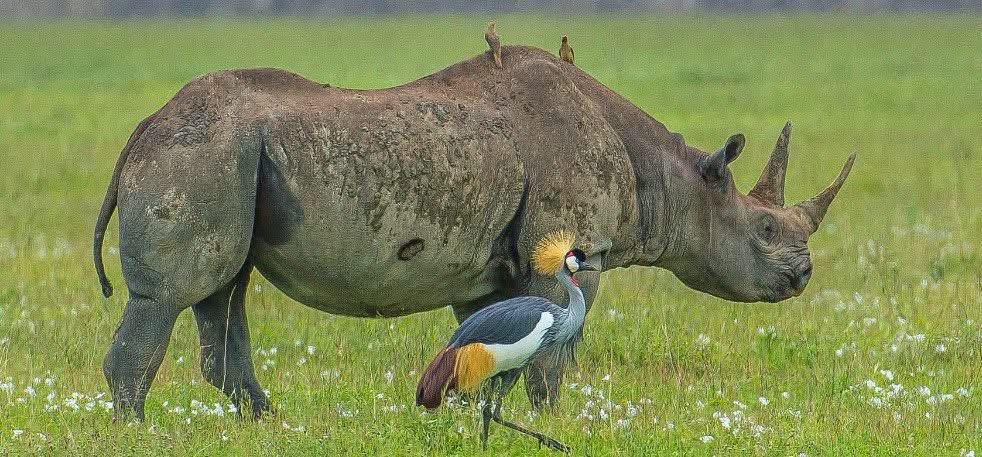
This is what makes the Ngorongoro Crater genuinely irreplaceable for many guests. The floor holds one of the most viable populations of critically endangered eastern black rhino in Tanzania, numbering around 20 to 30 individuals. Black rhino are notoriously difficult to find in open parks. In the crater, where the floor is bounded and the rhino are known to our guides, sightings are achievable. They are not guaranteed, as rhinos move according to their own agenda, but this is the best place in Tanzania to find one.
Elephant
Elephant bulls descend into the crater regularly, though full family herds are less common, as the crater walls are steep and cows with calves prefer to stay in the highlands. The bulls you encounter on the floor are typically mature animals with impressive tusks, and sightings at the Lerai Forest, a dense acacia grove on the western floor, are particularly good.
Buffalo
Large buffalo herds, sometimes numbering 500 to 1,000 animals, are a constant presence on the crater floor. They form a dark, moving mass across the short-grass plains and are visually one of the most dramatic spectacles the crater produces. Buffalo are also the primary prey of the crater's lion prides, so wherever you find buffalo, a lion pride is usually nearby.
Hippo
The Ngoitokitok Springs in the eastern crater floor support a permanent hippo pool that holds 50 to 100 animals. This is a standard stop on crater game drives and often a highlight. The hippos wallow and argue loudly while the surrounding trees shelter yellow-billed storks and sacred ibis. Lunch at the designated picnic site adjacent to the springs is one of those simple safari moments that guests remember for years.
Flamingo
The shallow soda lake at the crater's centre, Lake Magadi, periodically floods with flamingo populations that can number tens of thousands. The sight of a pink line stretching across the alkaline water, backed by the caldera walls, is one of Tanzania's most distinctive images. Flamingo numbers vary seasonally and are not guaranteed, but even a few hundred birds on the lake creates a striking scene.
Cheetah and Leopard
Cheetah are present and sighted with reasonable frequency on the open grasslands. Leopard also inhabit the crater, particularly in the Lerai Forest, but are rarely seen, as they are nocturnal hunters and the crater floor is closed to vehicles after 6pm. Do not visit the crater expecting leopard sightings; treat them as an extraordinary bonus if they occur.
Giraffe. The crater walls are too steep for them to descend. You will not see giraffe on the crater floor, which surprises many guests. You will see them at the crater rim and throughout the surrounding highlands. This is one reason the Ngorongoro Crater works best as part of a circuit that includes Tarangire. The giraffe and elephant herds there provide a complementary experience.
The Fees: What You Actually Pay
The Ngorongoro Conservation Area Authority (NCAA) charges multiple fees, and understanding them matters because they appear on your itemised quote. Transparency on this is important to me, so here they are in full:
| Fee | Amount | Notes |
|---|---|---|
| NCA Entry Fee (adult) | $82.60 per person / per 24hrs | Charged per day of stay in the conservation area |
| Crater Service Fee (vehicle) | Approx. $200 per vehicle | Charged per descent to the crater floor; not per person |
| NCA Vehicle Fee | Approx. $50 per vehicle / per day | For driving within the conservation area |
| Camping/Lodge Conservation Fee | $70.80 per person per night | Charged for all accommodation within the NCA |
For a standard two-person crater visit, one night at a rim lodge and one full day on the crater floor, the NCA fees alone come to approximately $500 to $600 per person. These fees are included in any all-inclusive quote from a reputable operator. If a quote seems low, ask specifically whether crater fees are included, as they are one of the most commonly omitted line items by operators cutting corners.
If you already have dates in mind or want to know what this costs for your specific trip, send your details on WhatsApp and I will respond with a personalised answer within a few hours.
Best Time to Visit
The Ngorongoro Crater is excellent in every season, and this is one of its great advantages over destinations like the Serengeti where timing is more critical. The resident wildlife does not migrate. The Big Five are present year-round. The question is not whether you will see animals. You will. The only question is what conditions you prefer.
| Season | Months | Conditions |
|---|---|---|
| Long Dry Season | June – October | Clear skies, dry crater floor, excellent predator sightings, peak visitor numbers |
| Short Dry Season | January – February | Good visibility, lush green landscape, fewer crowds, strong calving in nearby Serengeti |
| Short Rains | November – December | Afternoon showers, fresh grass, lower lodge rates, still very good wildlife |
| Long Rains | March – May | Heavy rain, some tracks flooded, significantly lower rates, lush scenery, few visitors |
My personal recommendation for the crater, if dates are flexible, is January or February. The landscape is lush from the short rains, visibility is clear, lodge rates are below peak levels, and the crater visitor numbers are significantly lower than the July and August peak. Wildlife viewing is outstanding and you avoid the congestion that can, in peak season, turn the crater floor into a frustrating traffic queue around predator sightings.
I will be honest with you about this. In July and August, the Ngorongoro Crater floor can be very busy. When a lion pride makes a kill near the road, fifteen vehicles can congregate within minutes. It does not diminish the wildlife, but it does change the atmosphere. If solitude and intimacy matter to you, visit in January, February, or November. If your dates are fixed in peak season, we position your game drive to start at dawn. Vehicles entering at first light encounter far fewer tourists for the first two to three hours.
Accommodation: Rim vs. Floor
All lodges and camps in the Ngorongoro Conservation Area are located on the crater rim, not the floor. No overnight accommodation is permitted on the crater floor. All vehicles must ascend before the 6pm closing time, and the floor is closed at night.
Rim Lodges
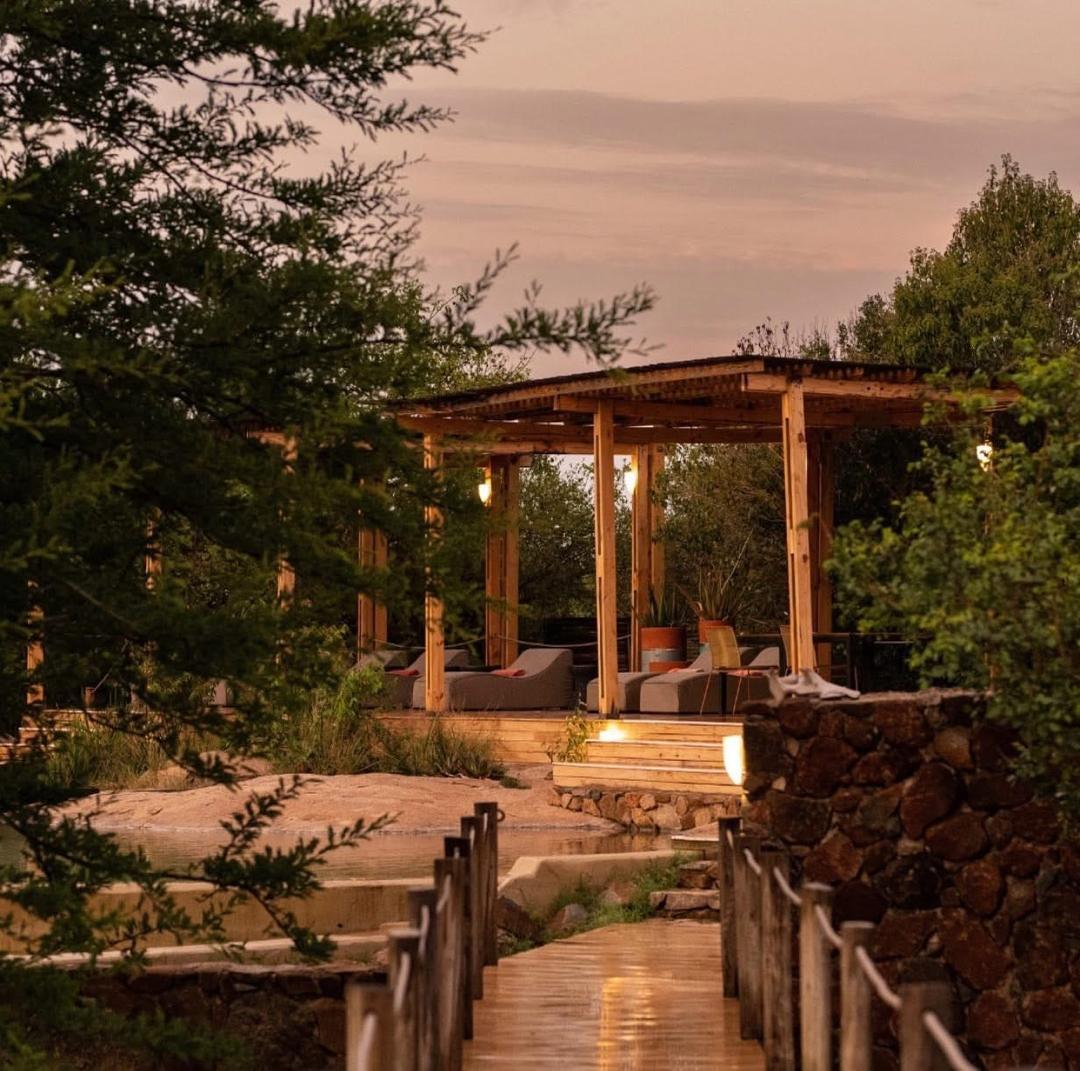
The rim sits at approximately 2,300 metres above sea level. The properties here offer what may be the most extraordinary lodge setting in Africa: your room faces directly into the caldera, the view dropping away 600 metres to the crater floor below. Waking up at dawn to see mist filling the crater before the first light burns it away is an experience that guests consistently describe as the most memorable moment of their safari.
Ngorongoro Crater Lodge (&Beyond) is the most celebrated property on the rim, with a dramatic design and unobstructed crater view that make it one of the iconic safari addresses in the world. Ngorongoro Serena Safari Lodge is a strong mid-range option with excellent crater views and well-appointed rooms. The Farm House (Elewana) sits on the outer rim, removed from the crater edge, and offers a more pastoral atmosphere for guests who want something quieter.
Getting There: The Logistics
The Ngorongoro Crater is located roughly 180 kilometres west of Arusha along the sealed highway, passing through Mto wa Mbu and ascending through the Ngorongoro Highlands. The drive takes approximately three hours by road. Most itineraries visit the crater as part of a northern circuit, combining it with Tarangire (which sits in the opposite direction, east of Arusha) and the Serengeti.
There is no commercial airstrip within the NCA that allows direct flights from Nairobi or Kilimanjaro. The nearest airstrips are at Manyara (roughly one hour from the crater by road) and at Serengeti, which connects to other northern circuit parks. For most guests, the crater is reached by road from Arusha or as part of an overland circuit.
How to Structure Your Visit
The vast majority of first-time visitors to the Ngorongoro Crater spend one full day on the floor. This is the minimum I would recommend. A one-day crater visit works as follows: descend through the crater wall at first light (gates open at 6am), spend six to seven hours on the floor covering the main habitats: the short-grass plains, Lerai Forest, Ngoitokitok Springs, and Lake Magadi, then ascend before the 6pm closing time.
For guests staying two nights at a rim lodge, a second crater descent gives you the opportunity to visit different sections of the floor, experience the crater in different weather conditions, and cover areas you missed on day one. Many guests find that the second day is actually the better day. They know the landscape, their guide knows exactly where to focus, and the pressure of seeing everything for the first time is gone.
I would also strongly recommend building time for the crater highlands into your itinerary if possible. The forested outer slopes support elephant families, buffalo, and a very different ecosystem from the crater floor itself. A morning game drive in the highlands before your crater descent adds depth and contrast that many guests find unexpectedly rewarding.
Combining the Crater with Other Parks
The Ngorongoro Crater sits at the natural intersection of Tanzania's northern circuit, and it works best when combined with the parks that flank it:
Tarangire National Park, three hours southeast of the crater, is famous for its elephant herds (the largest concentration in northern Tanzania), ancient baobab trees, and year-round Tarangire River game. Where the crater provides enclosed, high-density wildlife viewing, Tarangire provides the open, wild feeling of a landscape you share with the animals rather than observe from a bounded floor. Together, they are complementary.
Serengeti National Park sits two to three hours northwest of the crater (passing through the NCA highlands) and provides the scale and the migration experience the crater cannot offer. A well-designed 7-day northern circuit visits all three: Tarangire, Ngorongoro, Serengeti. The crater typically sits in the middle of the itinerary, providing a concentrated wildlife highlight between the two wider parks. Many crater itineraries pair with a hot-air balloon safari at dawn on a Serengeti morning, which delivers an aerial perspective of the plains that the crater itself cannot.
Lake Manyara National Park is often included as a day visit or half-day en route between Arusha and the crater. Famous for its tree-climbing lions and the flamingo-lined alkaline lake. It does not require a full day to do well, and it adds variety without adding significant travel time.
Frequently Asked Questions
The Ngorongoro Conservation Area entry fee is $82.60 per adult per 24 hours. There is also a vehicle fee of around $200 to $300 per vehicle for crater floor access, and a crater service fee charged per vehicle descent. For a day visit from a rim lodge, budget approximately $200 to $250 per person in government fees above and beyond your accommodation and vehicle costs. These fees are paid by your operator and included in any all-inclusive safari quote from a reputable company.
The Ngorongoro Crater supports one of the highest densities of wildlife on Earth. Expect lions (the crater has around 60 to 70 resident lions), black rhino (the crater holds one of Tanzania's healthiest populations), elephant bulls, buffalo herds of several hundred, hippo in the Ngoitokitok Springs, hyena in large clans, and cheetah on the open grasslands. The soda lake at the crater floor regularly hosts flamingo flocks numbering in the tens of thousands. Leopard are present but rarely seen. The crater does not support giraffe, as the walls are too steep for them to descend.
One full day on the crater floor is the minimum I would recommend, and most guests who do it in one day wish they had more. A full day means descending at first light, spending six to seven hours on the floor, and ascending before the gates close in the late afternoon. This gives you a genuine immersive experience. For guests who want to wake on the rim and descend at sunrise without rushing, staying two nights at a rim lodge is far preferable. Two days allows you to visit different sectors of the floor and see the crater in different light.
The Ngorongoro Crater is genuinely excellent year-round because its resident wildlife does not migrate. That said, the dry season from June to October offers clearer skies, less mud on the crater floor, and excellent predator sightings as animals concentrate around water sources. January and February, the short dry season, are also very good. April and May see heavy rain and some tracks on the crater floor become impassable, though the landscape is lush and visitor numbers are lowest.