The Masai Mara is not simply Kenya's most famous wildlife reserve. It is, in my experience, the single most reliable place to see big cats and great herds anywhere in East Africa, in almost any month of the year. The river crossings between July and October earn the headlines, and they deserve them. Yet even well outside the migration window, the Mara holds the highest density of lions anywhere on the continent, leopard along the wooded banks of the Talek and the Mara rivers, cheetah strung out across the open plains, and elephant and buffalo moving through in good numbers. There is, honestly, never a poor time to be here.
I plan Kenya safaris from our base in Arusha, working with a small group of trusted partners and some of the most experienced guides in the Mara ecosystem. The Mara and the Serengeti are two halves of one ecosystem that straddles the Kenya and Tanzania border, and I know both sides closely. That cross border knowledge is what lets me place you where the wildlife actually is, rather than where a brochure assumed it would be. For travellers who are still weighing the two countries against each other on cost, parks, and overall value rather than only the Mara against the Serengeti, my Tanzania versus Kenya safari comparison walks through the full head to head.
What the Masai Mara Actually Is
The Masai Mara National Reserve sits in the south west of Kenya, pressed up against the Tanzanian border. On the far side of that line the plains continue and become the Serengeti. So the first thing worth saying plainly is that the Mara is the Kenyan portion of a much larger ecosystem. It is not a separate world from the Serengeti, and it is certainly not a smaller copy of it. It is the northern end of the same vast grassland, named for the Maasai people who have lived alongside this wildlife for centuries and for the Mara River that runs through it.
The reserve itself covers roughly 1,500 square kilometres of rolling grassland, scattered acacia, and riverine forest. Around its northern and eastern edges sits a ring of private conservancies, land leased from Maasai families and managed for low impact tourism. Together the reserve and the conservancies form the wider Greater Mara. When people picture Kenya, they are usually picturing the Mara. It has earned that status because the wildlife here is genuinely concentrated, genuinely visible, and genuinely present all year.
The Great Migration in the Mara
July to October: the river crossings
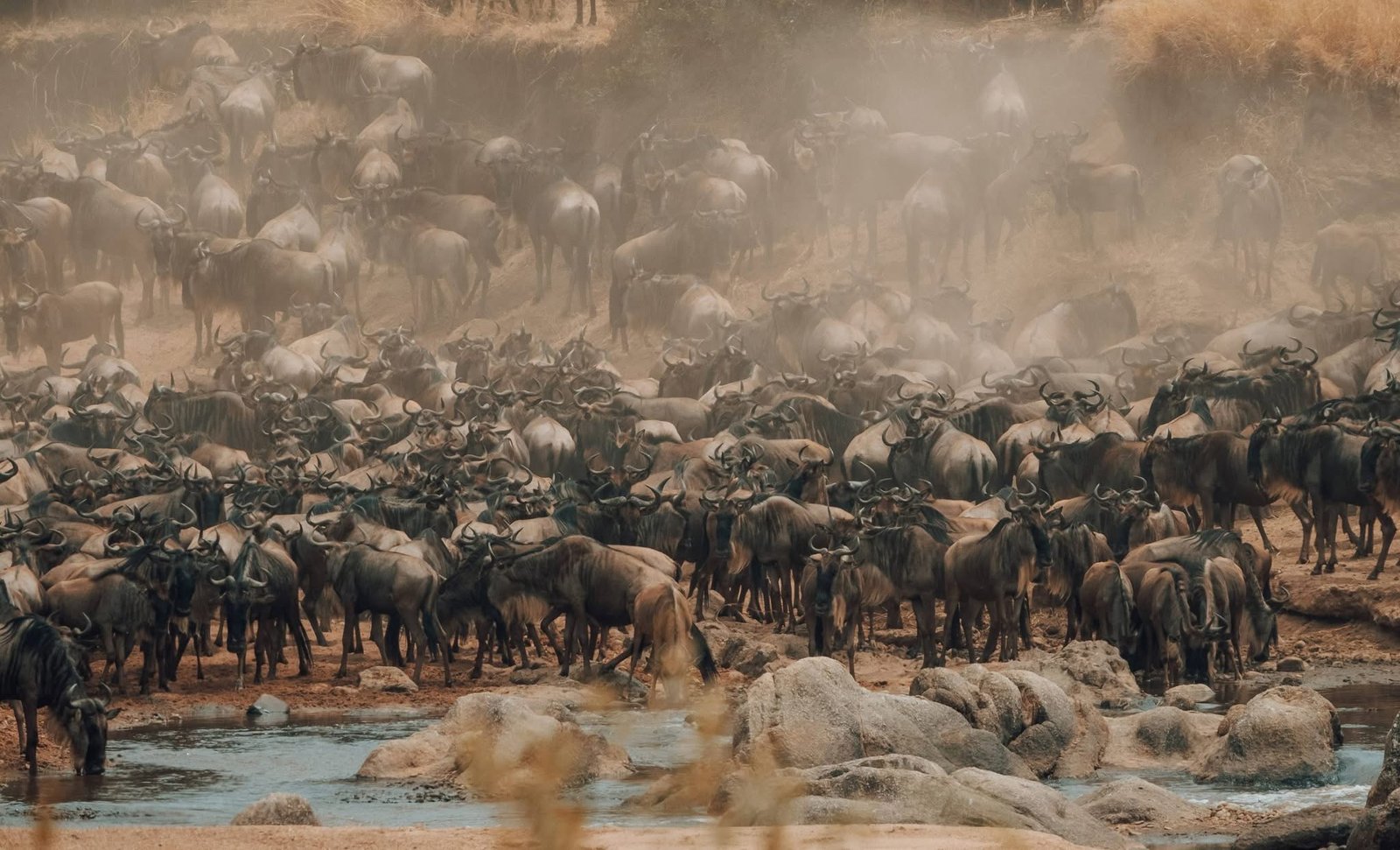
The Great Migration reaches the Masai Mara from the Serengeti around late June and early July. From then into October the herds push north into the Mara, cross and recross the Mara River, and then begin drifting south again as the short rains approach. The crossings are what most people travel for, and they are every bit as raw as the documentaries suggest. Thousands of wildebeest mass on a cut bank, hesitate, and then pour into water that holds some of the largest crocodiles in Africa. Many make it across. Some do not. No two crossings are ever alike.
I am always honest with guests about this. You cannot book a crossing. The herds move on their own clock. Some days they stand at the water for hours and turn back. Other days they go in waves you will remember for the rest of your life. What you can control is being at the right camp, on the right side of the river, with a guide who reads the herds and the wind, and then giving it time. Patience is the single most valuable thing you can bring to the Mara in season.
Calving belongs to the Serengeti, not the Mara
One point is worth clearing up, because it confuses a great many first time visitors. The dramatic calving season, when close to half a million wildebeest calves are born within a few short weeks, does not happen in the Mara. It happens far to the south, on the short grass plains of the southern Serengeti and the Ndutu area, roughly between January and March. If your heart is set on newborn herds and the concentrated predator action that follows them, that is a Tanzania trip in the green season, and my guide to the best time to visit the Serengeti sets out exactly when and where to be. The Mara is the place for the northern crossings later in the year. Knowing which spectacle you actually want is half of planning the trip well.
Year round resident wildlife
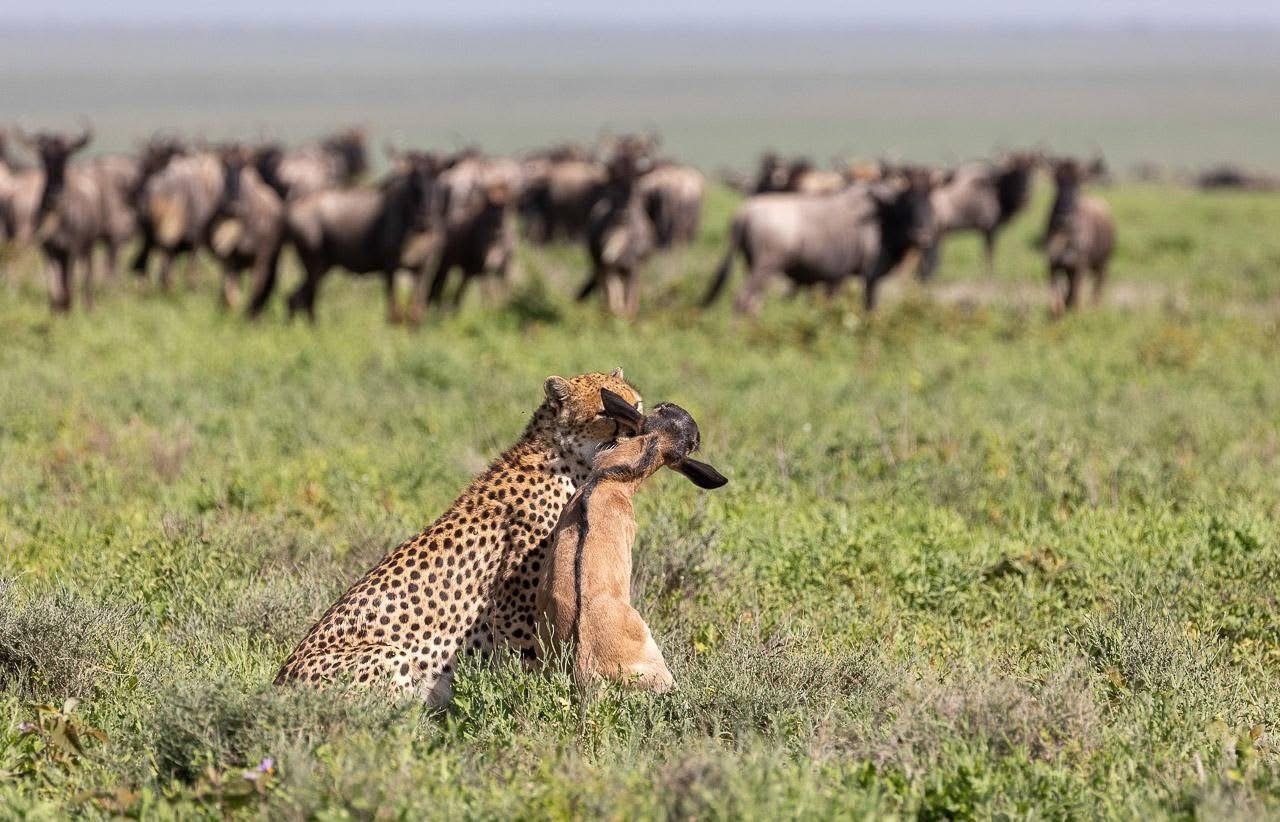
Here is what I wish more people understood before they fixate on crossing dates. The resident wildlife of the Mara never leaves. The lion prides, several of them well known in their own right, are here in every season, often with cubs. Leopard hold territories in the fig trees along the rivers. Cheetah hunt the open grass where they can use their speed, and hippo, topi, impala, eland, and giraffe are constant company. From January to March the plains turn green, the light softens, the camps grow quieter, and the game viewing remains superb. For many of the travellers I work with, this quieter green window delivers a more personal safari than the busy peak, at a gentler level of investment.
The Reserve and the Conservancies, and Why This Choice Shapes Everything
If you take one practical thing from this guide, let it be this. Where you sleep in the Mara matters as much as when you visit. The Greater Mara is made up of two quite different kinds of land, and the difference between them shapes the whole texture of your safari.
The Masai Mara National Reserve is public land. Any licensed operator may drive in, which is why it carries the crossings and the headline sightings, and also why a single leopard can draw a ring of vehicles around it in high season. The reserve is where the river runs and where the great crossings happen, so it has a rightful place in most itineraries. But it is busy, and the rules are strict. No off road driving, no night drives, and no walking are allowed inside it.
The private conservancies are a different proposition entirely. These are tracts of Maasai owned land where a limited number of camps pay the community for exclusive access and agree to cap vehicle numbers, often to only a handful of vehicles at any one sighting. Because the land is private, the conservancies permit what the reserve cannot. You can drive off road to position for a photograph. You can walk the bush with an armed Maasai guide who grew up reading these plains. And, importantly, you can take night drives.
That last point deserves emphasis. It is one of the genuine advantages the Mara holds over its southern neighbour. Night game drives are not permitted inside Kenya's national reserves, and they are not permitted in the Serengeti either. They are permitted in the Mara private conservancies. A spotlit drive after dinner opens up a completely different cast: leopard on the move, serval hunting in the grass, white tailed mongoose, bushbaby, and sometimes the slow business of a lion pride waking to hunt. For guests who have done a few classic daytime safaris and want something they have not seen before, this alone can justify anchoring a stay in a conservancy.
For almost everyone I advise, I lean toward building the heart of the trip inside a conservancy such as Mara Naboisho, Olare Motorogi, or Mara North, and then, if the dates line up with the migration, adding a night or two with access to the reserve for the crossings. That way you get the spectacle of the river and the intimacy and freedom of private land, rather than having to choose between them.
The Best Time to Visit
There is no single best month for the Mara, only the best month for what you want. If the river crossings are the goal, aim for the window from late July through to October, and accept that the camps are full and rates are at their yearly peak. Book early, because the strongest camps are spoken for six to twelve months ahead in this season.
If you would rather trade the crossings for green landscapes, dramatic skies, newborn antelope, and far fewer vehicles, the months from December to March are quietly wonderful in the Mara, and they tend to come at a more comfortable level of investment. The shoulder months around June and November can be a clever compromise: strong resident game, softer pricing, and a real chance at early or late migration movement without the full peak season crowds.
Getting There: Fly In Versus the Road from Nairobi
You reach the Mara in one of two ways, and the choice sets the tone for the whole trip. The road from Nairobi runs roughly five to six hours, and the final stretch is rough. It is the lower cost option, and it lets you string in a stop such as the Great Rift Valley or Lake Nakuru along the way, but it spends a long day in a vehicle that you could otherwise spend on the plains.
The alternative, and the one I recommend for most luxury itineraries, is to fly in. Light aircraft leave Nairobi's Wilson Airport several times a day and land at a scatter of airstrips across the Mara, including Musiara, Olkiombo, and the conservancy strips, in around forty five minutes. You step off the plane and you are on safari within minutes, often spotting game on the short transfer to camp. For a trip where every hour of light counts, flying in is almost always worth the difference, and it makes a cross border hop into Tanzania far simpler to coordinate.
Lodges and Camps: Character Across the Tiers
The Mara has accommodation at every level, and the character changes as much as the price. At the comfortable mid tier you will find well run tented camps, en suite canvas, good food, shared game drives, and genuine warmth, the kind of place that delivers a real safari without extravagance. These camps sit mostly inside or on the edge of the reserve and represent sensible value for a first safari.
A step up, in the premium tier, the camps move into the conservancies. Tents become larger and more private, guiding becomes more expert, vehicles carry fewer guests, and the experience starts to feel tailored to you rather than to a group. This is the tier I point most honeymooners and discerning first timers toward, because the jump in quality is real and obvious.
At the top, the Mara holds some of the finest camps in Africa. Places such as Angama Mara on the edge of the Oloololo Escarpment, andBeyond Bateleur, Governors' Il Moran on the river, and the heritage style of Cottar's 1920s combine spectacular settings, private guiding, and a standard of service that stands beside anywhere on the continent. At this level you are paying not only for comfort but for exclusivity, space, and the freedom that private conservancy access brings. Whichever tier suits you, my job is to match the camp to the season, to your party, and to the kind of days you actually want to have.
Combining the Mara with a Tanzania Safari
Because the Mara and the Serengeti are one ecosystem split by a border, the most rewarding East African itineraries I plan often span both. A typical shape is a few nights in a Mara conservancy for the cats, the crossings, and the night drives, then a short flight south into the Serengeti for the sheer scale of the southern plains, perhaps finishing in the Ngorongoro Crater or on the beaches of Zanzibar. The two countries complement each other rather than repeat, and seeing them back to back gives you the full migration story in one journey. I have set out exactly how that trip runs in my combined Kenya and Tanzania safari itinerary, planned day by day across twelve to fourteen days.
Cross border travel does add logistics: separate park systems, separate fees, a border to clear, and flights to align. That coordination is precisely what we handle, so that you experience one seamless trip rather than two stitched together. If you are starting your research on the southern half of that journey, my broader Tanzania safari guide lays out the parks, the seasons, and how the classic northern circuit fits together.
A Word on Cost
I keep specific numbers out of these guides on purpose, because an honest price depends entirely on the season, the camps, the size of your party, and how you travel between parks. What I can give you is the shape of it. Cost in the Mara rises along three broad tiers. The comfortable mid tier covers solid tented camps, mostly shared activities, and road or light air access. The premium tier moves you into the conservancies with private guiding, smaller vehicles, and the freedom of off road and night drives. The top tier adds the finest camps, full exclusivity, and a level of service and space that is rare anywhere.
Park and conservancy fees are charged per person per day, sit on top of camp rates, and run higher in the migration months than in the green season. Rather than quote figures that shift from year to year, I would rather build a clear, itemised proposal around your exact dates so you can see precisely where every part of the investment goes. There are no hidden margins in how I work, and no obligation in asking.
If you already have dates in mind or want to know what this looks like for your specific trip, send your details on WhatsApp and I will respond with a personalised answer within a few hours.
Frequently Asked Questions
No, although they are closely connected. The Masai Mara is the Kenyan reserve in the south west of the country, and the Serengeti is the Tanzanian park directly across the border. They form two halves of one continuous ecosystem, which is why the migration moves between them. The Mara is where the northern river crossings happen from around July to October.
It depends on what you want. Late July to October is peak season for the Great Migration river crossings, with the highest prices and the fullest camps. December to March brings green landscapes, newborn antelope, and far fewer vehicles. The resident lions, leopard, and cheetah are present all year, so there is no poor time to visit.
The Masai Mara National Reserve is public land that any licensed operator may enter, which makes it busier but also gives access to the main river crossings. The private conservancies are Maasai owned areas that limit vehicle numbers and allow off road driving, walking safaris, and night drives. For an exclusive, intimate safari, the conservancies are well worth prioritising.
Yes, but only in the private conservancies, not inside the national reserve. This is one advantage the Mara holds over the Serengeti, where night drives are not permitted at all. A spotlit drive reveals leopard, serval, bushbaby, and other nocturnal species you simply cannot see during the day.
There are two options. You can drive from Nairobi in roughly five to six hours, with the final stretch on rough roads, or you can fly in from Nairobi's Wilson Airport to one of the Mara airstrips in about forty five minutes. For a luxury trip where time on the plains matters, I almost always recommend flying in.
I suggest a minimum of three nights, which gives you full days to find the cats and, in season, the patience to wait out a river crossing. Four or five nights, ideally split between a conservancy and the reserve, gives a far richer experience. Many guests then add the Serengeti or another Kenyan park to round out the trip.
Yes, and it is one of the most rewarding combinations in East Africa. Because the Mara and the Serengeti share one ecosystem across the border, a short flight links the two. We handle the park systems, fees, border crossing, and flights so the journey feels seamless rather than like two separate trips.