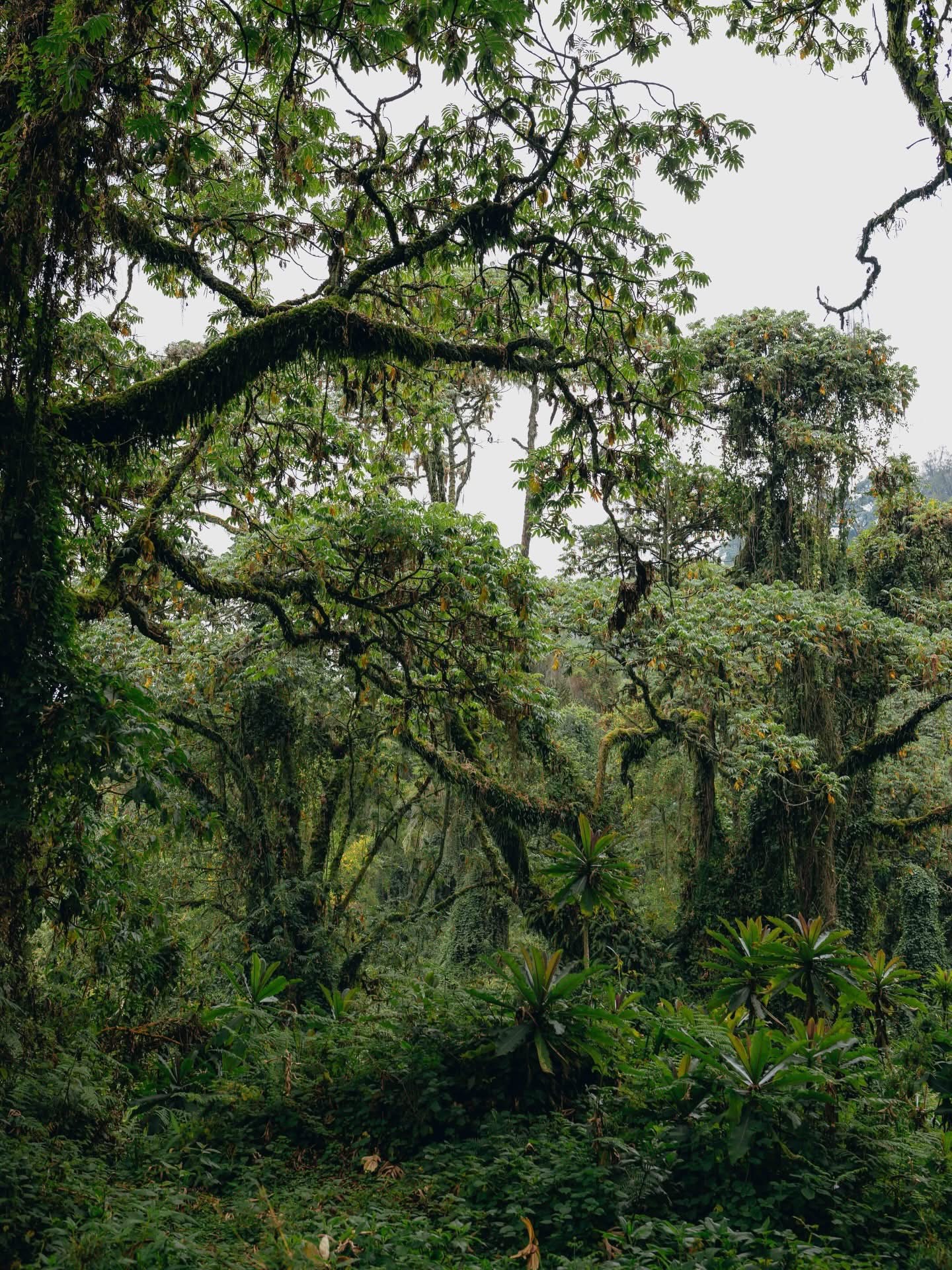
The first question almost every guest asks me about Rwanda is the same. How much does the gorilla permit actually cost in 2026, and what does the rest of the trip add to that number? It is a fair question and it deserves a clear answer. I have spent years sending guests to Volcanoes National Park, and the gap between what websites quote and what a Rwanda gorilla trip actually costs once you account for the road, the permits, and the lodges can mislead even careful planners. In this guide I walk through what the trek really costs in 2026, how to qualify for the only meaningful discount, and what the full investment looks like when every line is built honestly.
Rwanda Gorilla Permit Cost in 2026: Every Official Rate
A Rwanda gorilla trekking permit costs USD 1,500 per person in 2026 for international visitors. The rate is fixed by the Rwanda Development Board and applies year-round. The full tier structure below is confirmed for 2026, last reviewed in July 2026.
- International visitors (foreign non-residents): USD 1,500 per person. This rate is fixed by the Rwanda Development Board. It applies year-round.
- Low season promotional rate for international visitors: USD 1,050 per person. This is a 30 percent discount. It is available November through May only. It applies only when the gorilla trek is combined with at least two nights in Akagera or Nyungwe National Park. It does not apply June through October, when all visitors pay the standard rate.
- Foreign residents in Africa and African citizens outside the East African Community: USD 500 per person, with proof of residency or citizenship.
- Rwandan and East African Community citizens: USD 200 per person, with valid ID.
The permit covers park entry, the guided trek with rangers, and one hour with a habituated gorilla family in Volcanoes National Park. It does not cover transport, accommodation, porters, or tips.
How Much Does Gorilla Trekking in Rwanda Cost in 2026?
The permit above is one line item, paid once, for one hour with the gorillas. The cost of gorilla trekking in Rwanda is shaped overwhelmingly by that permit and by where you choose to sleep, and a full Rwanda gorilla trip with lodging, transport, guiding, and the usual additions typically lands well above the permit itself by the time the lodge tier and the extras are honestly accounted for.
It helps to hold two numbers apart from the start, because conflating them is where most online gorilla trekking cost estimates go wrong. The first is the permit, a fixed government fee identical at every licensed operator. The second is the total trip investment: the lodge, the private vehicle and driver guide, road transfers from Kigali, meals, park-adjacent logistics, and the customary gratuities. The permit you cannot change. The total you shape deliberately, and the biggest lever on it is the lodge tier. Across a properly built quote the permit usually accounts for twenty to forty percent of the total, which means the gorilla trek Rwanda price quoted as a single headline figure rarely tells you what the week on the ground actually invests.
Is the USD 1,500 Rwanda Gorilla Permit Worth It?
My honest answer as an operator is yes for most travellers, with two exceptions I will name plainly. In years of sending guests to Volcanoes National Park, I have never had one return and tell me the hour was not worth the fee. What you receive for that USD 1,500 is one hour with a habituated gorilla family, the trained tracker team who locate the family at first light, the armed park rangers who accompany the trek for safety, and Rwanda's contribution to gorilla conservation, anti-poaching patrols, and the community revenue-sharing scheme that funds schools and health centres around the park boundary. By official disclosure a substantial portion of every permit fee returns to local communities and ongoing conservation work. The price point is high because Rwanda set it deliberately, and the work it funds is real.
Now the two exceptions. First, if paying USD 1,500 per person would force the rest of your trip into lodging and logistics you would not otherwise accept, Uganda at USD 800 delivers the same species and an encounter every bit as valid, and I say so directly in the comparison further down this page. Second, if your dates fall anywhere from November through May and your routing is flexible, paying the standard rate without first checking the USD 1,050 qualifying itinerary is simply leaving money on the table. Worth it is not a fixed answer. It depends on which rate you can access and what the rest of your trip needs to be.

The permit is one hour. The trip is the days around it, and the sections below cover what those days involve and where the price actually moves.
How Does the USD 1,050 Low Season Discount Actually Work?
This is the one meaningful discount the Rwanda Development Board offers on the gorilla permit, and most pages describing it get the conditions wrong. A 30 percent discount brings the permit from USD 1,500 to USD 1,050 per person. It is available November through May only, and only when the gorilla trek is combined with at least two nights in Akagera or Nyungwe National Park. For a couple, that is USD 900 saved on permits alone.
Both conditions matter equally. First, the stay must be genuine: at least two nights inside Akagera, Rwanda's Big Five savannah park near the Tanzania border, or Nyungwe, the montane rainforest in the southwest with habituated chimpanzee groups and the canopy walk. Booking only the Volcanoes trek during low season does not qualify, and nor does a token half-day stop at either park. Second, the calendar is strict: the discount does not apply June through October, when all visitors pay the standard USD 1,500 rate regardless of itinerary. Worth noting is that December through February falls inside the November to May window, so a qualifying itinerary in those months still earns the reduced rate even though it is high season on the ground.
For travellers with date flexibility, this opens up a more interesting shape than the gorilla-only sprint. A seven to ten night itinerary with two or three nights at Akagera or Nyungwe alongside three at Volcanoes gives you far more of the country at a permit price reduced by 30 percent. It is the rare case where doing more actually costs less per element. The guests I steer toward it are second-time East Africa travellers, honeymooners with two weeks to work with, and anyone whose dates already fall between November and May.
What Does a Full Rwanda Gorilla Trip Cost Beyond the Permit?
When people search for gorilla trekking Rwanda prices, they are usually picturing the permit alone, and that is the error. The permit is a fairly large line item, but it is rarely the largest on a properly built Rwanda quote. Once you account for accommodation, transport, guiding, meals, and the standard extras, the permit typically sits at twenty to forty percent of the total trip investment depending on the lodge tier. Treating the permit as the trip cost is the most common planning mistake I see. The sections below take each line in turn so the full shape of the price is visible rather than hidden inside one round number.
Lodging: The Largest Price After the Permit
Accommodation is the largest single line on most Rwanda gorilla quotes after the permits themselves, and the spread across tiers is enormous. A mid-range lodge near Volcanoes National Park, well-built and comfortable with reliable hot water and generator-backed lighting, sits at a meaningfully lower nightly rate than a luxury property with design-led architecture, a serious spa offering, and a fully realised culinary programme. An ultra-luxury lodge such as Bisate, Singita Kwitonda, or One&Only Gorilla's Nest sits in another category again, with per-night rates that move the entire shape of the quote. The next section covers the character of each tier, since this choice is the single biggest lever on the total after permits.
Transport and Logistics from Kigali
Volcanoes National Park sits about 2.5 to 3 hours by road from Kigali International Airport on a fully paved route that climbs gently into the foothills of the Virunga range. The standard arrangement is a private 4x4 vehicle with a professional driver guide for the duration, covering airport transfers, the road journey to Musanze, the daily run to the park headquarters at Kinigi for the morning briefing, and the return to Kigali. For guests who would rather skip the road, private helicopter transfers between Kigali and Kinigi are available at a serious premium, and domestic charter flights to the airstrip at Musanze are also possible.
Guiding and the Quiet Costs
Guide quality in Rwanda is genuinely high across the licensed operators, because the national tourism strategy has invested heavily in training and certification. A serious operator pairs you with a guide who has worked the circuit for years, with deep knowledge of the individual gorilla families and personal relationships with the park staff at Kinigi. There are also quieter costs that belong on every honest quote and are routinely hidden on cheap ones: ranger gratuities at the end of the trek, the customary porter tip on the trail, camp staff gratuities, and beverages outside the full-board arrangement. None are large individually, but they add up and should be itemised rather than left as a surprise on the final morning.
What It Costs to Visit Gorillas in Rwanda by Lodge Tier
Because the lodge is the biggest lever on what it costs to visit gorillas in Rwanda, the three tiers are worth understanding in some depth. The landscape around Volcanoes has changed enormously in the last ten years. When the permit price rose to USD 1,500, Rwanda made a deliberate decision to be the premium destination on the gorilla trekking map, and the lodge inventory followed accordingly.
At the mid-range end you have properties such as Le Bambou Gorilla Lodge, Mountain Gorilla View Lodge, and Five Volcanoes Boutique Hotel. These are honest, well-run lodges with comfortable rooms, working hot water, generator-backed lighting, and meals that are well-prepared rather than gourmet. The location puts you close to the park headquarters at Kinigi for the morning briefing, which matters when your assigned gorilla family is at altitude and the trek runs long. This tier is where most travellers who want the encounter without the design-led lodge find the right fit. The hour with the gorillas is the same hour regardless of which bed you slept in.
The luxury tier includes properties such as Sabyinyo Silverback Lodge, Virunga Lodge, and Five Volcanoes' upper category. The room design improves substantially, the spa offering arrives, the wine list develops some thought behind it, and the staff ratio shifts in your favour. You feel the difference from the moment of arrival, and for guests who want the gorilla encounter built into a fully realised lodge experience rather than treated as a standalone activity, this is the tier I most often recommend.

At the ultra-luxury end sit a handful of properties that operate at a different register entirely. Bisate Lodge by Wilderness, Singita Kwitonda Lodge, and One&Only Gorilla's Nest design every element of your stay around you, from volcanic-stone soaking tubs with views to the Virunga peaks, to spa treatments built around trek recovery, to forest-restoration programmes you join personally. These properties also sit close to the park boundary, often a fifteen minute drive or less to Kinigi, which on a difficult trek morning is a real consideration.
The lodge decision matters more in Rwanda than on a typical northern Tanzania circuit, because the trek is the same encounter regardless of where you sleep. What you choose with the lodge tier is the shape of the rest of your time on the ground.
If you already have dates in mind or want to know what a Rwanda gorilla trip costs for your specific group, send me your details on WhatsApp and I will respond with a personalised, itemised answer within a few hours.
Is Gorilla Trekking Cheaper in Rwanda or Uganda?
This is the question I field most often from guests settling the country choice, and it deserves a direct answer. Uganda's gorilla permit, charged by the Uganda Wildlife Authority, sits at USD 800 per person for foreign non-residents in 2026, with a USD 600 low season rate, and Uganda's gorilla habituation experience, which gives you extended time with a family still being habituated, is USD 1,800 from 1 July 2026. The standard permit is roughly half of Rwanda's USD 1,500. For a couple, that is a permit gap of about USD 1,400 before any other line on the quote is considered. Uganda is, plainly, the lower-cost alternative for gorilla trekking, and I break down the full figure in my guide to what gorilla trekking in Uganda costs in 2026, which mirrors this one on the Uganda side.
Rwanda commands its premium for genuine reasons. Kigali International Airport is closer to the gorillas, at two and a half to three hours by road, than Entebbe is to Bwindi, which is eight to ten hours by road although charter flights now cut that to about an hour. The trek terrain in Volcanoes is volcanic and open in stretches, generally shorter and more accessible underfoot than Uganda's Bwindi rainforest, which is dense, steep, and physically demanding in a way that surprises guests expecting an easier walk. The lodge inventory at the premium end is significantly more developed in Rwanda, although Uganda has been catching up with properties such as Bwindi Lodge and Sanctuary Gorilla Forest Camp. Rwanda has positioned itself deliberately as the premium destination, with road infrastructure, hospitality standards, and a tourism strategy built around exactly that.
Uganda is the lower-cost alternative without being a lesser experience. The encounter with a habituated gorilla family in Bwindi is every bit as remarkable as the one in Volcanoes, and for guests who prioritise the depth of the forest over the polish of the lodge, Bwindi often delivers the more memorable visit. I lay out the full trade-offs around terrain, lodge quality, transfer logistics, and trip shape in my dedicated piece comparing Rwanda and Uganda for gorilla trekking. If the question is purely permit-driven, Uganda is the answer. If it is broader, the answer is less clean.
When Is the Best Time, and the Cheapest Time, to Trek Gorillas in Rwanda?
Gorilla trekking in Rwanda is possible year-round, and the habituation work continues whether the sky is clear or the rain is coming down. The conditions vary meaningfully across the calendar, however, and so do the prices and the permit availability. The high season runs June through September and again December through February. These are the dry windows, with the firmest trek terrain, the most reliable visibility on the trail, and the highest demand on both permits and lodges. Permits during these months sell out four to six months ahead at minimum, and the premium lodges sell out further out than that for the peak weeks. If you have set dates in this window, the rule is straightforward: book early, secure the permits first, and let the lodge selection follow from what is still available.
The low season runs November through May, with March through May carrying the heaviest rain. This is the window where the 30 percent permit discount applies for gorilla treks combined with at least two nights in Akagera or Nyungwe. The treks during these months are wetter underfoot, visibility can be reduced in heavy rain, and the gear demands rise. But the encounters themselves are entirely valid. The gorillas are there, the families are habituated to humans regardless of the weather, and the lodges sit at lower rates, which compounds with the permit discount to make a low-season Rwanda trip the strongest value the country offers. For guests with flexible dates, I quietly steer toward late November and early December before the Christmas peak, and toward early to mid-June before the high-season rates fully arrive, the shoulder weeks where conditions are reasonable, rates have not yet peaked, and the permit discount may still apply on the late-November end.
How Do I Book a Rwanda Gorilla Permit, and How Far Ahead?
There are two routes, and both end at the same permit. You can book directly with the Rwanda Development Board and hold the confirmation yourself, or you can have a licensed operator secure the permit as part of your itinerary. The price is identical either way, because the fee is fixed by the government. There is no operator discount on the permit itself, and any quote that claims one is either misrepresenting the permit or quoting a resident rate you do not qualify for. What an operator adds is sequencing: matching the permit date to lodge availability, holding the trek day inside a sensible road plan, and speaking for you at the morning briefing at Kinigi, where gorilla families are assigned and a word about your fitness and preferences genuinely shapes the trek you get.
Timing matters more than the route. Permits are limited each day, with ninety-six issued across twelve habituated families and eight visitors per family, and they sell out months ahead for the peak windows of June to September and December to February. Four to six months ahead is the minimum I advise for peak dates, and the highest demand weeks around Christmas and the northern summer go earlier still. Low season dates carry more availability, but a USD 1,050 qualifying itinerary also needs Akagera or Nyungwe lodging aligned with the trek date, so earlier remains better. My working rule is simple: fix the permit date first and let every other element of the trip follow from it.
Combining Gorilla Trekking with a Tanzania Safari
Many guests planning Rwanda from outside East Africa ask whether they can pair the trek with a Tanzania safari, and the combined trip is one of the strongest shapes a first East Africa journey can take. The two destinations share a reliable air corridor through Kigali and Kilimanjaro, so a single bespoke itinerary gives you two genuinely distinct experiences. The honest planning question is length. Rwanda needs three to four nights to be done properly and a serious Tanzania safari needs six to seven, so combining the two calls for ten to fourteen nights on the ground, often more if Zanzibar is added at the end. My Tanzania safari planning guide walks through how the Tanzania portion is built, and my piece on what a Tanzania safari costs in 2026 covers the figure side the same way this guide covers Rwanda.
For honeymooners and milestone travellers, the combined journey, often finished with several nights on Zanzibar, sits in a category of its own, moving from mountain gorillas in volcanic forest, to lions on the Serengeti plains, to reef and ocean on the coast. My piece on honeymoon safaris combining Tanzania and Zanzibar covers how those portions are paced together. On order, I recommend Rwanda first, Tanzania in the middle, then an optional Zanzibar finish, because the trek is the most physically demanding element and starting fresh makes the encounter more present. My piece on how many days you actually need for a Tanzania safari is the framework I use when sequencing a combined East Africa trip.
If your dates fall in June to September or December to February, the practical priority is securing the gorilla permits first. The lodges follow. Sending dates to us four to six months ahead is the safe window for peak season, and longer for the highest-demand weeks across the year. Every quote we send is itemised line by line so the permit, lodge, transfers, guiding, and gratuity guidance sit as separate, visible numbers rather than a single opaque total.
Frequently Asked Questions
A Rwanda gorilla permit costs USD 1,500 per person in 2026 for international visitors, fixed by the Rwanda Development Board. Foreign residents in Africa and African citizens outside the East African Community pay USD 500. Rwandan and East African Community citizens pay USD 200. A conditional USD 1,050 low season rate runs November through May.
The USD 1,050 rate is a 30 percent discount on the standard USD 1,500 permit. It is available November through May only, and only when the gorilla trek is combined with at least two nights in Akagera or Nyungwe National Park. It does not apply June through October, when all visitors pay the standard rate.
Uganda is cheaper on permits. The Uganda gorilla permit is USD 800 standard and USD 600 in low season, against Rwanda at USD 1,500. Uganda's gorilla habituation experience is USD 1,800 from 1 July 2026. Rwanda charges its premium for shorter road access from Kigali, more open trek terrain, and deeper luxury lodge inventory.
The permit covers park entry, the guided trek with rangers, and one hour with a habituated gorilla family in Volcanoes National Park. It does not cover transport, accommodation, porters, or tips. Those sit as separate lines on any honest quote, and lodging is usually the largest of them.
Book four to six months ahead at minimum for peak season, and longer for the highest demand weeks. Permits are limited daily and sell out months ahead in the June to September and December to February windows. You can book through the Rwanda Development Board directly or have a licensed operator secure permits with your itinerary.
Beyond the permit, the largest line is lodging, which ranges from honest mid-range lodges to ultra-luxury properties near the park boundary. Private transfers from Kigali, guiding, meals, and porter and ranger gratuities complete the picture. The permit usually represents twenty to forty percent of a properly built trip, depending on the lodge tier.
November through May is the cheapest window, with lower lodge rates and the USD 1,050 permit rate for qualifying itineraries. March through May carries the heaviest rain, though the encounters remain just as valid year-round. June through October always carries the standard USD 1,500 rate, and peak season dates sell out earliest.
Yes, and it is one of the strongest shapes a first East Africa trip can take. Plan ten to fourteen nights on the ground to do both countries properly. The sequence I recommend is Rwanda gorillas first, a Tanzania safari in the middle, and an optional Zanzibar finish. Flights between Kigali and Kilimanjaro are reliable.