The question I am asked first about Uganda is almost always about the permit. How much does the gorilla permit cost in 2026, and what does the rest of the trip add to that figure? It is the right question, and it deserves a straight answer rather than the vague ranges that fill most search results. I have spent years sending guests into Bwindi Impenetrable National Park, and the distance between the permit price people see online and what a Uganda gorilla trip actually invests, once you account for the road, the lodges, and the days around the trek, catches out even careful planners. In this guide I walk through what the trek really costs in 2026, the low-season discount, the habituation experience and its mid-year price change, and what the full trip looks like when every line is built honestly.
In broad terms, the standard Uganda gorilla permit in 2026 sits at USD 800 per person for foreign non-residents, set by the Uganda Wildlife Authority. That is one line item, paid once, for one hour with a habituated gorilla family. A full trip with lodging, the transfer to Bwindi, guiding, and the usual additions lands well above the permit itself once the lodge tier and the extras are honestly accounted for. The permit is the headline number, not the trip cost.
The Uganda Gorilla Permit in 2026: USD 800 and What It Funds
The standard Uganda gorilla trekking permit in 2026 is USD 800 per person for foreign non-residents. The figure is set by the Uganda Wildlife Authority, the government body that manages the parks, and it is fixed across every licensed operator on the ground. No operator can offer you a lower permit price than another, and any quote that claims a discount on the permit itself is either misreading the rate or quoting the East African resident figure to a guest who does not qualify for it.
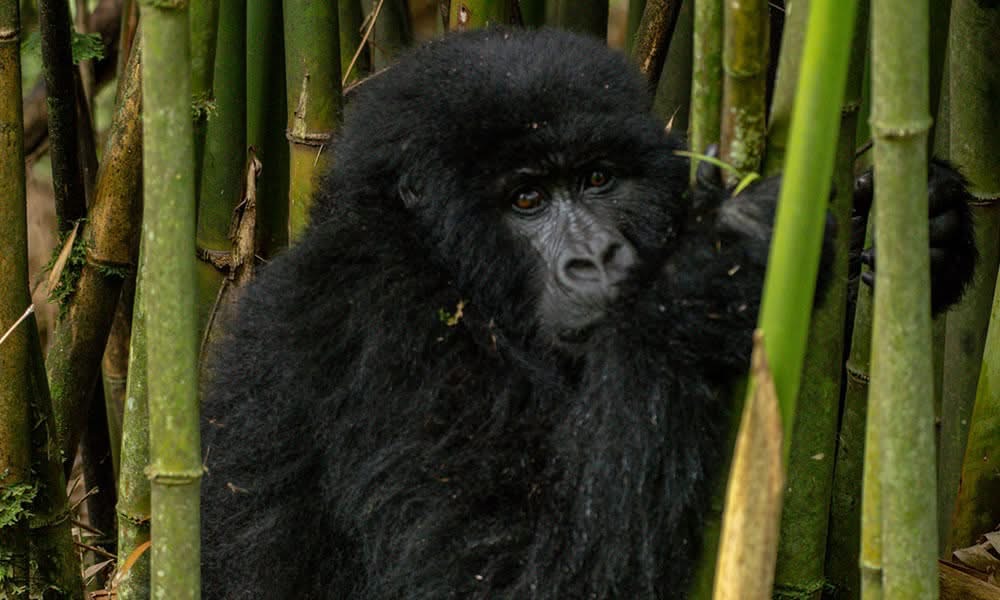
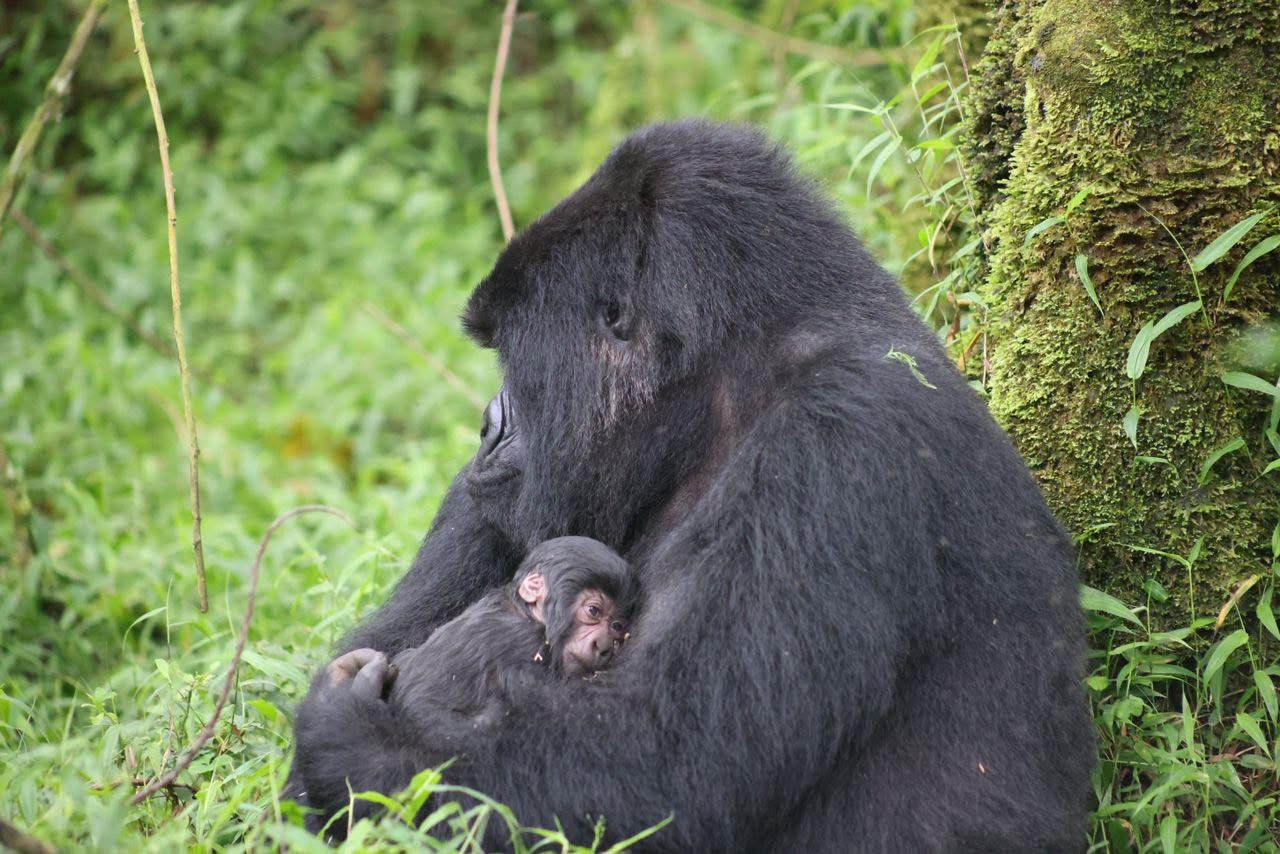
What you receive for that USD 800 is one hour with a habituated gorilla family, the trained ranger guides who track and lead you to them, the trackers who work the forest ahead of you, and park entry for the day of the trek. Gorilla trekking in Uganda takes place in two parks in the southwest: Bwindi Impenetrable National Park, which holds the large majority of the habituated families across its Buhoma, Ruhija, Rushaga, and Nkuringo sectors, and the smaller Mgahinga Gorilla National Park on the Rwanda border. A meaningful share of every permit fee returns to conservation work and to the communities around the park, which is part of why the families have remained protected and the local relationship with tourism has held.
What the permit does not cover is everything else around the trek: accommodation, the transfer from Entebbe to Bwindi, meals outside the lodge arrangement, the customary porter tip, the ranger gratuity at the end, and every additional day you spend in Uganda. The permit buys one hour. The trip is the days that surround it, and those days are where the real shape of the cost is decided.
The Low-Season Discount: USD 600 in April, May and November
There is one genuine discount on the standard permit, and it is worth understanding clearly because it can change the shape of a trip for travellers with flexible dates. During April, May and November, the Uganda Wildlife Authority sets a low-season permit rate of USD 600 per person for foreign non-residents, a saving of USD 200 per permit against the standard USD 800.
The condition most websites underplay is this: the discounted permits are date-specific and non-reschedulable. They are issued against particular dates inside those three months, and once a permit is bought it cannot be moved. If your plans shift, the permit does not shift with them. The lower price is real, but the flexibility you give up is the trade. For a couple the discount saves USD 400 on permits alone, and it lands in the same months that already carry lower lodge rates, which is why a low-season Uganda trek is the strongest value the country offers. The honest caveat is that April, May and November are wetter, and the Bwindi trails are steeper and more demanding underfoot when the rain has been through.
The Gorilla Habituation Experience and Its 2026 Price Change
For travellers who want more than one hour, Uganda offers something Rwanda does not: the Gorilla Habituation Experience, the GHEX. Rather than visiting a fully habituated family for a single hour, you join the researchers and trackers working with a family that is still being habituated, and stay with them for up to four hours. It takes place in Bwindi's Rushaga sector, the group sizes are smaller, and the experience is quieter and more immersive than the standard trek. It is the most rewarding gorilla encounter in East Africa for guests who want depth over brevity.
The pricing here carries a change every guest planning 2026 dates needs to know. The GHEX is USD 1,500 per person for foreign non-residents through the first half of 2026, and effective 1 July 2026 that figure rises to USD 1,800 per person. Both numbers are real and the change date is firm, so the timing of when you travel decides which you pay: before 1 July 2026 it is USD 1,500, on or after that date it is USD 1,800. For guests weighing the GHEX against the standard one-hour permit, this price step is part of the calculation, and one more reason to settle dates early.
Full Payment Now Required to Secure a Permit
One procedural change from 2026 matters enough to call out on its own, because it affects how you plan rather than what you pay. As of 1 March 2026, the old seven-day soft-hold on gorilla permits has ended. Previously an operator could place a tentative hold for a week while a guest confirmed plans; that hold no longer exists, and full payment is now required to secure a permit. In practice this raises the importance of early commitment, especially for peak dates and the limited GHEX permits in Rushaga, because there is no longer a window in which a permit sits reserved but unpaid, and it goes to whoever pays first. We handle the purchase directly once your dates are confirmed, so the payment timing is managed on your behalf rather than left to chance.
What the Full Trip Costs Beyond the Permit
I want to be direct here, because it is where most online quotes mislead. The permit is one line item, and an important one, but it is rarely the largest line on a properly built Uganda quote. Once you account for lodging, the transfer to Bwindi, guiding, meals, and the standard extras, the permit typically sits well below half of the total. Treating the USD 800 permit as the trip cost is the single most common planning error I see on Uganda.
Lodging
Accommodation is usually the largest single line after the permits, and the spread across tiers is wide, from comfortable mid-range lodges near a Bwindi trailhead to ultra-luxury properties whose per-night rates move the entire shape of the quote. I cover the character of each tier in the next section, because after the permits it is the single biggest lever on the total investment.
Transport and the Bwindi Drive
This is where Uganda differs most sharply from Rwanda on logistics, and the line guests underestimate most often. Bwindi sits in the far southwest, roughly eight to ten hours by road from Entebbe on a journey that is scenic but long. Most guests do not drive it in one push; the usual shape is to break the road with a night near Lake Mburo, or to fly. A scheduled or charter flight from Entebbe to the airstrips at Kihihi or Kisoro cuts the transfer to roughly one and a half hours in the air, followed by a shorter road leg to the lodge. The flight adds cost but recovers a full day or more at each end, and for shorter itineraries it is usually the right call. A private 4x4 with a professional driver guide covers the ground portion either way.
Guiding and the Quiet Costs
The ranger and guide quality in Uganda is genuinely high, and the trackers who work the Bwindi families know them individually. A serious operator pairs you with a driver guide who has worked the southwest circuit for years and knows the park staff personally, which matters on a long trek morning. There are also quieter costs that belong on every honest quote and are routinely hidden on cheap ones: the porter you hire at the trailhead, who is worth every shilling on Bwindi's terrain, the ranger gratuity, camp staff gratuities, and beverages outside the full-board arrangement. None is large on its own, but together they add up, and they should be itemised rather than left as a surprise on the final morning. I lay out this category in more detail in my piece on the costs that hide inside a safari quote, and the same discipline applies on the Uganda side.
Lodge Character Near Bwindi
The lodge landscape around Bwindi has matured considerably in the last decade. Where you sleep is partly a function of which of the park's four sectors your permit is allocated to, since the drive between them can be long on Bwindi's mountain roads. There are broadly three tiers I quote across.
At the mid-range end you have properties such as Buhoma Lodge's standard rooms, Gorilla Mist Camp, Ride 4 a Woman, and the Rushaga-area community lodges. These are honest, well-run places with comfortable rooms, working hot water, and meals that are well-prepared rather than gourmet. What they give you is proximity to the trailhead and a genuine sense of place, often with strong community ownership behind them. The hour with the gorillas is the same regardless of which bed you slept in, and for many guests this tier is exactly the right fit.
The luxury tier includes properties such as Mahogany Springs, Buhoma Lodge's premium rooms, and Chameleon Hill above Lake Mutanda. The room design improves substantially, the kitchen develops real ambition, the staff ratio shifts in your favour, and the setting tends to be more dramatic. For guests who want the gorilla encounter built into a fully realised lodge experience rather than a standalone activity, this is the tier I most often recommend in Bwindi.

At the ultra-luxury end sit a small number of properties that operate at a different register entirely. Bwindi Lodge by Volcanoes Safaris, Sanctuary Gorilla Forest Camp set inside the park itself, and Clouds Mountain Gorilla Lodge above Nkuringo each design every element of the stay around you: forest-edge soaking tubs, fireplaces against the highland chill, kitchens that take the food seriously, and a level of service that makes the recovery after a hard trek part of the experience. Uganda's premium inventory was once thinner than Rwanda's, but these properties now stand comfortably alongside the best on the gorilla map. The lodge decision matters more here than on a savannah circuit, because the trek itself is the same encounter regardless of where you sleep. What you choose with the lodge tier is the shape of the rest of your time on the ground.
If you already have dates in mind or want to know what a Uganda gorilla trip costs for your specific group, send me your details on WhatsApp and I will respond with a personalised, itemised answer within a few hours.
How Uganda Compares to Rwanda on Cost
This is the comparison guests most want settled, and it deserves a direct answer. On the permit, Uganda is plainly the lower-cost of the two major gorilla destinations. Uganda's permit is USD 800. Rwanda's, set by the Rwanda Development Board, is USD 1,500. That is a permit gap of USD 700 per person, or USD 1,400 for a couple, before any other line on the quote is considered. If the question is purely permit-driven, Uganda is the answer, and it is not close.
The wider trip cost narrows that gap somewhat, mostly because of access. Rwanda's Volcanoes National Park is two and a half to three hours by paved road from Kigali, while Bwindi is eight to ten hours from Entebbe or a charter flight that adds cost. So Uganda saves you heavily on the permit and gives some of it back on the transfer. The countries also differ in character. Volcanoes is volcanic and more open underfoot, generally shorter and more accessible; Bwindi is dense, steep rainforest that is physically demanding in a way that surprises guests expecting an easier walk. The encounter itself in Bwindi is every bit as remarkable as in Volcanoes, and for guests who prioritise the depth of the forest over the polish of the lodge, Bwindi often delivers the more memorable visit. I break down the full picture in my guide to what a Rwanda gorilla trek costs in 2026, and I lay out the country choice in my piece comparing Rwanda and Uganda for gorilla trekking, where the trade-offs around terrain, lodges, and logistics are set out in full. If the question is broader than the permit, the answer is less clean, and that is exactly the conversation those two pieces are built for.
Best Time to Trek Gorillas in Uganda
Gorilla trekking in Uganda is possible year-round; the families remain habituated whether the sky is clear or the rain is coming through. The conditions, the prices, and the trail demands all vary across the calendar, however.
The drier months run June through September and again December through February. These are the firmest windows underfoot, with the most reliable trekking and the steadiest visibility in Bwindi's forest, and demand on permits and lodges is highest then. The wetter months run March through May and again October through November, when the rain is heavier, the trails steeper and more slippery, and the gear demands rise. Those same months carry the lower lodge rates, and April, May and November carry the USD 600 low-season permit. The wet-month encounters are entirely valid; the gorillas are present and the families habituated regardless of the weather, so the trade is comfort and trail conditions against price. For flexible dates I quietly steer toward early June and late September, the shoulder edges of the dry season, and toward November for guests who want the low-season permit without the heaviest of the long rains.
Combining Gorilla Trekking with a Wider Safari
Most guests who travel this far do not come only for the hour with the gorillas, and Uganda rewards a wider journey. Within the country, the gorilla trek pairs naturally with chimpanzee tracking in Kibale, the tree-climbing lions and boat cruise of Queen Elizabeth National Park, and the raw power of Murchison Falls, giving you a country still far less travelled than the northern Tanzania circuit, with the gorillas as its anchor.
Many of my guests also combine the Uganda gorilla trek with a Tanzania safari, and the pairing works well. The two countries share a reliable air corridor through Entebbe and Kilimanjaro, and a single bespoke itinerary that includes both gives you two distinct experiences inside one journey: mountain gorillas in highland rainforest, then lions and the great herds on the savannah. The honest planning question is length. The gorilla portion needs three to four nights once the transfer to Bwindi is accounted for, and a serious Tanzania safari needs six to seven to cover the northern circuit at the pace it deserves, so combining the two calls for ten to fourteen nights on the ground, often more if a beach finish is added. My Tanzania safari planning guide walks through how the safari portion is built, and my piece on what a Tanzania safari costs in 2026 covers the figure side of the Tanzania leg the same way this guide covers the Uganda side.
The order matters too. I generally recommend the gorilla trek first, the savannah safari in the middle, and an optional beach finish at the end. The trek is the most physically demanding element, and starting fresh makes the encounter more present. I cover the calendar question in my piece on how many days you actually need for a safari, which is the framework I use when sequencing a combined East Africa trip. To see how I shape the trek and the days around it, look at my private gorilla trek safari.
Since 1 March 2026, a permit is only secured once it is paid in full, and the discounted April, May and November permits cannot be rescheduled once issued. If your dates fall in the dry-season peak or you want the limited habituation permits in Rushaga, the practical priority is confirming dates and securing permits early. Send your dates to us and every quote we return is itemised line by line, with the permit, lodge, transfers, guiding, and gratuity guidance as separate, visible numbers rather than one opaque total.
Frequently Asked Questions
The standard Uganda gorilla trekking permit in 2026 is USD 800 per person for foreign non-residents, set by the Uganda Wildlife Authority. It covers one hour with a habituated gorilla family in Bwindi Impenetrable National Park or Mgahinga Gorilla National Park, the ranger guides who lead the trek, and park entry for the trek day. The figure is fixed and applies across every licensed operator.
Yes. A low-season rate of USD 600 per person for foreign non-residents applies during April, May and November. These discounted permits are tied to specific dates within those months and are non-reschedulable once issued, so the date flexibility you give up is the trade for the lower price. Outside those three months the rate returns to USD 800.
The Gorilla Habituation Experience, which gives you up to four hours with a semi-habituated family in Bwindi's Rushaga sector, is USD 1,500 per person for foreign non-residents in 2026. That figure rises to USD 1,800 effective 1 July 2026. If your dates fall after that date, the higher figure applies, so the timing of when you travel changes what this experience costs.
Yes. As of 1 March 2026, the old seven-day soft-hold on gorilla permits has ended. Full payment is now required to secure a permit, so a permit is only confirmed once it is paid in full. For peak dates this makes early commitment more important than it used to be, because a tentative hold is no longer an option.
The permit at USD 800 is one line item among several. A full Uganda gorilla trip adds lodging near Bwindi, the long road transfer or charter flight from Entebbe, a private vehicle and guide, park transfers, meals and the customary porter and ranger gratuities. Once those are accounted for, the total sits well above the permit alone, and it moves most with the lodge tier you choose and the trip length. We quote line by line so each component is visible.
Yes, on the permit. Uganda's permit is USD 800 against Rwanda's USD 1,500, so Uganda is the lower-cost of the two major gorilla destinations by a clear margin. The wider trip cost narrows the gap somewhat because of the longer transfer to Bwindi, but Uganda remains the more affordable country for the gorilla encounter itself.
The drier months of June to September and December to February give the firmest trail conditions in Bwindi and the most reliable trekking. The wetter months of March to May and October to November bring heavier rain and steeper, more demanding terrain, but they also carry the USD 600 low-season permit rate in April, May and November and lower lodge prices. The gorillas are present and habituated year-round.
Yes. Uganda pairs naturally with a wider East Africa journey, whether that is the rest of Uganda's parks or a Tanzania safari reached by air through Entebbe and Kilimanjaro. A combined gorilla and safari trip usually needs ten to fourteen nights on the ground to do both properly. The gorilla trek normally comes first, with the savannah safari following, and an optional beach finish at the end.