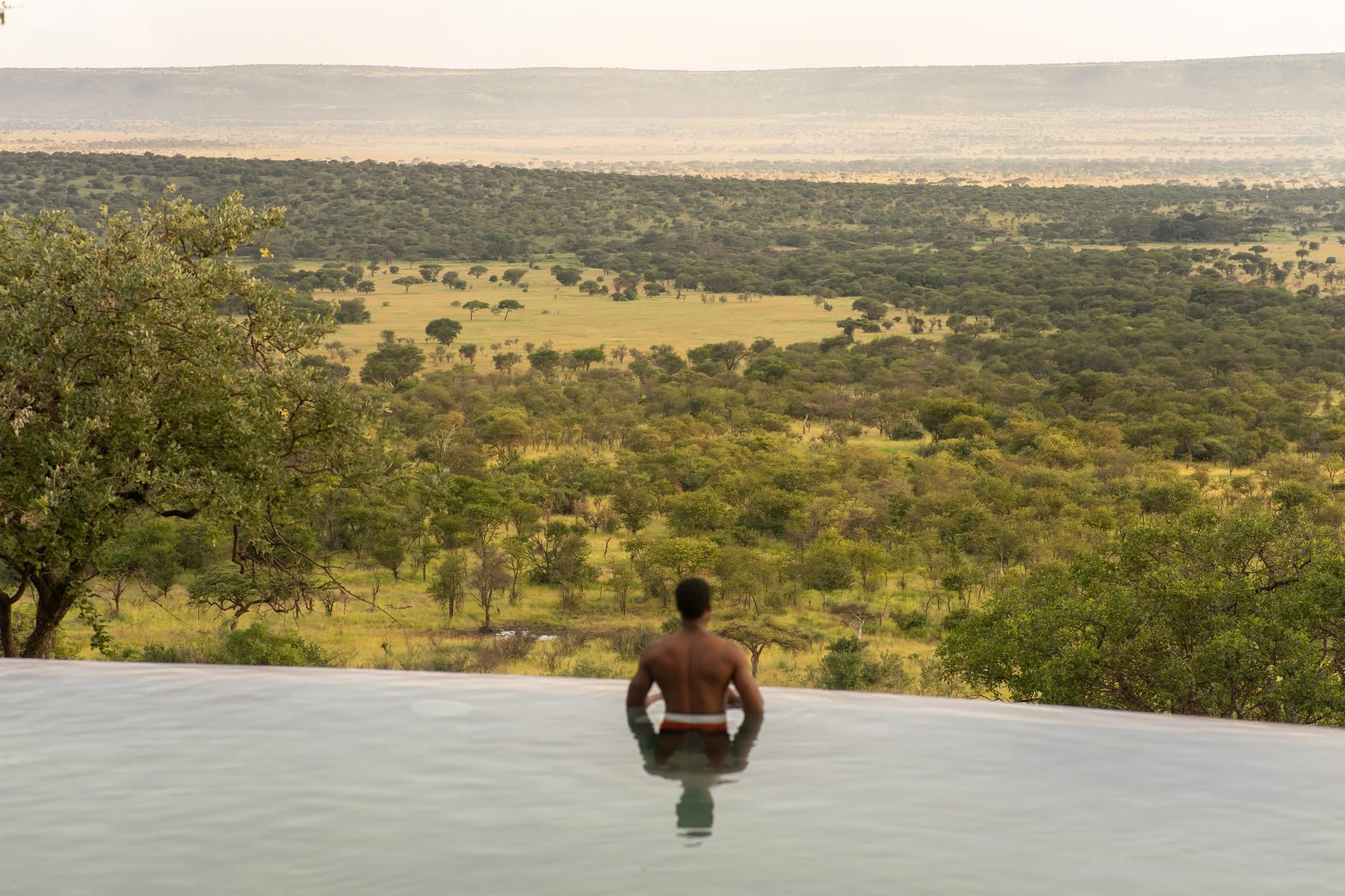
There are two good ways to spend ten days in Tanzania. The first is the full Northern Circuit, Tarangire, the Ngorongoro Crater, and the central and northern Serengeti, with time to go deep, and the second is seven days of safari followed by three on the Zanzibar coast. This page gives you both, day by day. The full circuit is the version I recommend to travelers who want the whole Northern Circuit done properly, with nothing left on the table. It reaches the northern Serengeti and the Mara River and gives you full days in each ecosystem rather than a string of transfers with game drives wedged between them. It is the itinerary returning clients ask me for.
What follows is the working framework I use for the full circuit. Arusha, then Tarangire, then the Ngorongoro Highlands and the crater floor, then the central Serengeti around Seronera, and finally the northern Serengeti around Kogatende, with a scenic fly-out on the last day. A walking safari with Maasai guides is built into the route, not sold as an upsell. The pricing is honest and the structure is real. The safari-and-beach version, which keeps the same core parks and gives the northern Serengeti days to the coast, follows straight after day ten.
Why is ten days the right length, and what does it add over seven?
Ten days buys two things a seven day Northern Circuit cannot: reach and rhythm. Seven days takes you through Tarangire, the Ngorongoro Crater, and the central Serengeti, a complete safari on its own. What it does not do is carry you north into the Kogatende and Mara River sector, a full day's drive beyond Seronera, where the wildebeest cross the river. Ten days is the shortest itinerary that reaches that country without rushing.
The second thing is rhythm. On a compressed route your full days are rare and your transfer days many, so you spend more time relocating than sitting with a sighting. Ten days inverts that ratio, with full days in Tarangire, the central Serengeti, and two in the north, and those unhurried days are where the trip actually lives. There is a practical case too. Once you have paid for the long flight to get here, the return on three more nights on safari is high, which is why clients who do ten days rarely wish they had done seven.
Day 1: Arrival in Arusha
You land at Kilimanjaro International Airport in the evening and your driver is waiting with a Westway Safaris sign. The transfer to your Arusha hotel takes about forty five minutes along a dark, low-traffic road. I do not push clients to do anything on the first evening. Most arrive tired from a long haul flight, and the body needs an unscripted night. Your lodge will have a quiet dinner waiting. The ten day arc means there is no need to force the pace on day one.
Luxury: Gran Melia Arusha (new for 2026, the best in town), Legendary Lodge (coffee plantation setting on the outskirts). Mid-range: Onsea House, Arusha Coffee Lodge.
Day 2: Arusha to Tarangire National Park
After breakfast your guide collects you in a fully equipped 4x4 Land Cruiser with a pop-up roof. The drive to Tarangire is comfortable along a paved road and takes roughly two hours, and you enter the park around lunchtime with a packed picnic from the gate.
Tarangire is the park most first time visitors underestimate and the one they talk about most afterward. Its ancient baobabs create an almost prehistoric atmosphere, and between June and November the river draws one of the highest concentrations of elephants in Africa, with breeding herds of two hundred or more. The resident wildlife is excellent year round, with tree climbing lions and leopards in the riverine forest. For the seasonal detail and the best lodges, my Tarangire National Park guide is the standalone reference. You game drive through the afternoon and reach your lodge as the light turns gold.

Day 3: A Full Day in Tarangire
A full day lets you move beyond the main circuits and into parts of the park short itineraries never reach. Morning drives push south toward the Silale swamps, where buffalo gather in the hundreds and lion prides shadow them along the edge. The midday hours back at your lodge are not wasted, and this slow rhythm is exactly what a ten day itinerary is built to protect.
For travelers who want more, a Tarangire night game drive is the most popular optional add on we offer. It is an extra 300 USD per person and gives you ninety minutes after dark with a spotlight, the only way to see civets, genets, white tailed mongoose, and on a fortunate evening an aardvark. It runs from a private concession adjacent to the park, where night driving is permitted.
Luxury: Tarangire Treetops (treehouse rooms above the baobabs), Chem Chem Lodge (private concession with walking). Mid-range: Maramboi Tented Lodge, Tarangire Safari Lodge (cliff-edge setting above the park).
Day 4: Tarangire to the Ngorongoro Highlands, with a Walking Safari
A short morning game drive on the way out, then the road north toward Karatu and the Ngorongoro Conservation Area, about three and a half hours through escalating landscapes. Dry lowlands give way to coffee farms and highland forest as you climb toward the crater rim, and the temperature drops enough that you reach for a fleece by arrival.
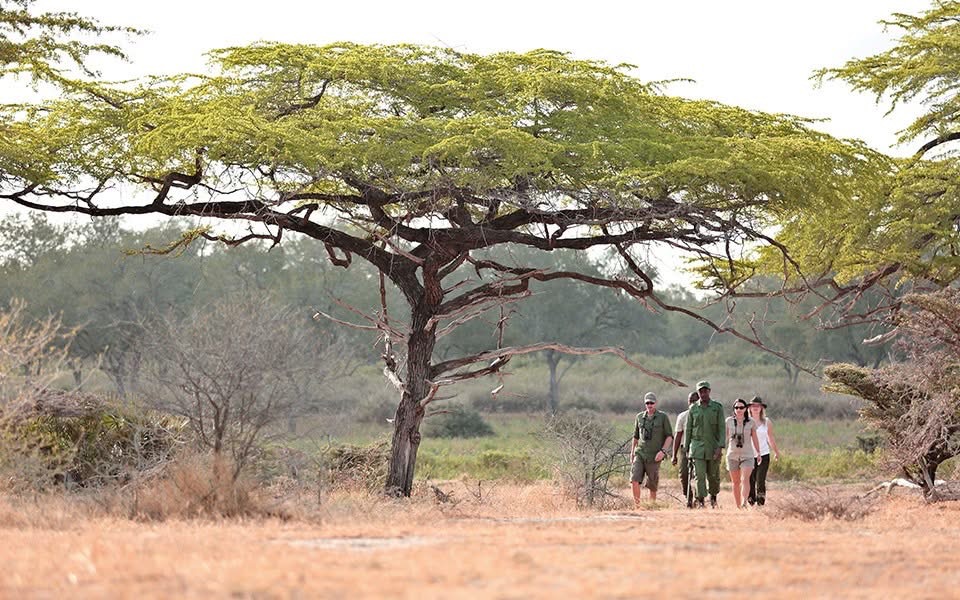
You check in around early afternoon and head straight out on a guided walking safari with a Maasai guide and an armed ranger. The walk runs about three hours along the highland forest trails. This is not a casual stroll. You learn how Maasai trackers read fresh elephant dung at a glance, how the medicinal plants here are still used in the surrounding communities, and you see buffalo, bushbuck, and forest birds at a pace no vehicle can offer. The walk is part of the itinerary, not a paid extra, and most clients name this afternoon the surprise of the trip. Sundowners on the crater rim close the day.
If you have specific dates in mind, or you want to know what a 10-day itinerary costs for your party size, send your details on WhatsApp and I will reply with a personalised plan within a few hours.
Day 5: Crater Floor, then on to the Central Serengeti
An early descent puts you on the crater floor by six thirty, ahead of the midday traffic. It is one of the densest concentrations of wildlife on earth, and within the first hour you will most likely see lion, elephant, buffalo, zebra, wildebeest, flamingo, and hippo. The black rhino, one of the last wild populations in East Africa, is spotted regularly though never guaranteed. My full Ngorongoro Crater guide is the deeper read.
The floor circuit runs four to five hours. By late morning you ascend the western wall and continue toward the central Serengeti, the area called Seronera, about three hours on, often with a stop at Olduvai Gorge where the early human fossil record was unearthed. Then the plains open out and run flat to the horizon, and this is usually the moment clients fall quiet in the back of the vehicle.
Day 6: A Full Day in the Central Serengeti
A full day in the Seronera area, with a dawn game drive and a return in the late afternoon. The central Serengeti holds Africa's highest density of big cats. On a full day you will almost certainly find lion prides near a fresh kill, leopards draped along acacia branches, and cheetah hunting the open plains. The Seronera River valley is reliable leopard country, and the kopjes, granite outcrops rising from the grass, shelter prides through the heat.
For clients who want it, dawn here is the ideal slot for a balloon safari. The balloon lifts off at first light and lands an hour later beside a champagne bush breakfast laid out in the grass. It is 600 USD per person, and most who do it name it the favourite morning of the week.
Luxury: Four Seasons Safari Lodge Serengeti, Singita Sasakwa Lodge, One Nature Nyaruswiga. Mid-range: Serengeti Serena Lodge, Kubu Kubu Tented Lodge, Lahia Tented Lodge.
Day 7: Central Serengeti to the Northern Serengeti
This is the day that separates a ten day itinerary from a seven day one. After a morning game drive you head north toward the Kogatende sector near the Kenyan border. You can drive the full route, five to six hours with game viewing along the way, or fly from the Seronera airstrip in under an hour. On a ten day route I recommend the flight, to preserve your energy for the two full days that follow.
The northern Serengeti feels different from the central plains. It is greener, hillier, and far less crowded, because most short itineraries never reach it. The wildlife is excellent year round, but the reason you come north is the Mara River. Between roughly July and October, more than a million wildebeest and zebra push against this river and cross in surges past the largest crocodiles in Africa.
Day 8: A Full Day on the Mara River, Northern Serengeti
Your first full day in the north is built around the Mara River. In crossing season your guide positions early near the established crossing points and reads the herds as they build along the bank. A crossing cannot be scheduled. The wildebeest mass, hesitate, retreat, and then with no obvious trigger one animal commits and thousands follow in a churning rush. It can take fifteen minutes, or you can wait three hours for it.
Outside crossing season the same country rewards a slower attention, with resident hippo and crocodile on the banks, leopard in the woodland, and good cheetah country on the open hills. This is also where I send clients who have been on safari before and want fewer vehicles around their sightings.
Day 9: Northern Serengeti, the Lamai Wedge and Quiet Country
A second full day lets you broaden from the river into the Lamai Wedge, the triangle of land between the Mara River and the Kenyan border. It is some of the most productive predator country in the Serengeti and among the least visited. With two full days you are not choosing between the river and the wider country; you can have both. By the ninth day you have seen an enormous amount, and a ten day safari is long enough that you can afford a slow morning and an afternoon back at camp, simply present in a place most people only ever see in a documentary.
Luxury: Singita Mara River Tented Camp, Sayari Camp, Lamai Serengeti. Mid-range: Mara Under Canvas, Olakira Camp (seasonal), Kogatende mobile camps.
Day 10: Morning Game Drive and Fly-Out to Arusha
A final morning game drive, then a late breakfast and a transfer to the Kogatende airstrip for the scenic flight back to Arusha, around two hours with an aerial view of the route you drove in. From Arusha you connect onward, usually to Kilimanjaro International for an evening departure, or to Zanzibar for a beach extension. The road alternative from the north is well over ten hours, which I do not recommend at the end of a ten day trip. The fly-out is built into our standard quote, so your last morning is a real game drive rather than the start of a drive home.
A ten-day safari and beach itinerary through Tanzania: seven days of parks, three on the coast
This is the version I plan for families with teenagers, friends travelling together, and first-timers who want the coast without giving up the Serengeti. It keeps Tarangire, the Ngorongoro Crater, and the central Serengeti exactly as they run in the first six days above, and gives the northern Serengeti days to Zanzibar instead. The beach comes after the safari, not before it, because three slow days on the coast are the right way to absorb a week of early starts and long game drives, and because the Serengeti airstrips connect to Zanzibar by light aircraft, so the safari ends where the beach begins.
| Day | Where | What happens |
|---|---|---|
| 1 | Arusha | Evening arrival at Kilimanjaro International, transfer to your Arusha hotel, and an unscripted first night |
| 2 | Tarangire | Drive to Tarangire, picnic lunch from the gate, afternoon game drive among the baobabs and elephant herds |
| 3 | Tarangire | Full day, with morning drives south toward the Silale swamps and the optional night game drive (300 USD per person) |
| 4 | Ngorongoro Highlands | Drive to the crater rim, afternoon walking safari with a Maasai guide and an armed ranger, sundowners on the rim |
| 5 | Ngorongoro Crater to central Serengeti | Dawn descent to the crater floor, then on to Seronera with a stop at Olduvai Gorge |
| 6 | Central Serengeti | Full day in big cat country around Seronera, with the optional dawn balloon safari (600 USD per person) |
| 7 | Serengeti to Zanzibar | Morning game drive, then the light aircraft flight from the Serengeti to Zanzibar, one to two hours depending on transit stops, and your first night on the coast |
| 8 | Zanzibar | A full day on the beach, at your own pace |
| 9 | Zanzibar | A second full day on the coast |
| 10 | Zanzibar | Transfer to the airport for your flight home |
The investment starts from 5,600 USD per person for ten days, the same floor as the parks-only version, with the Serengeti to Zanzibar flight and the tier of beach resort you choose moving the final figure. Couples should read my Tanzania and Zanzibar honeymoon guide, which is the honeymoon version of this split.
Can you do Kenya and Tanzania in ten days?
No, not well. Ten days is one country done properly, and in Tanzania that means the full Northern Circuit or the safari-and-beach split above. A genuine two-country trip needs 12 to 14 days, and that is the length my 12 to 14 day Kenya and Tanzania itinerary is built around, adding the Masai Mara and Amboseli to this circuit.
What does a 10-day Tanzania safari cost?
Pricing depends on season, accommodation tier, and how many internal flights replace road transfers. A private safari, with your own guide and vehicle and no shared travelers in the cabin, starts at around 560 USD per person per day at the entry tier. Across ten days that puts the mid-range starting point at roughly 5,600 USD per person sharing, all included. Luxury and ultra-luxury sit well above that, as the table shows.
Every Westway Safaris quote is itemised, with all park and conservation fees, lodge nights, internal flights, guide and vehicle, fuel, and water in a line by line breakdown, so there are no surprise additions when you land in Arusha.
| Tier | Per Person (10 Days) | Includes |
|---|---|---|
| Mid-range | $5,600 to $7,800 | All accommodation, meals, game drives, park and conservation fees, transfers, northern Serengeti flights and fly-out |
| Luxury | $9,000 to $14,000 | Premium lodges and camps, all meals and house drinks, game drives, all fees, internal flights throughout |
| Ultra-luxury | $15,000 to $24,000+ | Private concessions and mobile camps, fly-in throughout, exclusive guiding, fully all-inclusive |
For a full breakdown of what shapes a quote, my Tanzania safari cost article is the deeper read. The per day rate is the honest unit to compare, because trip length scales it predictably once you know the tier.
When is the best time of year for a 10-day Northern Circuit?
There is no bad month for this route, but the northern Serengeti days make timing matter more than they do on a shorter itinerary. June through October is the strongest window, because that is when the migration sits in the north and the Mara River crossings are most reliable, with July, August, and September the peak. If the crossings are why you are extending to ten days, this is the window to book.
January and February bring the calving season on the southern plains, with predator action at its peak; in those months the herds are in the south, so I shift the Serengeti nights accordingly rather than send you to a quiet Mara River. March through mid May are the long rains, green and quiet, with lower rates and some northern camps closed. November brings light short rains and excellent value. My full Tanzania safari guide covers the seasons in more depth.
How do you extend to Zanzibar or a second country?
Ten days covers the Northern Circuit in full, but the additions clients ask about most extend the trip rather than reshuffle it. The most common is a Zanzibar beach week after the safari, usually three to five nights on the northeast coast, reached by a short flight from the northern Serengeti or Arusha. That brings the full trip to roughly thirteen to fifteen days, the bush followed by the Indian Ocean. My safari and Zanzibar honeymoon itinerary shows that combination in full.
The other frequent extension is gorilla trekking in Rwanda, two to three days via a short flight from Arusha to Kigali and a transfer up to Volcanoes National Park. If you would rather keep the trip to ten days but still want a beach finish, the safari-and-beach version above keeps the core parks intact and gives the northern Serengeti days to the coast rather than rushing Tarangire, Ngorongoro, and the central Serengeti. If a second safari country appeals more than a beach or a gorilla trek, my full combined Kenya and Tanzania safari itinerary extends this route into a genuine two-country journey across twelve to fourteen days, adding the Masai Mara and Amboseli to the Tanzanian circuit. If you are weighing ten days against a shorter route, my five day luxury itinerary shows the most compressed version of the circuit.
Seven days shows you the Serengeti. Ten days lets you understand it. The extra three days are the difference between seeing the migration country and standing in it, unhurried, with time to spare.
Frequently Asked Questions
Ten days lets you cover the full Northern Circuit without compressing anything. It carries the same Tarangire, Ngorongoro, and central Serengeti core as a seven day route, then adds the northern Serengeti and the Mara River, where the migration crossings happen between July and October, with room for a walking safari and unhurried full days in each park. It is also enough for seven days of safari and three on the Zanzibar coast, though a genuine two-country trip with Kenya needs 12 days or more.
A private 10-day Tanzania safari starts from around $5,600 per person sharing at the mid-range entry tier, all included, which follows from a private safari starting at roughly $560 per person per day. Luxury sits between $9,000 and $14,000 per person, and ultra-luxury runs from $15,000 upward, depending on season, lodge tier, and how many internal flights replace road transfers.
It covers Tarangire National Park, the Ngorongoro Conservation Area including the crater floor and a walking safari in the highlands, the central Serengeti around Seronera, and the northern Serengeti around Kogatende and the Mara River. The route begins and ends in Arusha, with a scenic fly-out from the north on the final day.
Yes. A guided walking safari with a Maasai guide and an armed ranger is built into the itinerary on the afternoon you reach the Ngorongoro Highlands, not offered as a paid extra. It runs about three hours along the highland forest trails and is one of the experiences clients reference most afterward.
Yes, though it lengthens the trip beyond ten days. The common shape is to keep the ten day safari intact and add three to five nights on Zanzibar afterward, flying from the northern Serengeti or Arusha. That brings the full trip to roughly thirteen to fifteen days. To finish on a beach inside ten days, I trim the northern Serengeti rather than rush the core parks.
June through October is the strongest window, because the northern Serengeti days line up with the Mara River crossings of the migration. January and February are excellent for big cat action during the calving season on the southern plains. March through May are the long rains, green and quiet, with lower rates and some northern camps closed.
Yes. The shape I use is seven days of safari and three on the coast: Arusha, Tarangire, the Ngorongoro Crater, and the central Serengeti, then a light aircraft flight from the Serengeti to Zanzibar of one to two hours depending on transit stops, and three nights on the beach. It starts from 5,600 USD per person for ten days, the same floor as the parks-only version, with the flight and the resort tier moving the final figure.
No, not well. Ten days is one country done properly. A genuine two-country trip needs 12 to 14 days, which is the length my combined Kenya and Tanzania itinerary is built around.