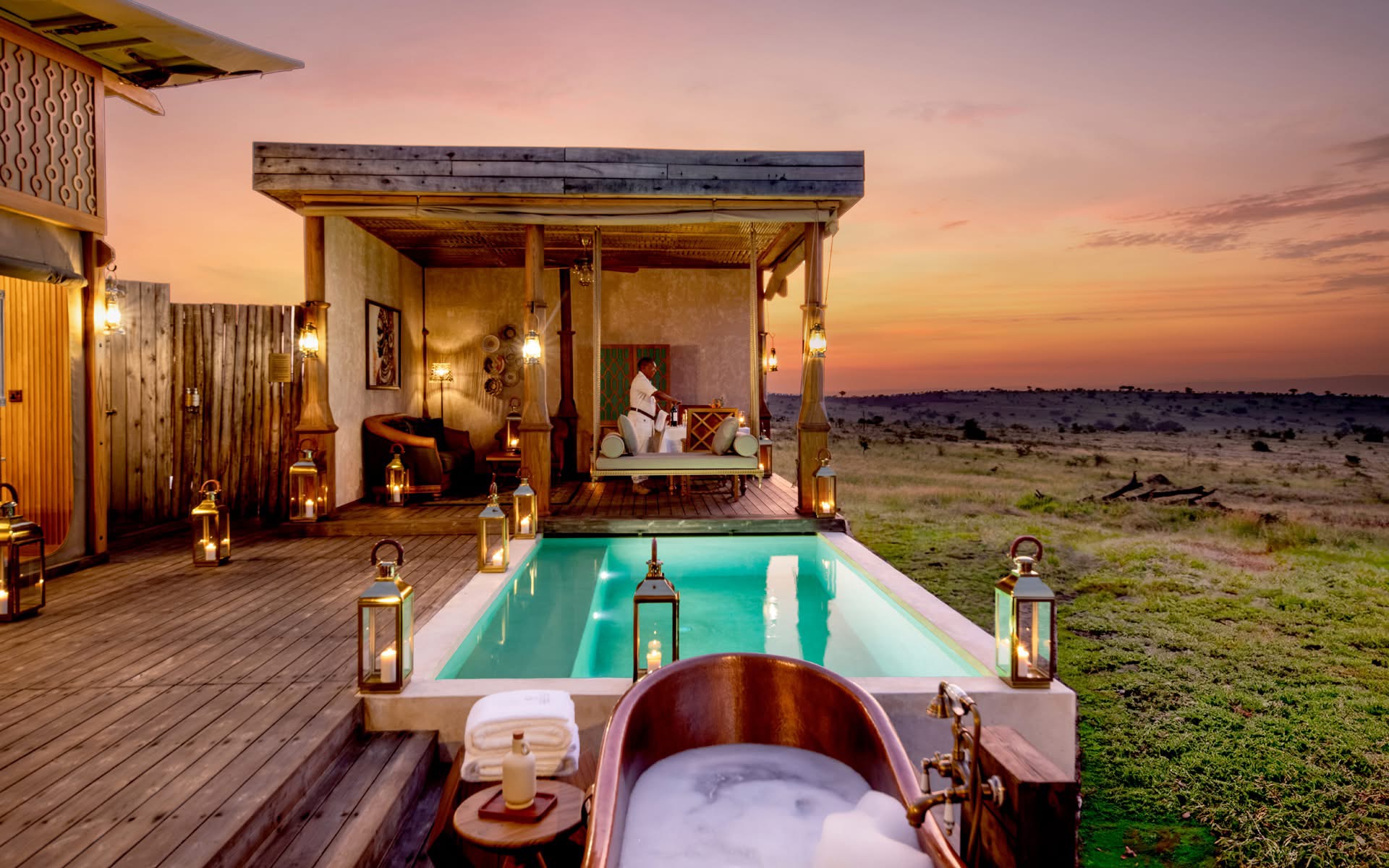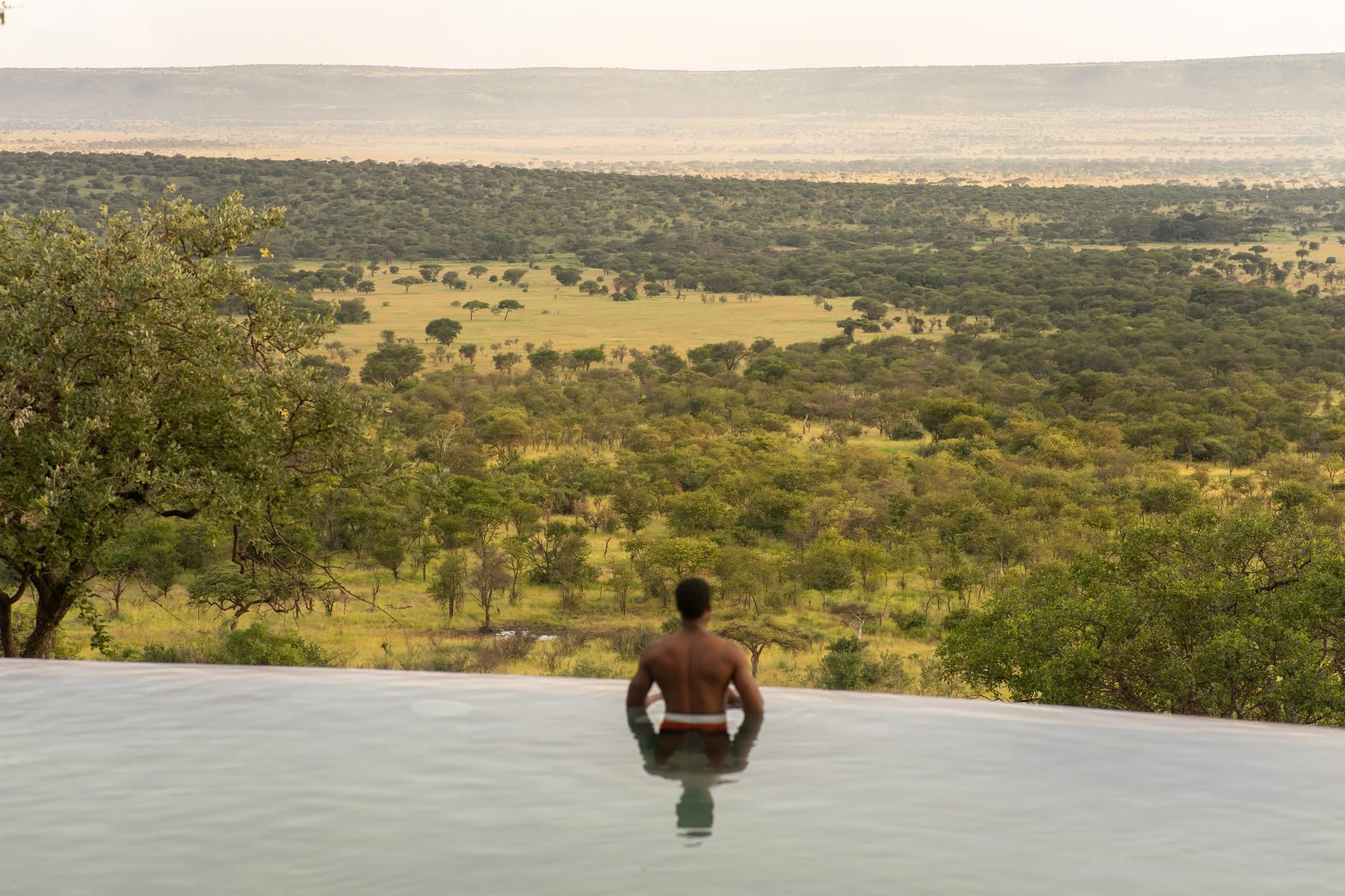
A combined Kenya and Tanzania safari is the trip people picture when they imagine East Africa at its fullest. It puts the two richest wildlife countries on the continent into a single arc, the Masai Mara and Amboseli on the Kenyan side, then the Serengeti, the Ngorongoro Crater, and Tarangire on the Tanzanian side. It is also the journey that commands the highest investment, because it asks for the most time and rewards it with the most variety. This is the itinerary I build for travelers who have decided that if they are going to cross the world for a safari, they want to see the whole of it, not half.
What follows is the working framework I use for a genuine two-country safari across twelve to fourteen days. I will be honest about the logistics that most marketing pages skip, especially the border crossing and the connecting flights, because those details shape the trip as much as the parks do. A walking safari is built into the route rather than sold as an extra, the pricing is given in real ranges, and the structure is one we run.
What a Combined Kenya and Tanzania Safari Itinerary Looks Like
A combined Kenya and Tanzania safari runs as one continuous arc across twelve to fourteen days. I open in Kenya with the Masai Mara and Amboseli, cross the border at Namanga, then continue through Tarangire, the Ngorongoro Crater, and the Serengeti on the Tanzanian side. Twelve days is the minimum this route works in and fourteen is what I recommend, because the crossing itself costs the better part of a day and each ecosystem needs its own time rather than a rushed morning. Every trip I build is private and tailor made, planned around your dates and the season you travel in, not sold as a fixed departure. The tier ranges are set out in the cost section further down.
Why Combine Kenya and Tanzania in One Safari
People ask whether the two countries are not simply different versions of the same thing. They are not, and the difference is the reason to combine them. Kenya gives you the Masai Mara, the most cinematic stretch of the migration ecosystem, with open grassland, an exceptional density of big cats, and the Mara River crossings between July and October. It gives you Amboseli, where elephant herds move across dust pans beneath Mount Kilimanjaro. Kenya also pioneered the private conservancy model, so the guiding is mature and the off-road access on conservancy land is excellent.
Tanzania answers with scale and year-round presence. Where Kenya concentrates the drama into one cinematic reserve, the Serengeti runs many times larger than the Mara and holds the migration through most of the year, so the wildlife is a constant rather than a season. If you are still deciding between them, my piece on Tanzania versus Kenya for safari lays out the contrast, though the honest answer for many travelers is that they should do both.
Why a Real Kenya and Tanzania Safari Needs Twelve Days, Not Ten
I want to be direct about trip length, because it is where most combined itineraries go wrong. Ten days is enough for one country done well. It is not enough for two. A genuine Kenya and Tanzania safari needs twelve days at a minimum, and fourteen is the length I recommend when the dates allow it. Moving between the countries costs the better part of a day, whether you take the road crossing at Namanga or fly via Kilimanjaro or Nairobi, because Kenyan and Tanzanian vehicles do not cross the border and the handover cannot be rushed. Beyond that, each ecosystem needs its own time. The Mara deserves two full days, Amboseli a proper day beneath the mountain, and the Tanzanian Northern Circuit alone is a five to six night route. Compress all of that into ten days and you spend the holiday arriving everywhere just as it is time to leave. Established luxury operators structure their multi-country East Africa trips at twelve days and up for exactly this reason. If ten days is genuinely all the time you have, my ten-day East Africa safari is the bookable compressed version of this combination, though I will always recommend twelve to fourteen days when the dates allow it.
Days 1 to 6: The Kenya Leg
Day 1: Arrival in Nairobi
You land at Jomo Kenyatta International Airport and are met for the transfer to your Nairobi hotel. Most international flights arrive in the evening, and after a long haul the right thing to do is nothing beyond a quiet dinner and sleep. For travelers who arrive with a morning to spare, the Sheldrick elephant orphanage and the Giraffe Centre are worth a stop, but I would rather you began the safari rested than tick a box while jet-lagged.
Day 2: Nairobi to the Masai Mara
After breakfast you fly from Wilson Airport to one of the Mara airstrips, about forty five minutes that replaces a five to six hour road transfer. Your Kenyan guide meets you and you are on a game drive within minutes of landing, because the plains begin at the runway. The Masai Mara is rolling grassland under enormous sky, and even on a first afternoon you are likely to find lion, elephant, giraffe, and the resident plains game that fills the reserve regardless of season. For the wider picture of the reserve and its conservancies, my Masai Mara safari guide is the fuller reference.
Days 3 and 4: The Masai Mara in Full
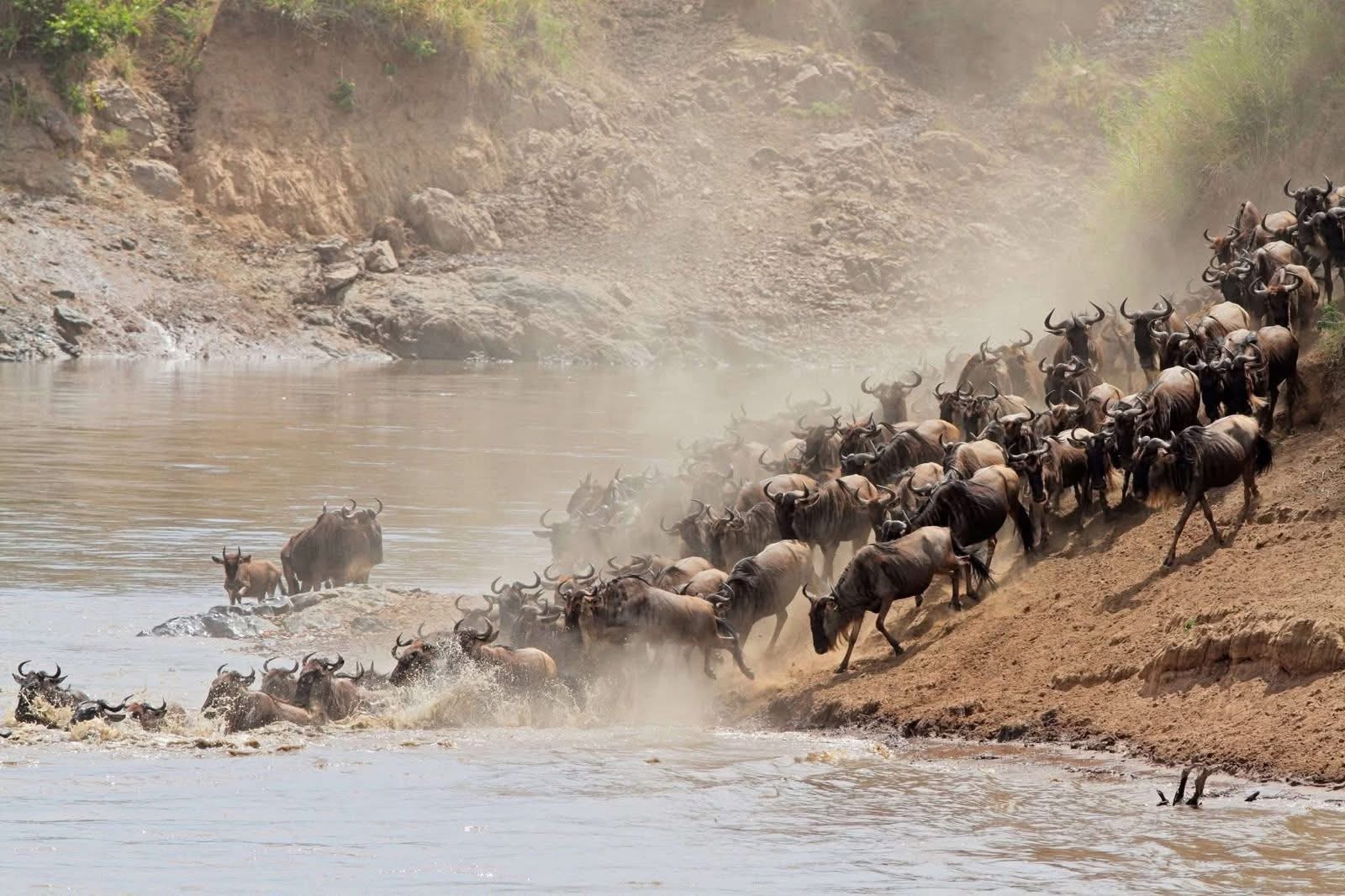
Two full days is what separates a real visit from a flying one, letting your guide follow the rhythm of the reserve rather than chase a checklist. Mornings start before dawn, when the big cats are still active and the light is low and gold across the grass. The Mara has one of the highest lion densities in Africa, and over two days you have a genuine chance at leopard in the riverine thickets and cheetah on the open plains. If your trip falls between July and October, this is where you may witness a Mara River crossing, with wildebeest massing on the banks before they plunge through the current and the waiting crocodiles. I usually base these nights in a private conservancy bordering the reserve, which caps vehicle numbers and permits the off-road driving, night drives, and guided walking safaris the main reserve does not. A walking safari with an armed Maasai guide is included on this leg, and on foot you read tracks, feel the scale of the country, and notice the small things the engine drowns out.
Luxury: Angama Mara (the Out of Africa view over the Oloololo escarpment), Mara Plains Camp, Sanctuary Olonana. Mid-range: Mara Bushtops, Basecamp Explorer, Governors Camp.
Day 5: The Mara to Amboseli
You fly from the Mara back across to Amboseli, routing through Wilson Airport in Nairobi. The connection takes most of the middle of the day, one of the reasons the trip needs its full length, and you arrive in time for an afternoon game drive. The landscape changes completely. Where the Mara was green and rolling, Amboseli is flat, dry, and open, with seasonal marshes fed by snowmelt from Kilimanjaro that draw wildlife into tight, photogenic concentrations.
Day 6: A Full Day in Amboseli Beneath Kilimanjaro
Amboseli is about elephants and the mountain. The park holds some of the most studied and most relaxed elephant herds in Africa, and on a clear morning they move across the pans with the snow cap of Kilimanjaro rising behind them. The mountain itself sits in Tanzania, a fitting preview of where the trip heads next. The best light is at dawn and in the last hour before sunset, when the cloud often lifts off the summit. Between those windows you will find lion, cheetah, buffalo in the swamps, and a bird list in the hundreds around the wetlands.

If you have specific dates in mind, or you want to know what a combined Kenya and Tanzania trip looks like for your party, send your details on WhatsApp and I will reply with a personalised plan within a few hours.
Day 7: Crossing the Border into Tanzania
This is the day the two halves of the trip are stitched together, and it deserves an honest account because it is where rushed itineraries fall apart. Amboseli sits close to the border, which makes the road crossing at Namanga the natural route. After a morning game drive you reach the Namanga border post, roughly two hours from the park, clear Kenyan immigration on foot, walk across, and clear Tanzanian immigration. Your Kenyan guide hands you over to your Tanzanian guide and Land Cruiser on the other side, because vehicles registered in one country do not operate in the other. From Namanga it is about two and a half hours on to Arusha, the gateway for the Northern Circuit. With the paperwork prepared in advance the crossing is straightforward, and I arrange both visas, both vehicles, and the handover so that it feels like one trip.
There is an alternative for travelers who would rather not spend a day on the road. From the Mara or Nairobi you can fly to Kilimanjaro International Airport, then transfer to Arusha or straight to your first Tanzanian camp. Flying saves the road hours and suits trips finishing on the Tanzanian side, though it costs more and shows you less of the country in between. For travelers chasing the migration, there is even a direct Mara to Serengeti hop across the same border, since the two reserves are one ecosystem split by a line on the map. I recommend the routing that fits your dates and your tolerance for road time.
Days 8 to 13: The Tanzania Leg
Day 8: Arusha to Tarangire
From Arusha you drive about two hours on a paved road to Tarangire National Park, picking up a packed lunch at the gate and entering around midday. Tarangire is the park first-time visitors underestimate and then talk about most. Its ancient baobab trees give it an almost prehistoric atmosphere, and between June and November the river draws one of the highest concentrations of elephants in Africa, with breeding herds of two hundred or more moving through the woodland. You game drive through the afternoon and reach your lodge as the light turns.
For travelers who want more, a Tarangire night game drive is the optional add on worth its place. It runs about ninety minutes after dark with a spotlight for an extra 300 USD per person, and it is the only way to find civets, genets, white tailed mongoose, and on a fortunate evening an aardvark. The same night drive is available in Lake Manyara for trips routed that way.
Day 9: Tarangire to the Ngorongoro Highlands, with a Walking Safari
A morning game drive in Tarangire, then the road north toward Karatu and the Ngorongoro Conservation Area, about three and a half hours as the landscape climbs from dry lowland into coffee farms and highland forest. The temperature drops with the altitude, and you will reach for a layer by the crater rim. You check in around early afternoon and head out on a guided walking safari with a Maasai guide and an armed ranger, roughly three hours along the rim forest trails or the slopes around Karatu. This second walking experience contrasts with the Mara walk, forest and highland rather than open plain. You see buffalo, bushbuck, and forest birds at a pace no vehicle offers, and most clients name this afternoon the surprise of the Tanzania leg. Sundowners on the rim close the day.
Day 10: The Crater Floor, then on to the Serengeti
An early descent onto the crater floor, dropping in by six thirty to be ahead of the midday traffic. The Ngorongoro floor holds one of the densest concentrations of wildlife on earth, and within the first hour you are likely to see lion, elephant, buffalo, zebra, wildebeest, flamingo, and hippo. The black rhino, one of the last wild populations in East Africa, is spotted regularly though never guaranteed. By late morning you ascend the western wall and continue toward the Central Serengeti, about three hours on, passing the Olduvai Gorge turnoff where a half-day stop can be added. Then the plains open flat to the horizon, and the back of the vehicle goes quiet. If you want the contrast between this ecosystem and the Mara spelled out, my comparison of the Serengeti versus the Masai Mara is the deeper read.
Days 11 and 12: The Serengeti in Full
Two full days in the Serengeti is what the longer trip buys you. The Central Serengeti has Africa's highest density of big cats, and with two days your guide can follow the radio reports between teams rather than rush a single circuit. You will most likely find lion prides resting near a kill, leopards draped along acacia branches, and cheetah hunting the open plains. Where the herds sit depends on the month, with calving on the southern plains from December to March and the northern river crossings from June to October.
One of these mornings is the slot for a balloon safari if you want it. The balloon lifts off at first light and lands about an hour later beside a champagne bush breakfast in the grass. It is 600 USD per person, and most travelers who do it name it the favourite morning of the trip. Across the two days I also build in slower hours at camp during the heat, because the rhythm of a real safari is the patience to be out when the wildlife is and at rest when it is not.
Luxury: Four Seasons Safari Lodge Serengeti, Singita Sasakwa Lodge, One Nature Nyaruswiga. Mid-range: Serengeti Serena Lodge, Kubu Kubu Tented Lodge, Lahia Tented Lodge.
Day 13: Final Morning and Fly-Out
A final morning game drive, a late breakfast, then a transfer to the Seronera airstrip for the scenic flight to Arusha or directly to Kilimanjaro for your international departure. The flight takes about an hour in a small bush plane and gives you an aerial view of the country you have just crossed. Travelers extending to Zanzibar connect here for the coast, and those adding gorillas route through Kilimanjaro or Nairobi. This spine runs thirteen days. To trim it to twelve, drop one of the two paired full days, most cleanly a second night in the Serengeti or one of the two Mara days, which shortens the trip without losing either country. To stretch it to fourteen, the extra two nights go where they matter most for your season, usually a third night in the Mara during crossing season or a second in the northern Serengeti.
How the Migration Moves Between Kenya and Tanzania Through the Year
The wildebeest migration is the thread that ties the two countries together, and understanding it is the key to timing a combined trip. It is not an event with a fixed date but a continuous loop of around two million animals following the rain across one ecosystem that ignores the border. From December to March the herds are on the short-grass plains of the southern Serengeti and Ndutu, where roughly half a million calves are born within a few weeks and the predator action is at its most intense. From April into June they move north through the Serengeti, with the Grumeti River crossings along the way.
From July to October they press into the far northern Serengeti and across the Mara River into Kenya's Masai Mara, where the dramatic crossings happen, then turn south toward the calving grounds again as the November rains return. The practical lesson is that the migration is somewhere in this system all year, and which country holds it depends on your dates. A trip in August can catch the crossings in the Mara and find the plains still full in the Serengeti, while February finds the calving in the south and a quieter, green Mara. For the full month-by-month breakdown, the Tanzania safari guide follows the herds through the calendar.
The Best Time to Combine Kenya and Tanzania
If I had to name one window, it would be June through October. The dry season concentrates wildlife around shrinking water in both countries, the vegetation thins so animals are easier to find, and this is the stretch when the migration is in the Mara, so a combined itinerary can pair the river crossings in Kenya with the dense resident game in Tanzania. It is the busiest season and the lodges price accordingly, but it is busy because it delivers.
January and February are my own preferred window for the Tanzania leg, when the southern Serengeti calving brings the most concentrated predator action of the year, though the Kenyan side is quieter for migration then. March, April, and the first half of May are the long rains, the green season, with some camps closed, softer roads, and substantially lower rates for travelers who do not mind a shower in exchange for green country and empty parks. November brings light short rains and good value before the December calving begins.
What a Combined Kenya and Tanzania Safari Costs
A combined safari sits on two cost bases, one for each country. Kenya private safaris, with your own guide and vehicle, start from around 500 USD per person per day at the entry tier, and Tanzania private safaris from around 560 USD per person per day. Stitch the two together across twelve to fourteen days, add the internal flights and the border logistics a two-country trip requires, and a combined private safari starts from around 7,500 USD per person at the entry tier, all included. Luxury and ultra-luxury sit well above that.
The table below shows the realistic per person ranges across the tiers we operate. I quote everything itemised, with park and conservancy fees, lodge nights, guiding, vehicles, internal flights, and the cross-border logistics built into a line-by-line breakdown, so there are no surprises once you arrive.
| Tier | Per Person (12 to 14 Days) | Includes |
|---|---|---|
| Mid-range | $7,500 to $9,500 | All accommodation, meals, game drives, park and conservancy fees, internal flights, border logistics |
| Luxury | $11,000 to $18,000 | Premium lodges and camps, conservancy stays, all meals and house drinks, internal flights, exclusive guiding |
| Ultra-luxury | $19,000 to $32,000+ | Private concessions, light-aircraft connections throughout, fully all-inclusive, private guiding both countries |
These are ranges, not quotes. The figure for your trip depends on the season, the lodge tier, your party size, and how much of the routing is flown rather than driven. Kenya and Tanzania each carry their own park and conservancy fees, so a two-country trip naturally costs more than a single-country one of the same tier, which is the trade-off for the breadth it gives you.
How to Extend the Trip: Zanzibar or Gorillas
Two extensions account for almost every request on top of the core route. The first is a Zanzibar beach week after the Tanzania leg, usually three to five nights on the northeast coast at a private resort, reached by a short flight from Kilimanjaro or Arusha. It is the natural way to close a long safari, trading early starts for slow mornings on the Indian Ocean. The second is a gorilla trekking add-on in Rwanda or Uganda, two to three days via a flight to Kigali or Entebbe. Standing a few metres from a mountain gorilla family is one of the few wildlife experiences that rivals the plains.
Either extension turns a twelve to fourteen day safari into a sixteen to eighteen day journey, so I tend to suggest choosing one rather than both unless you have a full three weeks. For travelers weighing a shorter single-country trip instead, the 10-day Tanzania safari itinerary and the Kenya safari guide are the right starting points, and either can be the seed that grows into the combined trip on a return visit.
The travelers who combine Kenya and Tanzania almost never wish they had done less. The regret I hear is always the other direction, from people who did one country in ten days and saw the other across the border, knowing they would have to come back.
Frequently Asked Questions
A genuine two-country Kenya and Tanzania safari needs twelve days at a minimum. Ten days is enough for one country, but two require time for the border crossing and for each ecosystem to be experienced properly. Twelve to fourteen days gives the Masai Mara, Amboseli, the Serengeti, Ngorongoro, and Tarangire the room they deserve, which is why established luxury operators structure multi-country trips at twelve days and up.
A private Kenya and Tanzania safari combines two cost bases. Kenya private safaris start from around 500 USD per person per day and Tanzania from around 560 USD. A twelve to fourteen day combined private safari therefore starts from around 7,500 USD per person at the entry tier, with luxury and ultra-luxury well above that.
June through October is the strongest all-round window. The dry season concentrates wildlife in both countries and the wildebeest are crossing into Kenya's Masai Mara, so a combined trip can catch the migration in the Mara and the resident game in Tanzania. January and February suit the Tanzania leg during the southern Serengeti calving, while March through May is the quiet green season.
There are two ways to move between the countries. The road crossing at Namanga, between Amboseli and Arusha, takes four to five hours with an immigration stop where you change vehicles, since Kenyan and Tanzanian vehicles do not cross. The alternative is to fly, usually to Kilimanjaro International. Both require a valid visa for each country, and I arrange the handover end to end.
Either order works, depending on your international flights and the season. Starting in Kenya and finishing in Tanzania flows well geographically, from the Masai Mara down to Amboseli, across the Namanga border to Arusha, and into the Northern Circuit with a Serengeti fly-out. Starting in Tanzania suits travelers who want to end on the Mara during the July to October crossing season or connect onward to Zanzibar.
Yes. The wildebeest migration is a continuous loop that lives in both countries across the year. The herds calve on the southern Serengeti from December to March, cross the Mara River into Kenya's Masai Mara from roughly July to October, then return south as the rains shift. A combined safari lets you follow them into whichever country holds them during your travel window.
Yes, both are common extensions. Three to five nights on Zanzibar after the Tanzania leg adds a beach close, reached by a short flight from Kilimanjaro or Arusha. A gorilla trekking add-on in Rwanda or Uganda adds two to three days via a flight to Kigali or Entebbe, turning the trip into a journey of around sixteen to eighteen days.