I have spent years planning safaris across East Africa, and Kenya is the country travellers ask me about most after Tanzania. It is where the safari was largely shaped into the form we recognise today, where the word itself entered common use, and where several of the most recognisable wildlife landscapes on the continent sit within a few hours of a single international airport. This guide brings together everything I tell my clients before they commit to a Kenya itinerary: which parks matter and what each one is genuinely for, the difference between the national reserve and the private conservancies that surround it, when the Great Migration reaches the Masai Mara, the best time to travel, and what the trip actually costs once every line item is accounted for.
Kenya rewards a traveller who understands it before booking. The country holds a remarkable range of habitats in a compact area, from the open grassland of the Mara to the elephant country beneath Kilimanjaro, the semi-arid north with its own distinct wildlife, and the Rift Valley lakes. The decisions that shape a Kenya safari, which is to say the parks you choose, whether you stay inside a reserve or in a conservancy, and the month you travel, matter more here than in almost any other destination I work with. Getting them right is the difference between a good trip and one my clients talk about for years afterwards.
Why Kenya for Safari
The case for Kenya rests on three qualities that few destinations combine as well: variety within a short reach, genuinely iconic wildlife landscapes, and an unusually mature safari infrastructure. From Nairobi you can be on the plains of the Masai Mara, beneath Kilimanjaro in Amboseli, or in the rugged north at Samburu within a single short flight. That compactness means a well-planned week in Kenya can hold two or three completely different ecosystems without long, tiring road days between them.
Kenya also offers something that matters more than most first-time visitors realise, which is the choice between public reserves and private conservancies. This is the single most important structural decision in a Kenya safari, and it shapes everything from how close you can get to a sighting to whether you can go out after dark or walk in the bush at all. I return to it in detail further down, because it is the question I spend the most time on with new clients.
Finally, Kenya carries the history of the safari as an idea. The classic image of open grassland under a wide sky, with lions resting in the shade and elephants moving in long lines toward water, was largely formed here. That heritage shows up in the quality of the guiding, the depth of the camp tradition, and the sheer reliability of the wildlife in the right places at the right time of year.
The Parks and Reserves: What Each One Is For
Kenya does not run on a single circuit the way Tanzania's north does. Instead it offers a set of distinct regions, each with a clear purpose, and the art of planning lies in choosing two or three that complement one another rather than trying to see everything in one trip.
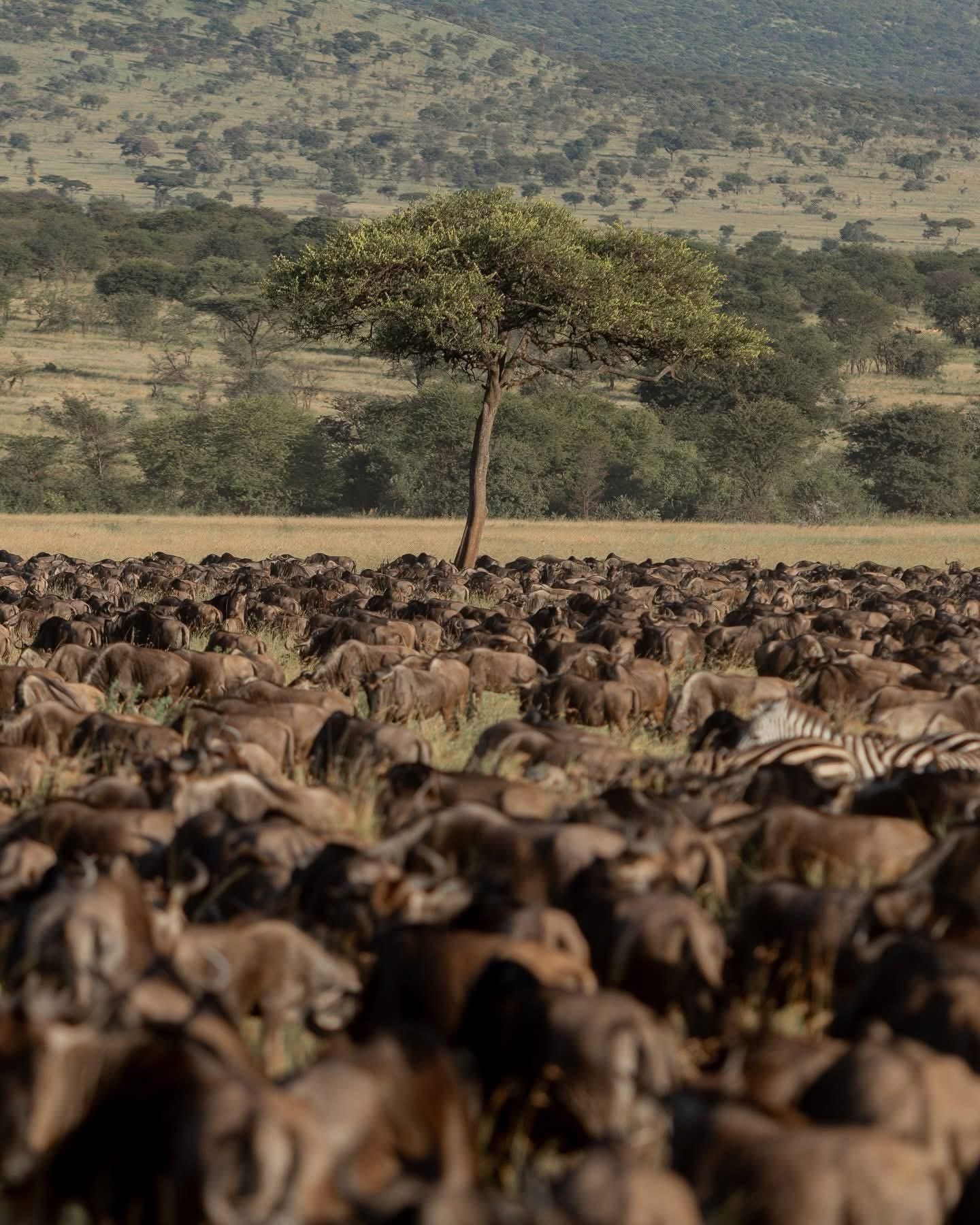
The Masai Mara National Reserve is the heart of almost every Kenya safari and the reason most people come. This is the Kenyan portion of the Mara and Serengeti ecosystem, an expanse of rolling grassland that holds extraordinary year-round predator densities and becomes the stage for the Great Migration from around July onward. Lion, cheetah, and spotted hyena are reliably seen, and the open terrain makes for the kind of long, uninterrupted sightings that define a great safari. I have written a dedicated Masai Mara safari guide for travellers who want the full detail on the reserve, its conservancies, and the best places to base themselves.
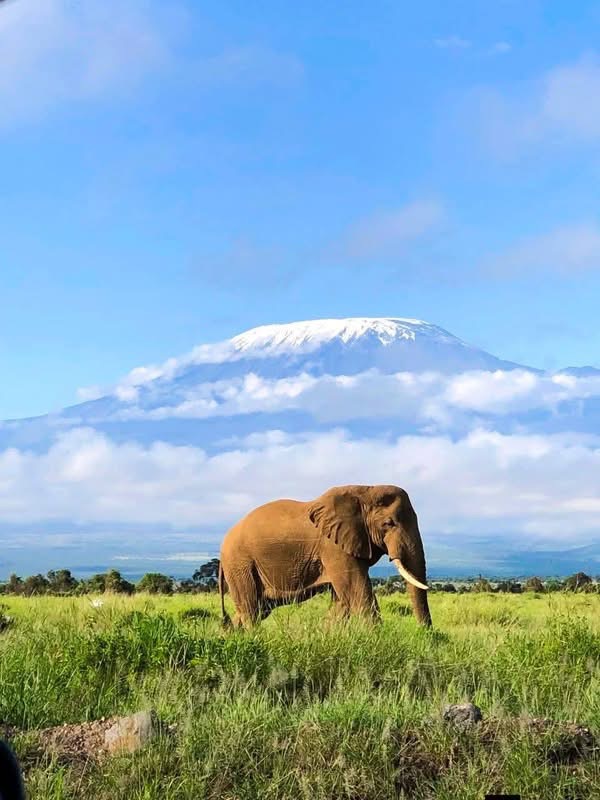
Amboseli National Park, in the south near the Tanzanian border, is famous for one thing above all: large elephant herds moving across open pans with Mount Kilimanjaro filling the horizon behind them. On a clear morning, usually just after dawn or in the late afternoon, the mountain emerges fully and produces some of the most recognisable wildlife photography in Africa. Amboseli is also one of the best places anywhere to observe elephant family behaviour at close range, which is why it pairs so naturally with the Mara on a week-long trip.
Samburu, in the arid north, is where Kenya shows a completely different face. The landscape is dry, rugged, and shaped by the Ewaso Ng'iro River, and it holds a set of species you will not find on the southern plains, including the reticulated giraffe, the Grevy's zebra, the gerenuk, and the beisa oryx. Travellers sometimes call these the northern specials. For anyone who has already seen the classic plains game, Samburu adds a layer of genuine novelty and a strong sense of remoteness.
Tsavo, split into Tsavo East and Tsavo West, is Kenya's largest protected wilderness and one of the biggest in the world. It is known for its red-dust elephants, vast open spaces, and a raw, untamed character that feels a world away from the busier Mara. Tsavo suits travellers who want scale and solitude, and it works well as a stop between Nairobi and the coast for those continuing on to the Indian Ocean.
Laikipia and the Lewa landscape, on the plateau north of Mount Kenya, represent the leading edge of Kenya's conservation-led tourism. This is private and community land where rhino conservation has been pioneered, where wildlife shares space with working ranches, and where activities extend well beyond the standard game drive into walking, horseback, and night drives. Lewa and the wider Laikipia conservancies offer some of the most exclusive and low-density safari experiences in the country.
Lake Nakuru, in the Rift Valley, is a compact park built around a soda lake. It is known for its birdlife, including flamingos in the right conditions, and as one of the more dependable places in Kenya to see both black and white rhino. Its small size makes it a productive half-day or full-day addition rather than a multi-night destination.
Nairobi National Park is the most unusual of all: a genuine wildlife park on the doorstep of the capital, where you can see lion, rhino, and giraffe against a backdrop of the city skyline. It will never replace a Mara or an Amboseli, but for a traveller arriving with a spare morning before a connecting flight, it is a remarkable way to begin or end a trip.
Reserve Versus Conservancy: Why It Matters
This is the distinction that shapes a Kenya safari more than any other, and it is the one most travellers have never heard of before they speak with me. The Masai Mara National Reserve is public land managed by Narok County. Any vehicle that pays the daily fee may enter, which means that at a popular sighting in peak season you can find a number of vehicles gathered around the same lions. The reserve also does not permit off-road driving, night drives, or walking, so your experience is limited to the formal track network during daylight hours.
The private conservancies that border the reserve work on a completely different model. They are leased from Maasai landowners, who receive a steady income in exchange for keeping the land open for wildlife, and they cap the number of beds and vehicles allowed inside. The result is dramatically lower vehicle density at sightings, often only one or two vehicles where the reserve might have a dozen. Crucially, the conservancies do allow off-road driving to reach a sighting, night drives to find nocturnal species, and guided walking safaris on foot. None of those are possible inside the national reserve.
This is why so many of my clients choose a conservancy camp even though it costs more. They are paying for exclusivity and for activities the reserve simply cannot offer, and most conservancy camps still provide access into the reserve itself for the days when the migration is crossing. For travellers who value space, quiet, and the freedom to follow a leopard off the track at dusk, the conservancy premium is usually money well placed. For those whose main priority is to witness a river crossing during the migration peak, time inside the reserve remains essential, and a thoughtful itinerary often blends both.
The Great Migration in the Mara
The Great Migration is the movement of roughly two million wildebeest, zebra, and gazelle in a continuous loop through the Mara and Serengeti ecosystem. It is not a single event with fixed dates but a year-round cycle driven by rainfall and grazing, and understanding which part happens where is essential to planning a trip around it.
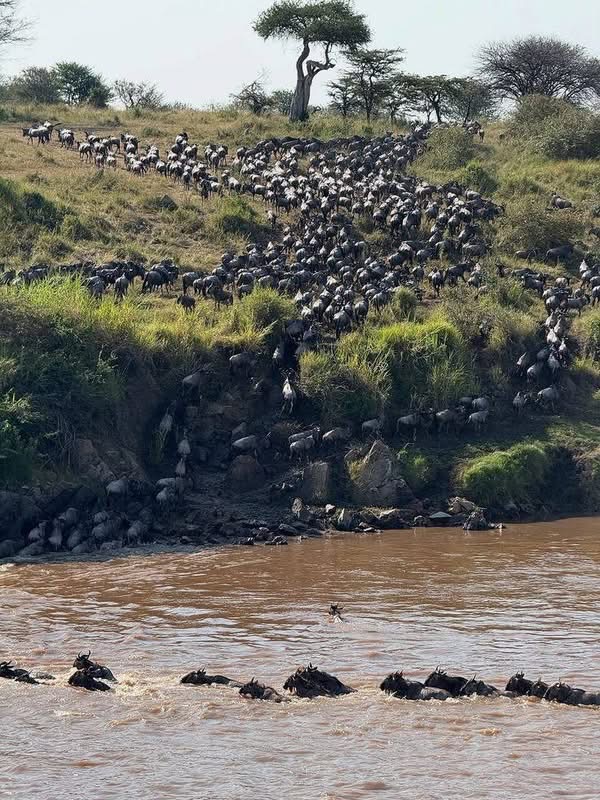
The part that takes place in Kenya is the dramatic northern phase. From around July, the herds push north across the border from Tanzania into the Masai Mara, and over the following months they cross and recross the Mara River in the scenes most people picture when they think of the migration: thousands of animals massing on the bank, hesitating, and then plunging through crocodile-filled water. These crossings are most likely between roughly July and October, after which the herds begin moving back south. There is no way to predict the exact day of a crossing, but staying several nights in the right area during these months gives you a strong chance of witnessing one.
One point I correct often is the question of calving. The calving season, when several hundred thousand wildebeest give birth within a few weeks, happens in the southern Serengeti in Tanzania around January and February. It does not happen in Kenya. If a traveller's heart is set on the newborn herds and the concentrated predator action that follows them, that is a Tanzania trip, not a Kenya one. I lay out the full annual picture in the Great Migration month-by-month guide, and for travellers weighing the two halves of the ecosystem directly against each other, the Serengeti versus Masai Mara comparison goes through the trade-offs in detail.
The Best Time to Visit Kenya
Kenya has no closed season, and I plan rewarding safaris here in every month of the year. The right time depends entirely on what you want the trip to be. The dry months from late June through October are the strongest overall period. The grass is short, water is concentrated, predators are easy to find, and this window coincides with the migration crossings in the Mara. It is also the busiest and most expensive period, and the best conservancy camps fill many months ahead for July and August.
The short dry spell of January and February is my quieter recommendation, and a strong one. The landscape is green from the short rains that precede it, the light is excellent, resident wildlife is abundant, and both crowds and rates sit below the July to October peak. This is an excellent window for Amboseli, where the Kilimanjaro views are often at their clearest, and for general game viewing across the country. The herds are in Tanzania at this time, so this is not the window for the Mara crossings.
The long rains of April and May bring the lowest rates of the year and the fewest visitors. Some remote camps close, and a few tracks become difficult, but the parks stay open and the wildlife does not leave. For a traveller who values having the landscape largely to themselves and does not mind the occasional afternoon shower, the green season has a quality that peak-season guests never encounter. Because Kenya and northern Tanzania share a climate, the seasonal logic carries across the border, and the best time to visit the Serengeti guide is a useful companion for anyone considering both countries.
What a Kenya Safari Costs
A Kenya safari covers a wide range of price points, and the most useful thing I can do is explain how the cost is built so you can see where your money goes. The single most common misconception I correct is the belief that park fees are the main cost of a safari. They are one line item among several, and the total trip cost sits well above them.
Start with the park and reserve fees, because Kenya's structure is genuinely particular and worth understanding before you compare quotes. The Masai Mara National Reserve charges non-resident adults USD 200 per day in the peak season from July to December and USD 100 per day in the low season from January to June. The Mara is managed by Narok County rather than the Kenya Wildlife Service, it runs on a strict 12-hour day rule rather than a rolling 24 hours, and its fee cannot be combined with a Kenya Wildlife Service pass. Among the Kenya Wildlife Service parks, Amboseli and Lake Nakuru charge USD 90 per day for non-resident adults, while Tsavo East, Tsavo West, and Nairobi National Park charge USD 80 per day, and these KWS fees generally allow 24-hour validity. Children aged 0 to 8 enter free, and reduced child or student rates apply for ages 9 to 17 where eligible. Conservancy stays carry their own separate conservation fees, which are built into the nightly rate of conservancy camps rather than charged at a gate.
Those fees then sit inside a daily rate that also covers your accommodation, meals, vehicle, guide, and the activities included at your camp. As a general guide, an entry-level Kenya safari using shared vehicles and simpler camps tends to run at roughly 200 to 350 US dollars per person per day. A private mid-range safari, with a dedicated vehicle and guide and comfortable tented camps, generally sits around 500 to 700 US dollars per person per day. The leading private conservancy lodges, with very low guest numbers and the full range of off-road, night, and walking activities, run from around 800 US dollars per person per day upward, and the most exclusive properties go well beyond that. International flights, visas, and travel insurance sit on top of whichever tier you choose.
The reason I frame the investment this way is that two quotes can look very different on paper and deliver almost the same experience, or look identical and deliver completely different ones. What matters is what the daily rate includes, how many vehicles share your guide, and whether you are inside a high-density public reserve or a low-density conservancy. A transparent, itemised quote that separates park fees, accommodation, vehicle, and guide is the only reliable way to compare, and any operator unwilling to provide that breakdown is one to treat with caution.
If you already have dates in mind or want to understand what a Kenya safari costs for your specific trip, send your details on WhatsApp and I will respond with a personalised answer within a few hours.
How Kenya Combines With a Tanzania Safari
One of the strongest itineraries in East Africa pairs Kenya with Tanzania, and it is a combination I plan often. The logic is simple: the Masai Mara in Kenya and the Serengeti in Tanzania are two halves of the same migration ecosystem, separated only by an international border that the wildebeest cross freely and travellers can cross with a little planning. A well-timed combined trip can effectively follow the herds, picking up the river crossings in the Mara and the wider plains and, at the right time of year, the calving in the southern Serengeti.
The two countries also complement each other beyond the migration. Tanzania brings the Ngorongoro Crater and the sheer scale of the Serengeti, while Kenya brings the Kilimanjaro backdrop of Amboseli, the northern species of Samburu, and the conservancy model around the Mara. Connecting them is usually done by a short flight or an overland border crossing, and the main practical points to plan around are the separate park fee structures in each country and the additional border process. For the full route written out day by day, with the Namanga crossing and the walking safaris built in, see my combined Kenya and Tanzania safari itinerary across twelve to fourteen days. For travellers deciding which country to lead with, or whether to combine them at all, I wrote a direct Tanzania versus Kenya safari comparison, and the companion complete Tanzania safari guide covers the southern half of the ecosystem in the same depth this guide gives to Kenya.
Frequently Asked Questions
A Kenya safari in 2026 runs at roughly 200 to 350 US dollars per person per day at the entry level using shared vehicles and simpler camps, 500 to 700 US dollars per person per day for a private mid-range safari with a dedicated vehicle, guide, and comfortable tented camps, and 800 to 2,500 US dollars or more per person per day for the leading private conservancy lodges. Park and conservancy fees are one line item within that total, not the total itself. International flights, visas, and travel insurance sit on top of the daily rate.
The dry months of late June through October are the strongest period for general game viewing and for the Great Migration in the Masai Mara, with river crossings most likely from roughly July to October. The short dry spell in January and February is also excellent, with green landscapes, fewer vehicles, and lower rates. The long rains of April and May bring the lowest prices and the smallest crowds, and the wildlife remains present throughout. There is no closed season for Kenya safaris.
The wildebeest herds reach the Masai Mara on the Kenyan side of the ecosystem from roughly July, and the dramatic Mara River crossings are most likely between July and October before the herds move back south into Tanzania. The calving season, when hundreds of thousands of wildebeest give birth, happens in the southern Serengeti in Tanzania around January and February, not in Kenya. For river crossings in the Mara, plan to travel between late July and early October.
The Masai Mara National Reserve charges non-resident adults USD 200 per day in the peak season from July to December and USD 100 per day in the low season from January to June. It is managed by Narok County rather than the Kenya Wildlife Service, runs on a strict 12-hour day rule, and its fee cannot be combined with a KWS pass. Among the KWS parks, Amboseli and Lake Nakuru charge USD 90 per day for non-resident adults, while Tsavo East, Tsavo West, and Nairobi National Park charge USD 80 per day, and KWS fees generally allow 24-hour validity. Children aged 0 to 8 enter free, with reduced child and student rates for ages 9 to 17 where eligible.
The Masai Mara National Reserve is public land managed by Narok County, open to any vehicle that pays the daily fee, and it does not permit off-road driving, night drives, or walking. The private conservancies that border the reserve are leased from Maasai landowners, cap the number of beds and vehicles, and do allow off-road driving, night drives, and guided walks. That is why many travellers choose a conservancy camp: lower vehicle density at sightings and activities the reserve cannot offer, usually with access to the reserve itself for the migration.
Yes, and it is one of the strongest East Africa itineraries when the timing is right. The Masai Mara in Kenya and the Serengeti in Tanzania are two halves of the same migration ecosystem, so a combined trip can follow the herds across the border. You can connect the two countries by a short flight or an overland crossing. The main considerations are separate park fee structures, an additional border process, and aligning the season with where the herds are, which I plan around each client's dates.
Three to four days focused on the Masai Mara delivers a strong standalone trip. Six to seven days allows the Mara to be combined with a second region such as Amboseli for the Kilimanjaro backdrop or Samburu for the northern species. Ten days and beyond opens up a fuller circuit or a Kenya and Tanzania combination. As with anywhere in East Africa, depth in fewer places consistently produces a better experience than a rushed sweep through many parks.
Kenya is a strong family safari destination, and children are welcome across most parks and many camps, though some conservancy properties set minimum ages for certain activities such as walking safaris. On park fees, children aged 0 to 8 enter free, and reduced child or student rates apply for ages 9 to 17 where eligible. The right pacing and the right camps make the difference, so a family itinerary should be built around the ages travelling rather than dropped into a generic plan.